

Story Highlights
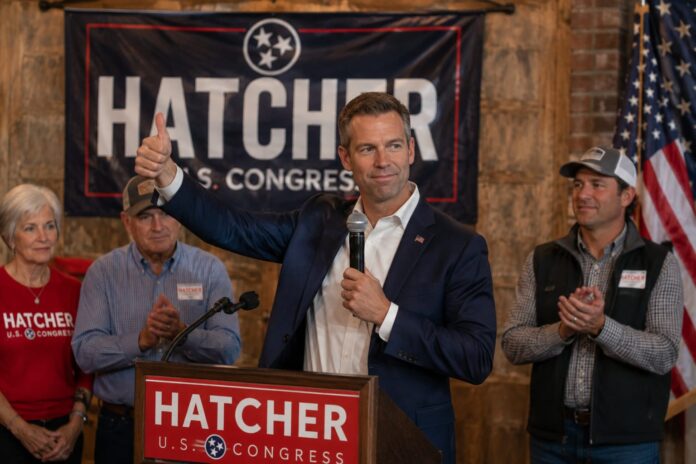
- Rep. Andy Ogles, R-Tenn., was defeated in his primary by Republican challenger Charlie Hatcher, a farmer and former state agriculture commissioner
- The Invest in Tomorrow Coalition super PAC spent approximately $2 million opposing Ogles while supporting his challenger
- Ogles attributes his primary loss to his strong advocacy against government renewable energy subsidies and his close alignment with President Trump
- The super PAC is bankrolled by Chris Larsen, a California-based billionaire and frequent Democratic donor who contributed nearly $5.5 million to Kamala Harris’s presidential campaign
What Happened
Rep. Andy Ogles of Tennessee faced defeat in a primary challenge on Thursday evening at the hands of Republican challenger Charlie Hatcher, a fifth-generation dairy farmer and the state’s former commissioner of agriculture. The race, which initially appeared to be a routine Republican primary contest, evolved into a significant battleground reflecting broader divisions within the GOP. The primary attracted national attention due to several competing factors, including a notable split in endorsements between President Trump and Tennessee Governor Bill Lee, along with substantial external spending focused on environmental policy issues.
The Invest in Tomorrow Coalition super PAC emerged as a major player in the race, deploying approximately $2 million in opposition spending against Ogles while simultaneously supporting Hatcher’s candidacy. The super PAC has raised $6.7 million during the current cycle, making Ogles a substantial target of their spending efforts. The scale of this outside investment proved decisive in a primary that served as a microcosm of larger forces reshaping Republican politics heading into the 2026 election cycle.
- Charlie Hatcher defeated Ogles on Thursday evening in the Tennessee primary
- The Invest in Tomorrow Coalition super PAC spent roughly $2 million in the race
- The super PAC raised $6.7 million total in the current election cycle
- President Trump and Governor Bill Lee offered competing endorsements in the primary
Why It Matters
The outcome in Tennessee carries significant implications for Republican energy policy and the party’s direction on government subsidies. Ogles had positioned himself as a staunch opponent of renewable energy subsidies funded through government programs, arguing that taxpayer money should not support what he characterized as corporate welfare for energy companies. His defeat potentially signals the political cost of challenging entrenched interests in the renewable energy sector, particularly when those interests possess substantial financial resources to influence primary outcomes.
The involvement of Democratic-aligned funding in a Republican primary race underscores deeper concerns about external influence in GOP contests. Ogles characterized the spending against him as retaliation for his principled stands on fiscal conservatism and energy policy independence. The candidate suggested that his close relationship with President Trump and his willingness to speak plainly about government overreach made him a target for well-funded opposition. The primary serves as a cautionary tale about how special interests can mobilize significant capital to remove Republican lawmakers whose policy positions threaten subsidized industries.
- The result demonstrates the influence of well-funded super PACs in Republican primary elections
- Ogles’ advocacy for eliminating government renewable energy subsidies became a central campaign issue
- Democratic billionaire funding directly shaped the outcome of a Republican primary
- The race reflects tension between Trump-aligned fiscal conservatism and establishment Republican interests
Political and Public Context
The primary loss occurred within a complex political landscape where national figures and state leaders held divergent views on the candidate. While President Trump remained supportive of Ogles’ candidacy, Tennessee Governor Bill Lee chose to endorse Hatcher instead, creating a notable split in Republican endorsements. This fracture highlighted ongoing debates within the GOP regarding energy policy, government spending, and the party’s relationship with incumbent lawmakers who push back against subsidy-dependent industries.
Chris Larsen, the California-based billionaire chairman of Ripple, a cryptocurrency financial technology company, bankrolled the super PAC through substantial contributions. Larsen has demonstrated a consistent pattern of supporting Democratic causes, having contributed nearly $5.5 million to support Kamala Harris’s presidential campaign. The revelation that Democratic-aligned money played such a prominent role in defeating a Trump-backed Republican incumbent raises questions about the coordination of interests across party lines when those interests involve government spending and subsidies. Ogles maintained that the opposition campaign was fundamentally about protecting lucrative government contracts rather than principled policy disagreement.
- President Trump endorsed Ogles while Governor Bill Lee supported Hatcher
- Chris Larsen funded the opposition super PAC and has contributed millions to Democratic candidates
- The race reflects broader GOP debates over government spending and energy subsidies
- Ogles characterized the opposition spending as retaliation for challenging government welfare programs
Trump-backed Rep. Ogles loses Republican primary in Tennessee https://t.co/k6zrajlpUW
— News 4 San Antonio (@News4SA) August 7, 2026
What Happens Next
The primary outcome will likely influence how Republican lawmakers approach energy subsidy legislation in future sessions. With Hatcher positioned to advance from the primary, questions remain about whether he will maintain or diverge from Ogles’ aggressive stance on eliminating government renewable energy funding. The defeat may embolden other lawmakers to reconsider their positions on subsidy-dependent industries, knowing that well-funded opposition campaigns can be deployed against those who challenge entrenched spending programs.
Moving forward, the Republican Party faces pressure to address the issue of Democratic-funded super PACs influencing GOP primaries. This race demonstrates a potential vulnerability in the party’s primary process, where ideological consistency on fiscal conservatism can be targeted by outside interests with financial motivation to protect government spending. The broader question for Republicans entering the 2026 cycle involves how the party will respond to this pattern of external interference and whether candidates aligned with Trump’s reform agenda can survive well-funded primary challenges from establishment-backed opponents.
- Charlie Hatcher will likely advance to the general election as the Republican nominee
- The race may influence how other Republicans approach energy subsidy votes going forward
- Questions remain about coordination between Democratic donors and Republican primary opponents
- The outcome could prompt GOP leadership to examine primary process vulnerabilities and external funding influence
