

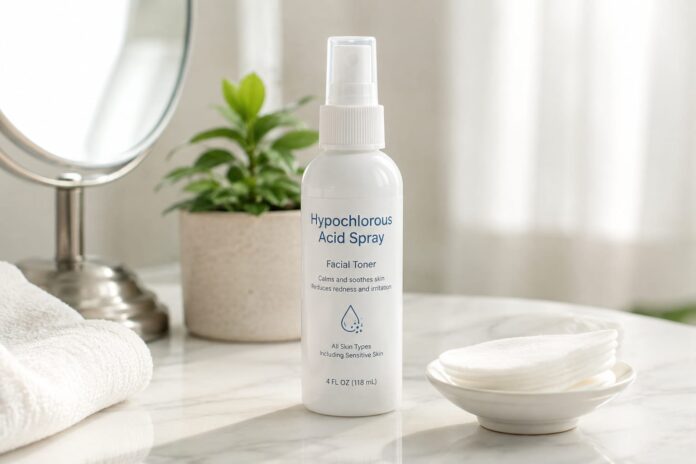
Story Highlights
- Hypochlorous acid, naturally produced by the body’s immune system, offers antimicrobial and anti-inflammatory benefits for skincare
- A lightweight facial spray formulation makes the ingredient accessible for daily use without the heaviness of traditional treatments
- Users report visible reduction in facial redness and irritation when applied morning and night after cleansing
- The spray format provides versatility for post-exercise recovery and soothing minor skin irritations beyond routine skincare
What Happened
A skincare product featuring hypochlorous acid as its primary active ingredient has gained attention for its ability to address persistent facial redness and irritation through a simple spray delivery system. The product represents an alternative approach to managing visible redness that many individuals experience as they age, particularly those with environmental exposure concerns or sensitivity-prone skin types. The formulation leverages a naturally occurring compound that the body produces as part of its immune response.
Hypochlorous acid has been recognized in skincare applications for its capacity to calm visible redness, soothe irritation, support skin barrier function, and maintain skin balance without the stinging sensations or heavy textures associated with conventional treatments. The spray format allows for quick absorption and cooling sensation upon application, making it suitable for integration into existing skincare routines without requiring extensive preparation or waiting periods.
- Active ingredient: Hypochlorous acid, naturally produced by the immune system
- Delivery method: Lightweight facial spray applied morning and night
- Key benefits: Reduces visible redness, soothes irritation, supports skin barrier
- Additional uses: Post-exercise skin recovery and minor irritation management
Why It Matters
Persistent facial redness represents a common concern for many individuals, particularly as they progress through middle age. Environmental factors including sun exposure, wind, dietary choices, and lifestyle habits can contribute to chronic facial redness that becomes increasingly difficult to ignore or manage with basic cleansing routines alone. For individuals with family histories of skin conditions such as rosacea, finding effective management strategies early becomes important for maintaining skin health and appearance.
The availability of a simple, single-product solution addresses a significant gap in skincare accessibility. Many individuals resist comprehensive multi-step skincare routines due to time constraints, complexity, or difficulty remembering to use multiple products consistently. A straightforward spray format that requires minimal steps and delivers visible results encourages greater adherence to skincare practices. Furthermore, the antimicrobial and anti-inflammatory properties of hypochlorous acid extend the product’s utility beyond aesthetic redness reduction, potentially supporting healing of minor cuts, scrapes, and general skin irritation that extends beyond cosmetic concerns.
- Addresses age-related facial redness that conventional washing routines fail to manage
- Provides accessible solution for individuals concerned about hereditary skin conditions
- Simplifies skincare through single-product approach that improves routine consistency
- Offers dual functionality for both prevention and reactive skin soothing
Political and Public Context
Consumer interest in efficacious, minimalist skincare solutions has grown substantially as individuals seek alternatives to complex multi-step routines popularized in recent years. The rise of ingredient-focused skincare reflects broader consumer sophistication regarding active compounds and their specific benefits. Hypochlorous acid represents a scientifically-supported ingredient with documented antimicrobial and anti-inflammatory properties that appeal to consumers seeking evidence-based skincare solutions rather than trend-driven products.
The focus on naturally-derived or naturally-occurring active ingredients aligns with evolving consumer preferences for skincare that works with the body’s existing biological processes. This approach contrasts with synthetic treatments and represents a meaningful shift in how consumers evaluate skincare efficacy. The versatility of hypochlorous acid—functioning both as a preventative daily care product and a reactive treatment for specific irritations—reflects changing attitudes toward skincare as integrated health management rather than purely cosmetic enhancement. Additionally, the accessibility price point of such products democratizes effective skincare solutions across socioeconomic brackets.
- Growing consumer demand for minimalist, ingredient-focused skincare approaches
- Preference for naturally-derived active compounds over synthetic alternatives
- Shift from multi-step routines to simplified, efficacious single-product solutions
- Expansion of skincare accessibility across broader price ranges and demographic segments
What Happens Next
As awareness of hypochlorous acid’s skincare benefits continues to expand, increased consumer interest will likely drive broader distribution and potentially inspire similar formulations from other skincare manufacturers. The spray delivery system may become more prevalent as consumers recognize the convenience factor of mist applications for facial products, potentially influencing how other active ingredients are formulated and delivered. Continued positive user experiences with visible redness reduction may encourage individuals with hereditary concerns about rosacea or similar conditions to pursue preventative management strategies earlier in life.
Further development in this category may explore complementary ingredients that enhance hypochlorous acid’s effectiveness or expand its applications beyond facial use. As skincare routines continue trending toward simplification, products that deliver multiple benefits through single applications may capture increasing market share. Consumer feedback regarding long-term use patterns and sustained redness reduction will shape product refinement and marketing positioning. The accessibility and ease-of-use characteristics suggest potential for adoption across diverse age groups and skin types, extending beyond the initial audiences seeking redness management solutions.
- Expected increase in hypochlorous acid-based product development by competing brands
- Potential expansion of spray delivery systems to other active skincare ingredients
- Growing adoption of preventative redness management strategies among younger consumers
- Continued refinement based on user feedback regarding sustained efficacy and long-term skin barrier support
