

Story Highlights
- The White House is likely to extend its temporary suspension of the Jones Act shipping law to help combat rising energy prices amid Middle East tensions
- Energy Secretary Chris Wright indicated that the waiver has proven effective in enhancing fuel distribution flexibility across domestic markets
- The current waiver expires August 16 after reaching 150 days, making it the longest suspension in the program’s history
- Maritime industry groups have criticized the waiver, arguing it weakens domestic shipping while delivering only modest price reductions
What Happened
The Trump Administration is considering an extension of its temporary waiver of the Jones Act, a century-old maritime shipping law enacted in 1920. This decision comes as geopolitical tensions in the Middle East continue to disrupt global energy supplies and keep fuel prices elevated for American consumers. The administration initially suspended the Jones Act in March following Iran’s militarization of the Strait of Hormuz, a critical chokepoint for global oil commerce. That initial 60-day suspension was subsequently extended for an additional 90-day period beginning in May.
Energy Secretary Chris Wright announced at a media briefing in Texas that another temporary extension of the Jones Act waivers is quite likely to occur. Wright emphasized that these temporary suspensions have been helpful for moving energy around the country and maintaining supply chain flexibility. The current waiver will expire on August 16, at which point it will have been in effect for 150 days, representing the longest suspension of Jones Act shipping restrictions in the program’s history. Officials within the administration are still evaluating whether to proceed with an extension, though the decision was originally expected by late July.
- Initial 60-day suspension issued March 17, extended for 90 days beginning May 18
- Current waiver expires August 16 after 150 total days in effect
- Energy Secretary Chris Wright confirmed administration support for likely extension
- Middle East tensions continue to threaten global shipping routes and energy supplies
Why It Matters
Energy prices have become a significant economic and political challenge for the administration heading into the midterm elections scheduled for November. Average U.S. gasoline prices currently exceed four dollars per gallon, imposing substantial costs on families and businesses nationwide. The Jones Act waiver represents one tool the administration has employed to address these pressures by allowing foreign-flagged vessels to transport cargo between U.S. ports, thereby increasing supply flexibility and competitive pressure on shipping costs. While economists estimate that the waiver reduces oil prices by only a few cents per gallon, every measure to mitigate upward price pressure on consumers aligns with the administration’s commitment to economic relief.
President Trump has been actively engaged in efforts to lower fuel costs through multiple channels. In addition to the Jones Act waiver, the president has directly appealed to major oil companies including ExxonMobil and Chevron to return surging profits to consumers at the pump. This multifaceted approach demonstrates the administration’s determination to utilize every available instrument, from regulatory tools to public persuasion, in pursuit of lower energy costs. Wright characterized this strategy as consistent with Trump’s belief in markets and capitalism, tempered by a willingness to employ the executive platform to encourage price reductions for American families.
- Current gasoline prices averaging over four dollars per gallon impact household budgets and business operations
- Waiver provides flexibility in domestic fuel distribution and supply chain management
- Extension could stabilize energy markets ahead of midterm elections in November
- Administration using combination of regulatory waivers and direct appeals to oil companies
Political and Public Context
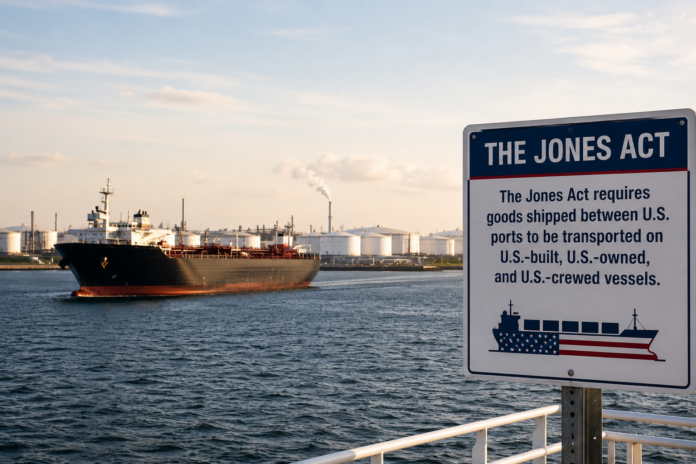
The Jones Act itself dates back to 1920 as part of the Merchant Marine Act, with roots extending to early American maritime policy from the late eighteenth century. The law requires that all cargo moving between U.S. ports must be transported on vessels built in the United States, owned by American companies, and staffed predominantly by American crews. This protectionist framework was originally designed to strengthen domestic maritime capabilities following World War I. However, the law has long been controversial, with critics arguing it increases shipping costs and limits supply flexibility during emergencies.
The current geopolitical context has brought the Jones Act debate into sharp relief. Iran’s militarization of the Strait of Hormuz in retaliation for military actions has disrupted global energy supplies and sent oil prices skyrocketing, creating both humanitarian and economic consequences. This crisis has provided the administration with clear justification for the waiver, framing it as a necessary emergency measure rather than a permanent policy change. American maritime companies have voiced opposition, contending that the waiver undermines the domestic shipping industry and fails to deliver meaningful consumer price relief. These competing interests reflect broader tensions between protectionism and market flexibility in energy policy.
- Jones Act enacted in 1920 as part of Merchant Marine Act to protect domestic shipping
- Maritime industry groups argue waiver weakens domestic shipping sector
- Middle East conflict has disrupted Strait of Hormuz shipping and global energy markets
- Waiver represents emergency measure, with administration emphasizing temporary nature of suspension
The Jones Act waiver — already the longest in the program's history — is likely to be extended again, according to Energy Secretary Chris Wright. With gas prices still above $4 a gallon nationwide, the administration is leaning on one of its few available short-term levers, even…
— FreightWaves (@FreightWaves) August 5, 2026
What Happens Next
The administration must make a formal decision regarding extension of the Jones Act waiver before August 16, when the current suspension expires. This timeline creates urgency for policymakers evaluating the waiver’s effectiveness and the broader geopolitical outlook. If recent flare-ups between the United States and Iran continue or escalate, the rationale for extension strengthens considerably. Conversely, if shipping through the Strait of Hormuz stabilizes and oil prices decline, the political imperative for maintaining the waiver diminishes.
The administration’s approach to this decision will likely set precedent for how executive authority over maritime policy is deployed during energy emergencies. An extension would signal sustained commitment to using regulatory flexibility as a tool for managing consumer energy costs. Simultaneously, the White House continues exploring additional avenues to reduce fuel prices, including direct engagement with major energy producers and ongoing monitoring of global energy markets. The intersection of these policy levers will determine the administration’s effectiveness in addressing one of the most pressing economic challenges facing American households.
- Decision required by August 16 expiration date of current waiver
- Further Iran-U.S. tensions could strengthen case for extension
- Stabilization of Middle East shipping routes could reduce urgency for continued suspension
- Administration continues evaluating additional policy tools for managing energy prices
