

Story Highlights
- President Trump announced a sweeping $22 billion overhaul of Dulles International Airport, covering more than 5 million square feet of new or renovated space.
- The aging mobile lounge shuttles, long criticized by travelers, will be replaced by a modern horseshoe rail system.
- The project will be privately financed through airline bonds, with no federal taxpayer dollars required.
- Transportation Secretary Sean Duffy indicated construction could begin as early as next spring.
What Happened
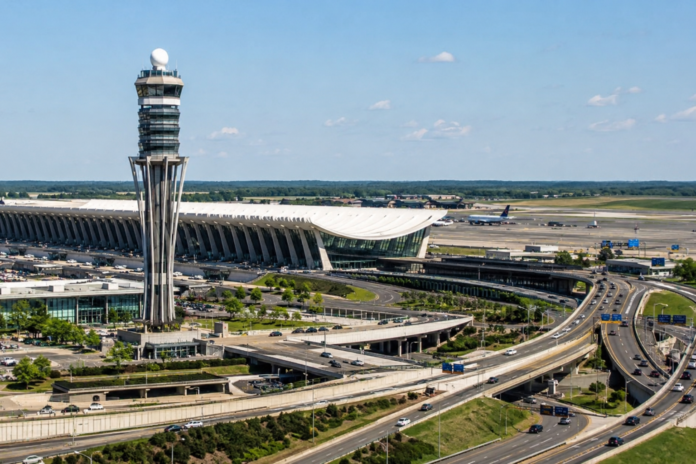
In a bold infrastructure announcement made from the Oval Office, President Trump unveiled an extensive transformation plan for Dulles International Airport in the Virginia suburbs of Washington. The proposal calls for more than 5 million square feet of new or renovated space, replacement of the C and D concourses, expansion of the main terminal, and significant upgrades to boarding areas and ticketing facilities — all while preserving the airport’s iconic original terminal building.
Transportation Secretary Sean Duffy joined the president to outline key details of the project, including the replacement of the airport’s notorious mobile lounge people movers with a faster and more efficient horseshoe rail system. Perhaps the most striking aspect of the announcement was the financing model: the entire $22 billion project would be bonded privately, with participating airlines, including United Airlines, bearing the financial responsibility rather than federal taxpayers.
- Over 5 million square feet of new or renovated airport space planned
- C and D concourses to be fully replaced; iconic original terminal preserved
- A new multistory parking structure with 32,000 spaces — potentially the largest garage in the world
- United Airlines confirmed as a participating financial partner in the project
Why It Matters
The Dulles overhaul represents one of the most ambitious airport modernization efforts in American history, and the way it is being structured says a great deal about the governing philosophy of the current administration. By keeping federal funding entirely out of the equation, the White House is demonstrating that transformational infrastructure improvements can be achieved through private-sector partnership rather than government expenditure — a model that could serve as a template for future projects nationwide.
Dulles serves millions of passengers annually as a major international gateway, and its aging facilities have drawn consistent criticism from travelers. The mobile lounges in particular have become a symbol of outdated infrastructure, described by frequent flyers as cramped, hot, and inefficient. Replacing them with a modern rail system addresses one of the most persistent complaints at the airport and signals a commitment to delivering a world-class traveler experience.
- No federal funding required — private airline bonds cover the full $22 billion cost
- Millions of annual Dulles passengers will benefit from modernized facilities
- The project sets a precedent for privately financed, large-scale airport infrastructure nationwide
- Airlines operating at Dulles will gain a competitive, updated hub capable of handling increased passenger volume
Political and Public Context
The announcement comes as the administration continues to prioritize tangible, results-driven infrastructure investment. Rather than relying on sprawling federal legislation or taxpayer-funded programs, the president has pushed for solutions that leverage private investment, competition, and efficiency. The Dulles project embodies that approach, structuring the financing so that the airlines benefiting from the improvements are the ones paying for them.
Traveler reaction at the airport itself reflected a widely shared frustration with the current state of the facilities, particularly the people movers. Frequent flyers described the vehicles as outdated, uncomfortable, and out of step with modern airport standards. The sentiment among those interviewed suggested strong public appetite for the kinds of improvements the administration is now moving to deliver. Secretary Duffy, for his part, framed the urgency of the project as a reflection of the president’s signature drive to move quickly and decisively, noting that the administration is pushing to accelerate timelines that the airline industry originally projected at up to 60 years.
- The administration’s financing model avoids federal spending while delivering major infrastructure improvements
- Traveler complaints about mobile lounges have persisted for decades, giving the project broad public appeal
- United Airlines publicly confirmed its participation, lending private-sector credibility to the plan
- The original industry timeline for such a project was estimated at 60 years — the White House is targeting completion far sooner
What Happens Next
With the announcement now public, attention turns to implementation. Permitting work remains ongoing, but officials expressed confidence that construction could begin by spring of next year. The president indicated his ambition to see the project completed within a compressed two-year window, though the Transportation Department acknowledged the transformation would likely unfold in phases over several years, and United Airlines described a decade-long modernization timeline in its own materials.
The discrepancy in projected timelines will be worth watching as planning progresses, but the administration’s track record of pushing agencies and partners to move faster than conventional expectations suggests the final timeline could be more aggressive than industry norms. The Dulles project will serve as an early test of whether the administration’s private-partnership infrastructure model can be replicated at other major American airports and transit hubs.
- Permitting process must be completed before ground can break — officials target spring construction start
- Project timeline remains a point of discussion, with the White House pushing for rapid completion
- Phases of construction will be rolled out to minimize disruption to ongoing airport operations
- Success at Dulles could accelerate similar private-financing infrastructure announcements at other U.S. airports