

Story Highlights
- President Donald Trump said he will not be rushed into accepting an Iran agreement unless it meets his standards.
- Reports indicate negotiators have discussed a framework involving the Strait of Hormuz, nuclear restrictions, and regional security terms.
- The talks remain fragile as Iran disputes parts of the U.S. position and regional tensions continue to affect negotiations.
What Happened
President Donald Trump said he will not be pressured into accepting a deal with Iran unless the agreement meets what he described as a strong standard for U.S. interests.
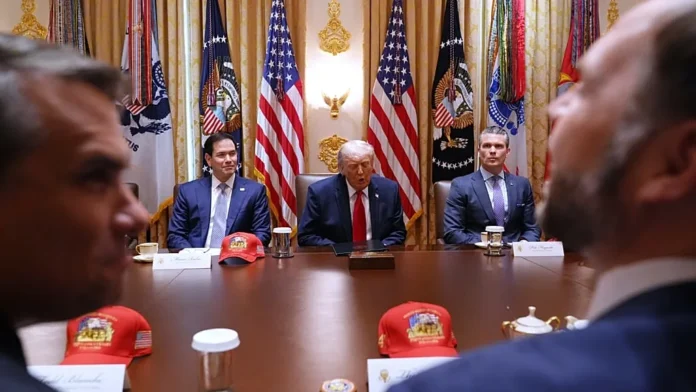
Speaking as negotiations continued, Trump indicated that his administration could make a deal quickly but would not accept terms he views as insufficient. His comments came as U.S. and Iranian officials, along with regional mediators, continued working through a possible framework tied to the Strait of Hormuz and Iran’s nuclear program.
- Trump said he wants a strong deal, not a rushed agreement.
- The proposed framework reportedly includes terms related to the Strait of Hormuz.
- Iranian officials have disputed parts of the U.S. description of the talks.
The framework reportedly under discussion could involve steps to ease restrictions around Iranian ports, reopen shipping access through the Strait of Hormuz, and begin a longer negotiation process over Iran’s nuclear activities. However, the details remain contested, and no final agreement has been announced.
Trump has made clear that any deal must address Iran’s nuclear ambitions and prevent Tehran from gaining the ability to develop a nuclear weapon. The administration has also emphasized that shipping through the Strait of Hormuz must remain open and secure.
- The nuclear issue remains one of the biggest sticking points.
- The Strait of Hormuz remains central because of its importance to global oil flows.
- Both sides appear to be using public statements to shape the negotiating environment.
Recent reporting has also pointed to conflicting signals from Tehran. Iranian-linked outlets have suggested that indirect communications with the U.S. may be paused or limited, while Trump has continued to say talks are ongoing. That uncertainty makes the status of the negotiations difficult to assess in real time.
Why It Matters
The Iran talks matter because they could determine whether the current standoff moves toward a broader diplomatic settlement or returns to a period of renewed escalation.
For Trump, refusing to rush the deal allows him to present himself as protecting American leverage. Supporters are likely to view that approach as a sign that the president is unwilling to accept weak terms simply to secure a quick announcement.
- A deal could ease tensions in the Persian Gulf.
- A failed negotiation could increase pressure on U.S. forces and allies.
- The outcome may affect fuel prices and inflation concerns for American households.
At the same time, prolonged uncertainty carries risks. The Strait of Hormuz is one of the world’s most important energy routes, and instability there can quickly affect oil prices, shipping costs, and broader economic confidence.
The talks also matter for U.S. allies in the Middle East. Israel and Gulf Arab states are watching closely to see whether any agreement limits Iran’s nuclear activity and regional influence, or whether Tehran gains room to rebuild its position.
Political and Public Context
Trump’s position fits his broader negotiating style: maintain pressure, keep final authority in his own hands, and avoid presenting compromise as weakness.
That approach may appeal to voters who support a tougher stance toward Iran. It also gives the White House room to argue that any final agreement was reached only after Iran accepted key American conditions.
- Republicans may frame Trump’s stance as strong and disciplined.
- Critics may argue that the administration is prolonging instability.
- Markets and allies are likely to focus on whether the deal produces enforceable commitments.
The political stakes are also tied to energy costs. If talks lead to a stable reopening of shipping routes, the administration could claim a major foreign-policy and economic win. If negotiations stall, critics may blame the White House for continued uncertainty.
For now, Trump appears willing to let the negotiations continue rather than accept a framework he considers incomplete.
What Happens Next
Negotiators are expected to continue working through disputes over the Strait of Hormuz, Iran’s nuclear program, sanctions, and regional security guarantees.
The next major test will be whether both sides can agree on terms that are specific enough to implement and strong enough for Trump to defend publicly.
- A final deal could be announced if Trump approves the framework.
- Talks could stall if Iran rejects U.S. nuclear or shipping demands.
- Any renewed military action could quickly raise tensions and energy prices.
Until a final decision is made, the administration is likely to continue presenting Trump as willing to negotiate, but not willing to accept a deal he views as weak.
The result is a tense waiting period, with diplomacy still alive but no guarantee that either side is ready to make the concessions needed for a lasting agreement.
