

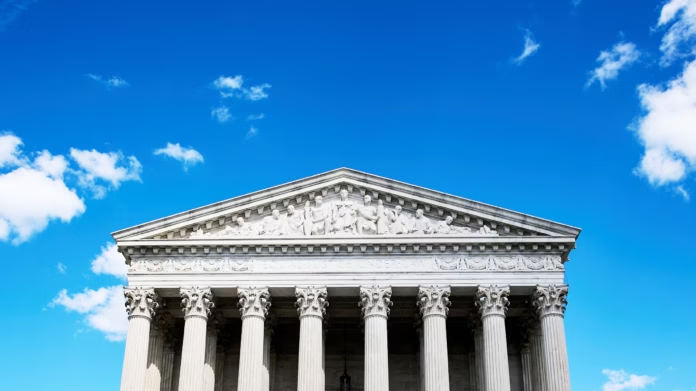
Justices Reverse Lower Court in Sweeping Victory for Trump’s Authority Over Federal Workforce. In a significant ruling supporting presidential power, the Supreme Court sided with the Trump administration’s policy restricting federal immigration judges from speaking publicly about policy matters, dealing a major blow to judicial free speech advocates.
Story Highlights
- The Supreme Court reversed a lower court decision and sided with the Trump administration on speech restrictions imposed on federal immigration judges.
- The ruling did not address the constitutional merits of the free speech restrictions themselves, instead deciding the case on procedural grounds.
- The decision comes as the Trump administration has intensified immigration enforcement, including firing immigration judges and pressuring remaining judges to increase deportations.
What Happened
The Supreme Court on Monday, May 26, 2026, dealt a setback to immigration judges challenging restrictions on their ability to speak out on public policy, siding with the Trump administration and reversing a lower-court decision that had allowed the challenge to proceed in federal court. The unsigned opinion, a procedural rather than substantive victory for the administration, returned the case to lower courts for further proceedings without ever addressing whether the speech restrictions themselves violated constitutional protections.
A group of immigration judges filed suit in 2020 over a government policy limiting their work-related public statements, claiming it violated their free speech rights, but the justices said the 4th Circuit had overstepped and essentially decided the case on grounds not raised by either of the parties. The original policy restricting immigration judges’ public commentary had been enacted during Trump’s first term and continues under current law, restricting what federal judges can say about immigration policy in public forums.
The U.S. Supreme Court sided with President Donald Trump’s administration in a dispute involving a free-speech challenge by federal immigration judges to a U.S. government policy restricting what they can publicly say about immigration, with the justices reversing a lower court’s decision and returning the case to that court for further proceedings. The Supreme Court’s reversal means the case will likely face a lengthy additional litigation process, effectively delaying any final resolution of the free speech question indefinitely.
The Trump administration had filed an emergency request asking the Supreme Court to intervene and review the case after the appeals court had revived the matter, writing that political realities called into question whether the administrative process was functioning as Congress intended. The administration’s aggressive use of the Supreme Court’s emergency docket—requesting immediate intervention rather than waiting for normal appellate review—underscores how seriously it viewed the immigration judges’ challenge to its authority.
The decision comes as the Trump administration has fired immigration judges across the country and put pressure on those remaining to deport more people, according to a recent New York Times investigation. Immigration judges who remain in their positions face unprecedented pressure to expedite deportation proceedings and comply with administration directives that critics argue undermine judicial independence.
Why It Matters
The Supreme Court’s decision, though technically procedural rather than substantive, signals the justices’ willingness to support Trump administration positions even on sensitive constitutional matters affecting federal workers’ rights. Immigration judges occupy a unique position in American government—they are executive branch employees rather than Article III judges, yet they preside over proceedings affecting millions of people’s legal status and freedom. By restricting these judges’ ability to comment on policy, the administration gains greater control over adjudication while reducing public scrutiny of immigration enforcement practices.
The broader implications involve presidential authority over the federal workforce. Trump has made restructuring federal government a priority, including efforts to reclassify career civil servants as at-will employees subject to dismissal without cause. The Supreme Court’s deference to the administration’s restrictions on federal workers’ speech provides legal support for expanded presidential control over the executive branch, shifting the traditional balance between executive prerogative and civil service protections established throughout the twentieth century.
For immigration policy specifically, the decision removes one avenue through which federal judges could inform public debate about enforcement practices. Immigration judges now face professional consequences if they speak publicly about concerns regarding due process, caseloads, or policy effectiveness. This silence insulates the administration’s immigration enforcement from expert criticism that might otherwise reach Congress and the public through judges’ testimony or commentary.
Economic and Global Context
The immigration enforcement intensification that the Supreme Court’s decision facilitates has economic ripples throughout the American labor market. Deportations remove both documented and undocumented workers from workplaces, affecting industries including agriculture, construction, hospitality, and healthcare that depend on immigrant labor. Regional economies with significant immigrant populations face labor shortages in specific sectors, potentially constraining economic growth in ways that might not be immediately apparent in national statistics.
Globally, the Trump administration’s hardline immigration stance affects America’s relationships with neighboring countries and allies. Mexico and Central American nations have lodged diplomatic protests regarding deportation practices and family separations. Canada, already at trade odds with the Trump administration, has expressed strong concern about the treatment of Canadian citizens in U.S. immigration custody. A Canadian citizen died in Immigration and Customs Enforcement (ICE) custody, prompting demands for transparency from Canadian officials.
The administration’s immigration policies also reflect underlying economic anxieties about labor competition and wage pressure. While economists generally find immigration contributes positively to long-term growth through labor force expansion and entrepreneurship, many American workers in lower-wage sectors perceive immigration as wage depressant. The Trump administration has leveraged these concerns into justifications for its enforcement intensification, framing immigration restriction as pro-worker policy even when evidence on employment effects remains mixed.
Implications
The Supreme Court’s decision essentially clears legal obstacles to the Trump administration’s unprecedented pressure on immigration judges to accelerate deportations. With speech restrictions intact and lower courts returning to square one, immigration judges face years of additional litigation while operating under administration pressure. This creates a chilling effect wherein judges self-censor to avoid professional consequences, accelerating deportations without public discussion or expert testimony about whether accelerated procedures adequately protect due process rights.
For immigration advocacy organizations and civil rights groups, the decision removes a potential constraint on administration enforcement and suggests the Supreme Court will defer to executive branch prerogatives even on civil liberties questions. These groups will likely redirect resources toward Congress and state-level protections rather than continued federal court litigation.
Immigration judges remaining in federal service face continued professional pressure to increase deportation rates. Some may resign in protest or frustration, further depleting the judicial workforce and potentially leading to increased adjournment of cases—the opposite of the administration’s efficiency goals. Others will comply with administration directives, raising questions about whether impartial judging remains possible under these conditions.
For asylum seekers and immigrants facing removal proceedings, the decision signals that the judicial system has become less protective of their rights. Advocates will likely increase emphasis on international forums and foreign governments applying diplomatic pressure on the U.S., though these avenues offer limited practical protection for individuals facing imminent deportation.
Source
Supreme Court Sides With Trump in Fight Tied to Speech Curbs on Immigration Judges