

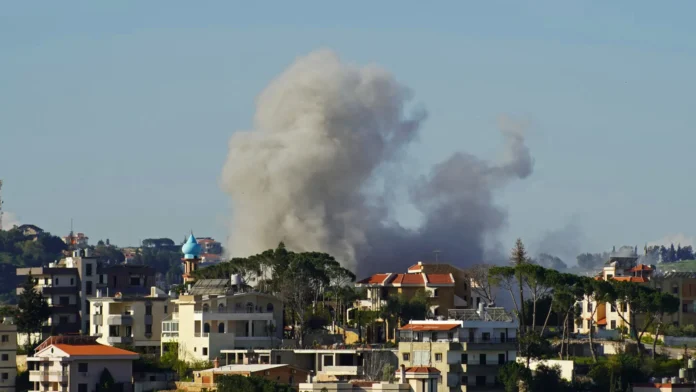
Military Operations Intensify in Lebanon Even as Trump Administration Seeks Comprehensive Middle East Peace Settlement. As the Trump administration races to finalize an Iran nuclear agreement, Israel is dramatically expanding military operations against Hezbollah in Lebanon, creating complications for a diplomatic settlement that the U.S. administration hopes to present as a comprehensive regional victory.
Story Highlights
- Israeli forces are conducting daily air strikes in Lebanon in direct response to what Israel claims are Hezbollah violations of the Washington-brokered ceasefire agreement.
- The escalating Lebanon operations complicate Trump’s efforts to present an Iran peace deal as a definitive regional achievement before midterm elections.
- International observers worry the separate conflict could undermine the broader Iran ceasefire framework if Israel-Hezbollah tensions trigger renewed American military involvement.
What Happened
As Iran and the U.S. appear near a deal, Israel is ramping up its war in Lebanon, with rescue workers removing bodies from rubble of residential buildings hit by Israeli strikes near the southern town of Burj al-Shamali, on the outskirts of Tyre, on May 27, 2026. The simultaneous escalation of military operations in Lebanon while Washington negotiates with Tehran creates a complex strategic situation requiring careful management to avoid triggering broader regional conflict.
In light of the terrorist Hezbollah’s violation of the ceasefire agreement, the Israel Defense Forces are forced to act against it with force, according to IDF spokesman Avichay Adraee, who repeats language he has used in daily evacuation orders for Lebanese towns and villages. The IDF has been conducting nearly daily air strikes since the Israel-Hezbollah ceasefire took effect in November 2024, though the current intensity appears elevated as Israel claims Hezbollah has violated ceasefire terms.
Since the Israel-Hezbollah ceasefire in Lebanon last November, Israel has still conducted almost daily air strikes in Lebanon, claiming it’s acting in response to Hezbollah violations or threats not addressed by the Lebanese government, while Lebanese officials have rejected those claims and condemned Israel for violating the ceasefire and its sovereignty. The disagreement over ceasefire compliance remains fundamentally unresolved despite months of supposed truce, with each side accusing the other of bad faith violations.
Israel continues to occupy Lebanese land by maintaining its presence in five military outposts in southern Lebanon, saying it will remain in these outposts as long as Hezbollah remains a threat. This ongoing occupation directly contradicts ceasefire agreements that contemplated Israeli withdrawal and Lebanese government reassertion of control over border regions. The presence of Israeli troops in Lebanese territory provides constant flashpoint for potential escalation and limits the Lebanese government’s ability to demonstrate sovereignty restoration.
The Lebanese cabinet decision two weeks ago ordered the military to prepare a plan for disarming all non-state armed groups to give the state a monopoly over weapons, made under pressure from the Trump administration, which has demanded Hezbollah be disarmed by the end of 2025. The Lebanese government’s unprecedented commitment to disarming Hezbollah represents a dramatic shift that requires international support and security guarantees to credibly implement against a powerful armed movement with decades of entrenchment.
Why It Matters
The Lebanon escalation occurs at precisely the moment the Trump administration hopes to lock in an Iran agreement, creating competing narratives about American success in the Middle East. If the Iran peace deal holds while Lebanon spirals into renewed conflict, critics can argue the administration achieved only partial success—freezing one conflict while allowing another to worsen. Conversely, successful coordination of both Iran negotiations and Lebanese stability would represent a genuine diplomatic breakthrough validating Trump’s Middle East strategy.
For the midterm election campaign, the Lebanon situation complicates Trump’s messaging. His administration has emphasized de-escalation and preventing entanglement in endless Middle Eastern conflicts, yet continued Israeli military operations suggest the region remains unstable and dangerous. Republican candidates will want to emphasize Trump’s strength and leadership, but ongoing military operations in a war Trump inherited from the Biden administration complicate that narrative.
For Lebanese civilians, the escalating Israeli strikes have devastating humanitarian consequences. The latest conflict has killed approximately 2,300 people in Lebanon and displaced over 1 million, creating one of the region’s worst humanitarian crises. Continued strikes destroy civilian infrastructure, displace additional populations, and make reconstruction impossible while warfare continues. The Lebanese government faces pressure from both Israel and the Trump administration while lacking resources or security capacity to implement disarmament demands against Hezbollah.
Economic and Global Context
The Lebanon conflict disrupts not only bilateral U.S.-Israeli relations but also affects broader Middle Eastern economic activity. Lebanese reconstruction efforts stall while fighting continues, infrastructure damage accumulates, and international investment avoids a region perceived as unstable. Regional trade corridors face disruption, particularly if any escalation spreads to involve additional actors or affects maritime shipping.
Israeli military operations in Lebanon also consume substantial defense resources and generate international criticism that strains Israel’s diplomatic relationships, particularly with European allies increasingly skeptical of expanded military operations. After a Cabinet meeting regarding Lebanon, Lebanese officials said the government is working on a report documenting alleged war crimes by Israel and that ministers had discussed joining the International Criminal Court. This threat to pursue international legal mechanisms represents an escalatory move that could further isolate Israel diplomatically even as the U.S. provides military support.
The American military commitment to supporting Israeli operations also carries fiscal implications. Weapons systems, ammunition, and intelligence support provided to Israel increase American defense expenditures at a moment when the Trump administration faces budget pressures and significant domestic spending demands. The precise cost of American military support to Israel remains classified, but estimates suggest billions of dollars in weapons transfers and operational support annually.
Implications
The continuation of Israel-Hezbollah conflict alongside Iran negotiations creates instability that could metastasize into broader regional war if any of several flashpoint scenarios occur. If Hezbollah perceives Lebanese government disarmament efforts as existential threats, it could escalate operations. If the Iranian government interprets Israeli actions in Lebanon as violations of a broader ceasefire spirit, it could resume attacks. Managing these separate conflicts simultaneously requires sophisticated diplomacy that could exceed the Trump administration’s capacity.
For Israel strategically, the continued military pressure on Hezbollah serves legitimate security objectives—degrading capabilities, preventing rearmament, and deterring attacks across the Lebanese border. However, ongoing operations indefinitely strain Israeli domestic politics and international relationships while failing to achieve permanent resolution of Hezbollah threat. Some Israeli strategists worry that protracted conflict hardens Hezbollah’s determination while international pressure increasingly constrains Israeli military options.
For Lebanon’s government, the impossible task of disarming Hezbollah without Israeli military pressure or international security guarantees likely proves unachievable. Lebanese officials increasingly recognize they need either substantial international intervention or ceasefire restoration as preconditions for any disarmament effort. The Trump administration’s demand for Hezbollah disarmament without providing security guarantees that would make such disarmament politically tenable suggests unrealistic expectations that could doom diplomatic efforts.
For the broader Iranian negotiating position, Israeli escalation in Lebanon provides negotiating leverage. Iran can frame Israeli actions as violations of the ceasefire spirit and demand explicit protections for Lebanese operations before finalizing broader agreements. This creates opportunities for Iranian negotiators to extract additional concessions, complicating Trump’s ability to claim a decisive diplomatic victory.
Source
Lebanon ‘separate skirmish’ and not part of Iran ceasefire deal
