

Story Highlights
- Trump returned from Beijing after a summit with Xi Jinping that generated few tangible trade deals or policy breakthroughs
- Trump is unveiling his latest effort to bring down healthcare costs, including expansion of the TrumpRx prescription drug platform.
- Trump’s recent polling shows his overall approval at 37 percent, a new second-term low, with nearly two-thirds of voters disapproving of his handling of the economy.
What Happened
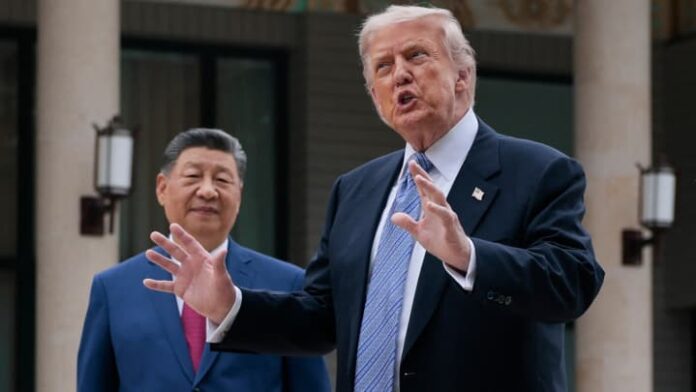
President Trump received a lavish welcome in Tiananmen Square as the superpower summit began, with Secretary of State Marco Rubio telling NBC News that key topics included Iran, Taiwan and trade deals. The meetings between Trump and Xi included discussions of various geopolitical issues, though neither side announced significant breakthroughs. Trump said he and Xi settled “a lot of different problems” that others would have struggled to resolve, and he lavished praise on the U.S.-China relationship.
The lack of concrete outcomes from the Beijing visit stands in contrast to the administration’s initial expectations. While discussions occurred on multiple fronts, particularly regarding Iran and Taiwan, the summit failed to produce the major trade agreements that had been anticipated by some observers. Trump stated he and Xi discussed Iran, saying he and Xi share similar feelings about how they wish for the conflict to end.
Following his return to Washington, Trump has launched what appears to be a strategic pivot toward domestic messaging ahead of the crucial 2026 elections. Trump on Monday afternoon unveiled his latest effort to bring down healthcare costs, while Defense Secretary Pete Hegseth travels to a campaign event in Kentucky and Vice President JD Vance attends a manufacturing-focused event in Missouri. The shift in focus reflects growing concerns within the administration about public perception of economic management.
Why It Matters
The Biden administration had seen approval ratings battered by economic anxieties, particularly around inflation and healthcare costs. Trump “recently had the lowest numbers on the economy he’s had in either term,” according to Quinnipiac University polling analyst Tim Malloy, who noted that “Put that on top of gas prices, you’re looking at big red flags.” By pivoting to healthcare initiatives and campaign-style events, Trump is attempting to rebuild confidence in his economic stewardship.
The apparent failure of the China summit to produce major trade wins undercuts one of Trump’s key campaign messages about his ability to negotiate superior deals on behalf of America. Supporters of Trump’s approach to international trade have long argued that his hardline tactics would force concessions from rivals. The absence of dramatic outcomes from the Beijing meeting may embolden critics who argue that the administration’s trade policies have not delivered promised benefits.
Healthcare affordability emerges as a critical political issue. A New York Times/Siena College poll published Monday found Trump’s overall approval scraping 37 percent, a new second-term low, as nearly two-thirds of voters said they disapproved of his handling of the economy. The administration’s decision to highlight healthcare initiatives represents an acknowledgment that economic performance is driving public dissatisfaction.
Economic and Global Context
The timing of Trump’s pivot to domestic messaging reflects macroeconomic realities facing American families. Gas prices and healthcare costs have dominated household budgets, particularly for middle-class and lower-income Americans who form Trump’s base. The prescription drug cost issue has become increasingly salient, with Americans paying significantly more for medications compared to citizens in other developed nations.
The president is expected to announce an expansion of the number of discounted prescription drugs offered through the administration’s TrumpRx website. This direct-to-consumer approach seeks to bypass traditional pharmacy benefit managers, though questions remain about how broadly this program will impact medication costs for typical Americans with insurance coverage.
The China summit’s limited outcomes come amid broader trade tensions that have characterized the second Trump administration. While the administration has pursued various trade initiatives and negotiations, results have been mixed. The pivot to domestic messaging suggests that the White House recognizes the political necessity of demonstrating progress on issues that directly affect American households.
Implications
For voters, the shift toward domestic economic messaging signals that healthcare and affordability will dominate campaign rhetoric heading into the midterms. Democrats will likely argue that Trump’s policies have failed to address costs adequately, while the administration will tout initiatives like TrumpRx as proof of progress. The stakes are particularly high given that Defense Secretary Pete Hegseth travels to a campaign event in Kentucky and Vice President JD Vance attends a manufacturing-focused event in Missouri, indicating that both economic and military leadership will be mobilized for campaign purposes.
For policymakers, the Beijing summit’s limited breakthroughs suggest that major trade realignments may not be imminent. Congress will continue evaluating the administration’s approach to China while managing constituent concerns about economic growth and job creation. The midterms will partly be decided based on whether voters perceive tangible improvements in their own economic conditions.
The business community will be watching closely to see whether the administration’s healthcare initiatives actually reduce costs, or whether they merely shuffle existing costs between consumers and providers. Major pharmaceutical manufacturers, pharmacy benefit managers, and insurance companies face potential disruption if the TrumpRx expansion truly bypasses traditional intermediaries.
Sources
