

Story Highlights
- Trump called Iran’s latest 14-point proposal “totally unacceptable,” citing the failure to address nuclear enrichment in the initial phase of any deal.
- Iran’s plan proposes ending hostilities and lifting the Strait of Hormuz blockade first, with nuclear talks deferred to a later stage.
- Congressional lawmakers from both parties are pressing Trump to reject any deal that allows Iran to continue uranium enrichment.
What Happened
Iran submitted a 14-point peace proposal to the United States, and a senior Iranian official confirmed that Tehran envisions ending the war and resolving the shipping standoff first, while leaving talks on Iran’s nuclear program for later. The phased approach represents Iran’s attempt to separate the immediate military conflict from the longer-term question of its nuclear capabilities — a sequencing the Trump administration has firmly resisted.
President Donald Trump grew increasingly frustrated with the Iranian response, and several aides said he was more seriously considering a resumption of major combat operations than at any point in recent weeks. Trump described Iran’s proposal as both “totally unacceptable” and “stupid,” and officials questioned whether Tehran was willing to adopt a serious negotiating position.
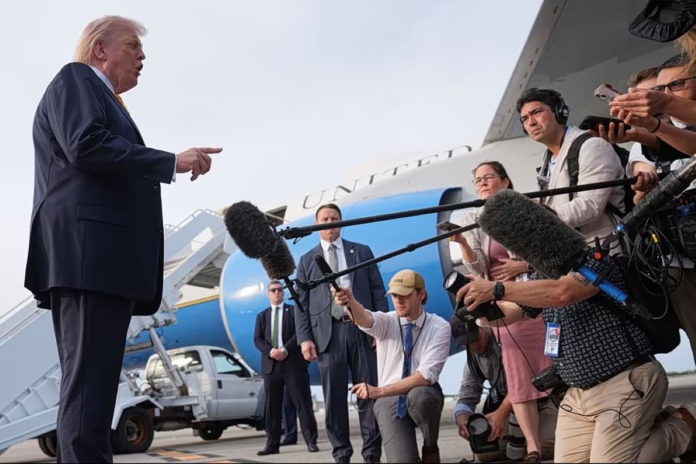
Though Trump initially said on Friday he was not satisfied with the proposal, he said on Saturday he was still reviewing it. Asked whether he might restart strikes on Iran, Trump told reporters he could not say, but added: “If they misbehave, if they do something bad, right now we’ll see. But it’s a possibility.”
The White House had previously believed it was closing in on a one-page memorandum of understanding with Iran, being negotiated through envoys Steve Witkoff and Jared Kushner along with Iranian officials, both directly and through mediators. The MOU would have declared an end to the war and initiated a 30-day negotiating period to open the Strait of Hormuz, limit Iran’s nuclear program, and lift U.S. sanctions.
On May 12, the United States imposed new sanctions targeting Iranian nuclear research with possible military applications, followed days later by sanctions on individuals and entities in China and Iran connected to Iran’s ballistic missile program. Separately, 52 senators and 177 members of Congress wrote a letter to Trump urging him to reject any deal that would allow Iran to continue uranium enrichment.
Why It Matters
The U.S.-Iran standoff is the most consequential foreign policy crisis of Trump’s second term. Iran has been blocking nearly all Gulf shipping for months, and the U.S. has imposed a counter-blockade on ships from Iranian ports. The Strait of Hormuz, through which roughly 20 percent of global oil supplies transit, remains a choke point whose prolonged closure carries enormous economic consequences for the United States and its allies.
The negotiations deadlock stems from differing priorities, with Trump seeking a rapid, clear-cut agreement that includes immediate concessions on Iran’s nuclear program, while Tehran is determined to delay those demands and extract its own concessions — including sanctions relief and end of hostilities — before discussing nuclear issues.
The congressional letter urging Trump to reject a deal permitting continued enrichment signals that the administration faces pressure from both parties to hold a maximalist position on nuclear terms. That pressure narrows Trump’s negotiating flexibility and may make a compromise framework — which any realistic deal would require — politically difficult to sell on Capitol Hill even if the two governments reach a preliminary understanding.
A return to large-scale military operations would carry severe geopolitical and economic risks. Regional allies, particularly Gulf Arab states, have economic exposure to any escalation affecting oil infrastructure. European governments, which have backed the U.S.-led pressure campaign, are simultaneously concerned that prolonged military conflict would drive energy prices higher and deepen inflationary pressures their own economies are still managing.
Economic and Global Context
Talks between the U.S. and Iran are being mediated by Pakistan, and issues under discussion include freedom of navigation through the Strait of Hormuz, Iran’s nuclear and ballistic missile program, reconstruction costs, sanctions relief, and a framework for a long-term peace agreement.
The duration of any uranium enrichment moratorium has emerged as a central sticking point. The duration of the moratorium is being actively negotiated, with sources saying it would be at least 12 years, with one putting 15 years as a likely landing spot. Iran has historically resisted time-limited commitments on enrichment, and its domestic political dynamics make agreeing to a multi-decade pause extraordinarily difficult for its leadership to justify publicly.
Oil markets have been volatile throughout the conflict. Prolonged closure of the Strait of Hormuz has intermittently driven Brent crude prices sharply higher, contributing to elevated gasoline prices in the United States. The U.S. energy sector has increased domestic production to offset some of the supply disruption, but American consumers have still felt the impact at the pump — a dynamic that feeds directly into Trump’s approval rating challenges heading into the midterms.
Implications
If negotiations collapse entirely, the United States faces a choice between resuming large-scale military strikes — which senior officials acknowledge have already severely damaged Iran’s military infrastructure — and accepting a prolonged stalemate in which the Strait of Hormuz remains partially disrupted and Iran retains its nuclear program. Neither option is attractive domestically or internationally.
A diplomatic resolution, even an imperfect one, would provide significant political benefits for Trump ahead of November. A ceasefire deal that opens Gulf shipping, even if nuclear talks are deferred, would likely generate a short-term approval bounce and allow the White House to claim a foreign policy victory.
Former State Department negotiator Alan Eyre told CNN that it is now “much tougher” to get a deal with Iran than it was during the 2015 nuclear accord negotiations, noting Iran’s “more hard-line and radical leadership” and a broader set of unresolved issues between the two countries.
For the broader Middle East, the outcome of U.S.-Iran negotiations will shape regional security architecture for years. Gulf Arab states, Israel, and European powers are all stakeholders in whatever framework eventually emerges. The coming weeks, as both sides assess their negotiating positions following the exchange of written proposals, will determine whether diplomacy remains viable or whether the conflict enters a new and more dangerous phase.
Sources
“Exclusive: U.S. and Iran closing in on one-page memo to end war, officials say”
