
Story Highlights
- Iran’s Revolutionary Guards said they killed members of the Democratic Party of Iranian Kurdistan near Piranshahr.
- Kurdish sources described the clash as an ambush during a wider surge of unrest in Iran’s Kurdish-majority west.
- Trump officials are using Iran’s internal crackdown and regional instability to increase pressure on Tehran during paused nuclear talks.
What Happened
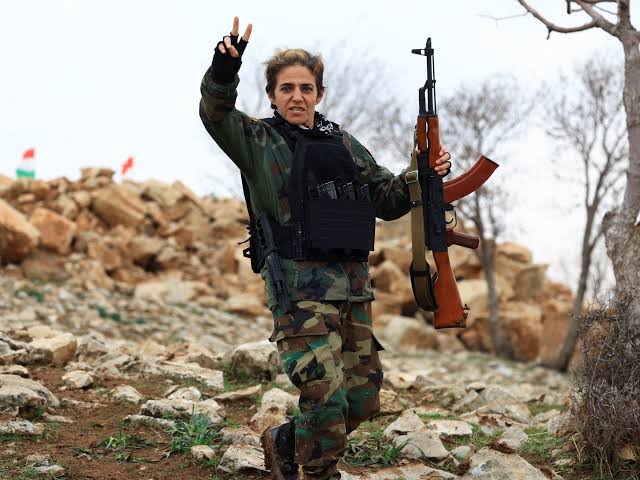
Iran’s Islamic Revolutionary Guard Corps said it killed members of the Democratic Party of Iranian Kurdistan in a clash near Piranshahr, a Kurdish-majority area in northwestern Iran.
The Kurdish opposition group disputed parts of Tehran’s account and said several of its fighters were killed in an ambush by Iranian forces.
The confrontation comes during a tense period for Iran, with the government trying to project strength after months of war, sanctions pressure, internal unrest, and leadership uncertainty.
- The clash took place near Piranshahr in West Azerbaijan province.
- The area has long been a center of Kurdish opposition activity.
- Reports also point to broader unrest involving Kurdish factions and Iranian security forces.
The timing is sensitive because Iran is also holding funeral events for Ayatollah Ali Khamenei while indirect U.S.-Iran talks remain paused.
Trump officials have been sharpening their public posture toward Tehran, pointing to Iran’s treatment of protesters, opposition groups, and minority communities as evidence that the regime remains unstable and dangerous.
Why It Matters
The Kurdish clashes matter because they expose another pressure point inside Iran at a moment when the Trump administration is trying to hold Tehran to a fragile diplomatic framework.
Iran’s Kurdish regions have long been politically sensitive, with armed opposition groups, cross-border ties to Iraqi Kurdistan, and deep grievances over repression and economic neglect.
For Washington, unrest in those areas creates both opportunity and risk.
- It gives Trump officials another way to pressure Iran over human rights and internal repression.
- It could complicate nuclear and sanctions negotiations if Tehran accuses Washington of backing separatist unrest.
- It raises concerns about spillover into Iraqi Kurdistan, where the U.S. has longstanding regional interests.
The Trump administration has signaled a hard line toward Tehran while avoiding an open commitment to Kurdish armed groups inside Iran.
That posture allows Washington to criticize Iran’s crackdown without fully tying U.S. policy to an unpredictable insurgent or opposition movement.
Political and Public Context
Trump’s Iran strategy has combined military pressure, sanctions leverage, and diplomacy.
The administration wants Iran to keep its nuclear commitments, maintain freedom of navigation through the Strait of Hormuz, and avoid renewed attacks during the funeral period.
At the same time, U.S. officials are spotlighting Tehran’s executions, crackdowns, and treatment of protesters as part of a broader campaign to isolate the regime.
- Iran sees Kurdish opposition activity as a national security threat.
- Kurdish groups describe their struggle as resistance against repression.
- Washington is using the unrest to underscore Iran’s internal weakness.
The issue is politically delicate because the United States has a complicated history with Kurdish groups across the region.
Trump officials may want to pressure Tehran, but they also have to avoid triggering a wider regional conflict or giving Iran a pretext to walk away from talks.
What Happens Next
Iran is likely to intensify security operations in Kurdish-majority areas if clashes continue.
Kurdish opposition groups may try to use the current moment to draw more international attention to arrests, executions, and military operations by Iranian forces.
The Trump administration is likely to keep condemning Tehran’s repression while preserving flexibility in nuclear and sanctions talks.
If the unrest grows, Iran may accuse foreign governments of interference and use that claim to justify additional crackdowns.
For Trump, the challenge is to maintain pressure on Tehran without allowing Kurdish unrest, Hormuz tensions, or funeral-period threats to collapse the fragile diplomatic track.
Sources
- Tehran warns of ‘harsh retaliation’ against US before Khamenei funeral as Waltz blasts late leader
- Six Kurdish fighters killed in IRGC ambush as clashes spread across western Iran
- Iran’s Revolutionary Guards say they killed Kurdish militants in northwest Iran
- Several Dead in IRGC-Kurdish Faction Battles in Piranshahr
- Ten Kurdish fighters killed in clashes with IRGC