

Story Highlights
- Republican strategist criticizes Trump for not allocating funds to GOP candidates.
- Trump’s focus on personal branding may resonate with his base.
- The upcoming RNC convention could shift strategies for the midterms.
- Concerns grow over GOP’s chances in the upcoming elections.
What Happened
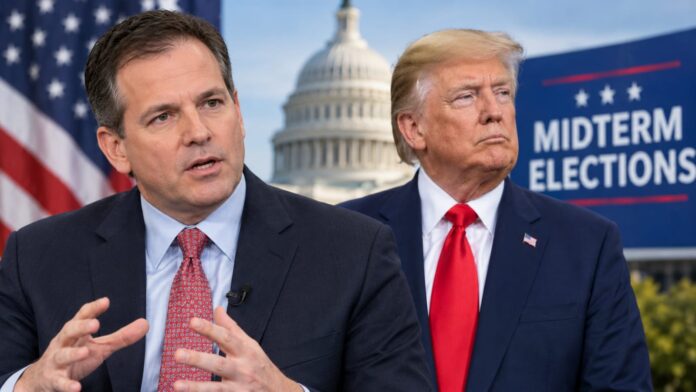
In a recent turn of events, Republican strategist Doug Heye publicly criticized President Trump for his funding choices as the GOP gears up for the crucial midterm elections. Heye, who previously served as the communications director for the Republican National Committee (RNC), expressed concerns that the party’s prospects are looking increasingly bleak due to a lack of financial support for various GOP campaigns. His remarks came during an interview with CNN, where he emphasized that the president’s focus seems to be more on his personal brand rather than on bolstering the party’s candidates.
Heye’s comments reflect a growing unease within the Republican ranks as they prepare for the upcoming elections. The president has reportedly chosen to prioritize funding for television commercials that enhance his own image through his super PAC, MAGA Inc., rather than directing those funds to support fellow Republicans. This decision has raised eyebrows among party leaders who are concerned about the implications for their electoral chances.
- Doug Heye criticized Trump for not directing funds to GOP campaigns.
- Trump’s super PAC, MAGA Inc., is focusing on personal branding.
- The RNC’s midterm convention is set to take place in Dallas this week.
- Concerns about the GOP’s chances in the House and Senate are mounting.
Why It Matters
The implications of Trump’s funding choices are significant for the Republican Party as they navigate the complexities of the midterm elections. With the stakes higher than ever, the party’s ability to maintain control of Congress is in jeopardy. Heye’s assertion that the GOP’s prospects are ‘bleak’ underscores the urgency of the situation. The president’s decision to focus on his own image rather than supporting candidates could alienate potential voters who are looking for a unified front from the party.
Moreover, Trump’s approval ratings have taken a hit, with a recent Reuters/Ipsos survey indicating that only 33 percent of respondents approve of his performance. This decline in support could further complicate the GOP’s efforts to rally voters ahead of the elections. The president’s messaging, which claims that the party is ‘hotter and richer’ than ever, may not resonate with voters who are feeling the economic pinch and uncertainty.
- Trump’s funding choices could alienate GOP candidates and their supporters.
- Declining approval ratings may hinder the party’s ability to mobilize voters.
- Voter sentiment may not align with Trump’s optimistic messaging.
- The GOP’s chances of retaining control of Congress are at risk.
Political and Public Context
Understanding the context surrounding Trump’s funding decisions is crucial to grasping the broader implications for the Republican Party. The upcoming RNC convention in Dallas is poised to be a pivotal moment for the party as it seeks to energize its base and strategize for the midterms. This two-day event will feature key Republican leaders, including the president, who will address the challenges ahead and attempt to unify the party.
Additionally, the political landscape has shifted dramatically since the last election cycle. Redistricting efforts by both Democrats and Republicans have altered the electoral map, making it more challenging for the GOP to secure the necessary seats to regain control. Decision Desk HQ (DDHQ) has forecasted that Democrats have a 68 percent chance of retaking the House, while the Senate remains a toss-up with a 50/50 split in probabilities. These developments highlight the urgency for the GOP to adapt its strategies and funding allocations to remain competitive.
- The RNC convention in Dallas aims to unify the party ahead of elections.
- Redistricting has changed the electoral landscape significantly.
- DDHQ forecasts a 68 percent chance for Democrats to retake the House.
- The Senate remains a competitive battleground with equal chances for both parties.
What Happens Next
As the Republican Party prepares for the upcoming elections, several key questions remain regarding Trump’s funding strategies and their impact on the party’s overall success. The RNC convention will serve as a critical platform for party leaders to address these concerns and potentially recalibrate their approach. It remains to be seen whether the president will shift his focus from personal branding to supporting GOP candidates in a more substantial way.
Furthermore, the party must grapple with the reality of its current standing in the polls and the sentiments of its voter base. Will Trump adapt his messaging to resonate more with the concerns of everyday Americans? How will the party respond to the challenges posed by the Democrats’ fundraising efforts and campaign strategies? The answers to these questions will be pivotal in determining the GOP’s fate in the upcoming elections.
- The RNC convention may lead to a shift in funding strategies.
- Trump’s messaging could evolve to better connect with voters.
- The GOP must address the challenges posed by Democratic campaigns.
- Future polling will be crucial in assessing the party’s standing.
