

Story Highlights
- President Trump announced that the U.S. will grant Ukraine a license to produce Patriot air-defense interceptors.
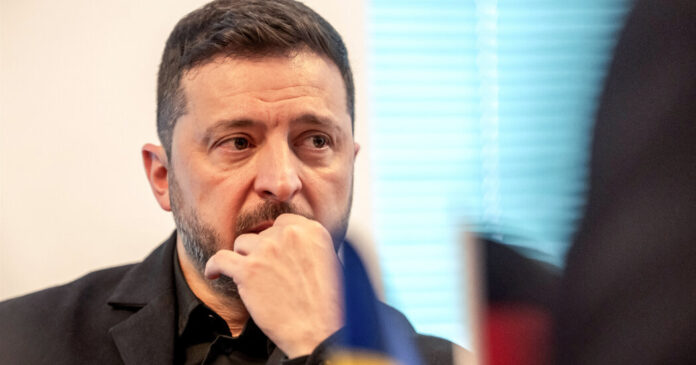
- The move came during a warmer meeting with Ukrainian President Volodymyr Zelenskyy at the NATO summit in Ankara.
- Experts caution that Ukrainian-made Patriot missiles may still be many months away from production.
What Happened
President Donald Trump announced at the NATO summit in Ankara that the United States will allow Ukraine to manufacture its own Patriot air-defense interceptors.
Standing alongside Ukrainian President Volodymyr Zelenskyy, Trump said Washington would give Kyiv the right to make Patriots and teach Ukrainian officials how to produce them.
“We’re going to give a license to you to make Patriots,” Trump said, adding that the system is a defensive weapon and that he prefers defensive tools over offensive weapons.
- Ukraine has long sought permission to produce Patriot interceptors domestically.
- Trump said the U.S. will provide the license and technical support.
- The announcement followed months of lobbying by Zelenskyy.
The decision comes as Ukraine faces a serious shortage of Patriot interceptors needed to stop Russian ballistic missile attacks.
Russia launched another major attack on Kyiv the same night as the announcement. Ukrainian forces intercepted 139 of 169 drones, but failed to stop any of the five ballistic missiles fired at the capital, according to Ukrainian air force data cited in the article.
Trump also said U.S. companies are already building four production plants to increase interceptor output, though he acknowledged that Lockheed Martin and RTX had not yet been formally informed of the licensing decision.
Why It Matters
The announcement matters because it could give Ukraine a more self-sufficient path to defending its skies.
For Trump and his supporters, the move fits a practical America First model: help Ukraine defend itself, but reduce long-term dependence on direct U.S. weapons shipments.
Instead of only sending American stockpiles overseas, Trump is pushing a licensing and production approach that could eventually let Ukraine carry more of the burden itself.
- Supporters say the plan strengthens Ukraine while limiting endless U.S. resupply pressure.
- Patriot systems are critical for stopping Russian ballistic missiles.
- The decision may improve Trump’s working relationship with Zelenskyy.
The policy shift also marks a notable change in tone between Trump and Zelenskyy. Their relationship has often been tense, especially after earlier disputes over aid levels and peace negotiations.
At the summit, however, the two leaders appeared more aligned. Trump’s announcement gives Zelenskyy a concrete win while allowing Trump to argue that he is helping Ukraine in a more sustainable way.
Political and Public Context
The Patriot license comes at a sensitive moment in the Russia-Ukraine war.
Ukraine’s air defenses are under growing pressure as Moscow increases missile and drone attacks against Kyiv and other cities. Patriots remain one of the few systems capable of intercepting Russian ballistic missiles, making interceptor shortages a central battlefield problem.
Trump has previously criticized open-ended U.S. spending on Ukraine and pushed for a negotiated end to the war. This move lets him support Ukraine’s defense while still shifting toward burden-sharing and production responsibility.
For NATO allies, the announcement adds momentum to efforts to expand defense manufacturing across Europe and reduce reliance on limited U.S. stockpiles.
For Russia, the decision is likely to be seen as a serious escalation because it could eventually strengthen Ukraine’s long-term air-defense capacity.
Economic and Global Context
The biggest challenge is production capacity.
Patriot interceptors are complex, expensive, and slow to manufacture. Defense industry analysis cited in the article says each PAC-3 MSE interceptor can involve a production lead time of roughly 24 months, with solid rocket motors taking even longer because of specialized processes and supplier requirements.
Lockheed Martin currently produces roughly 650 PAC-3 MSE interceptors annually, though production is expected to expand in the coming years.
- Ukraine will need secure facilities, trained workers, and specialized components.
- U.S. contractors will need to review technology-transfer and security rules.
- Existing global demand for Patriots is already straining supply chains.
The Iran conflict has added even more pressure. Trump said Gulf states have fired more than 1,100 Patriot interceptors in recent months, depleting a major share of global stockpiles.
That creates difficult choices for the Pentagon as it balances Ukraine, Gulf security, NATO needs, and U.S. domestic defense readiness.
What Happens Next
The next step is turning Trump’s public announcement into a formal agreement with defense manufacturers and Ukrainian officials.
Lockheed Martin, RTX, the Pentagon, and Ukrainian defense authorities will need to work through licensing terms, technology transfer, production security, and supply-chain requirements.
- Formal talks with Lockheed Martin and RTX are expected in the coming weeks.
- Ukraine will still need existing U.S. and European supplies while production is developed.
- Congress may seek oversight of technology transfer and defense export controls.
Even with Trump’s approval, Ukrainian-made Patriot interceptors are unlikely to appear immediately. Experts cited in the article say production could take many months, and possibly longer.
For Ukraine, the announcement is still a major diplomatic and strategic boost.
For Trump, it creates a new model for Ukraine support: help Kyiv defend itself, pressure allies and contractors to increase production, and reduce long-term dependence on direct American weapons transfers.
