

Story Highlights
- President Trump emphasized substantial energy sector gains during a Georgia campaign rally, noting the U.S. oil and gas industry generates hundreds of billions in revenue
- Democratic strategist David Axelrod and California Governor Gavin Newsom criticized the president’s remarks as insensitive to consumers facing elevated fuel costs
- National average gas prices stood at $4.29 per gallon, up significantly from $3.06 a year earlier, amid ongoing Middle East tensions
- The president attributed temporary price elevation to regional conflict and predicted dramatic declines once the situation stabilizes
What Happened
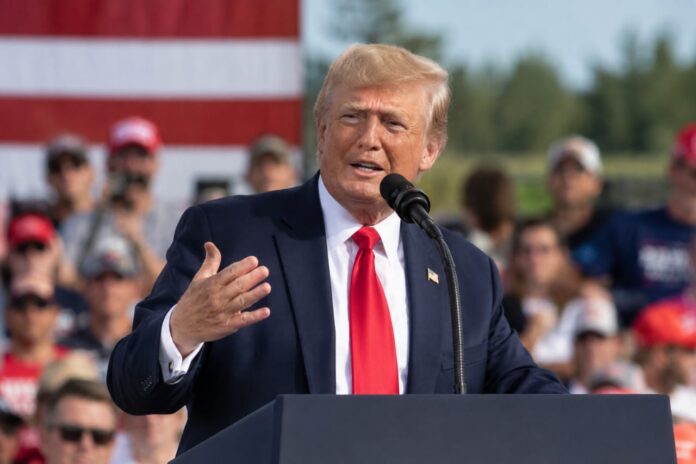
During a Saturday campaign event in Perry, Georgia, President Trump addressed the tension between domestic energy profitability and consumer fuel costs. The president acknowledged that critics would characterize his remarks unfavorably, yet proceeded to emphasize the substantial financial gains flowing to the American energy sector. He noted that advisors had cautioned him against highlighting energy profits amid public concern about gasoline affordability, but he chose to discuss the matter directly with supporters.
The president linked elevated fuel prices to geopolitical instability in the Middle East, specifically referencing maritime challenges in the Strait of Hormuz. He projected that oil prices would decline sharply once regional tensions resolved, enabling rapid restoration of normal supply flows. The administration framed the energy industry’s financial performance as a broader economic achievement worthy of recognition even as consumers experience price pressures at the pump.
- National average gas price: $4.29 per gallon (Sunday morning measurement via AAA)
- Year-over-year price comparison: $3.06 per gallon at same point previous year
- Campaign location: Perry, Georgia rally supporting Senate nominee Rep. Mike Collins and gubernatorial nominee Rick Jackson
- Geopolitical factor: Middle East conflict affecting Strait of Hormuz shipping routes and oil market dynamics
Why It Matters
The president’s comments highlight a fundamental economic reality that shapes voter sentiment during election cycles: the relationship between industry profits and household expenses. Energy sector performance represents significant job creation, tax revenue, and manufacturing strength within the American economy. The administration’s willingness to defend energy industry gains reflects confidence in the long-term strategic value of robust domestic energy production, even when short-term consumer costs rise due to external factors.
This exchange illustrates divergent political frameworks for evaluating economic policy. The presidential perspective emphasizes sectoral strength, export capability, and wealth generation as measures of economic health. Critics counter that government policy should prioritize immediate consumer relief over industry profitability. The debate carries particular weight as energy prices influence broader inflation concerns and consumer purchasing power across the economy, making fuel costs a visible daily reminder for voters evaluating economic performance.
- Job creation and tax revenue from energy sector expansion benefit broader economy and government resources
- Consumer affordability concerns affect household budgets and influence voter sentiment toward incumbent leadership
- Energy independence and export capacity strengthen American geopolitical positioning and economic resilience
- Supply chain vulnerabilities tied to Middle East instability demonstrate continued reliance on international market stability
Political and Public Context
The president’s Georgia appearance served dual purposes: supporting Republican candidates in consequential races while maintaining campaign momentum. Democratic responses from strategist David Axelrod and Governor Gavin Newsom attempted to frame the president’s comments as tone-deaf to struggling consumers. Former Transportation Secretary Pete Buttigieg characterized elevated prices as a temporary consequence of Republican governance, suggesting Democratic stewardship would produce different outcomes.
Energy pricing occupies a uniquely prominent position in American political discourse because fuel costs directly affect daily household experiences across income levels. Presidents from both parties have faced electoral consequences when energy prices rose sharply, regardless of international factors beyond their control. The strategic decision to defend energy sector profitability rather than emphasize consumer price relief represents a calculated political choice, betting that the case for American energy strength and economic expansion resonates more powerfully with the president’s coalition than consumer grievance narratives do.
- Democratic party strategy focuses on consumer affordability framing and criticism of energy industry profit levels
- Middle East conflict now in eighth month with no resolution timeline evident, maintaining geopolitical uncertainty
- Oil prices reached highest point since May, indicating continued upward pressure on retail fuel costs
- Campaign context includes Senate and gubernatorial races where economic messaging directly influences candidate fortunes
What Happens Next
The trajectory of energy prices will substantially influence political messaging in coming weeks and months. Should geopolitical tensions ease and oil prices decline as the president projected, his remarks will gain retroactive validation as economic forecasting. Conversely, if elevated prices persist, Democratic critics will cite the comments repeatedly as evidence of misplaced priorities. The administration appears committed to maintaining emphasis on energy sector strength and economic growth metrics rather than pivoting toward consumer price relief messaging.
Market dynamics in the Middle East, particularly shipping conditions through the Strait of Hormuz, will determine whether the president’s prediction of dramatic price declines materializes. Federal energy policy may also continue emphasizing domestic production expansion and export capability. The political debate will likely intensify as energy prices remain visible to consumers at every gas station visit, making this an enduring campaign issue through election cycles.
- Geopolitical resolution in Middle East could validate administration forecasts and shift political narrative favorably
- Continued price elevation may intensify Democratic messaging about energy industry accountability and consumer protection
- Oil market surveillance will track price movements as leading economic indicator influencing voter sentiment
- Energy policy debates will feature prominently in upcoming campaign communications and political strategy
