

Story Highlights
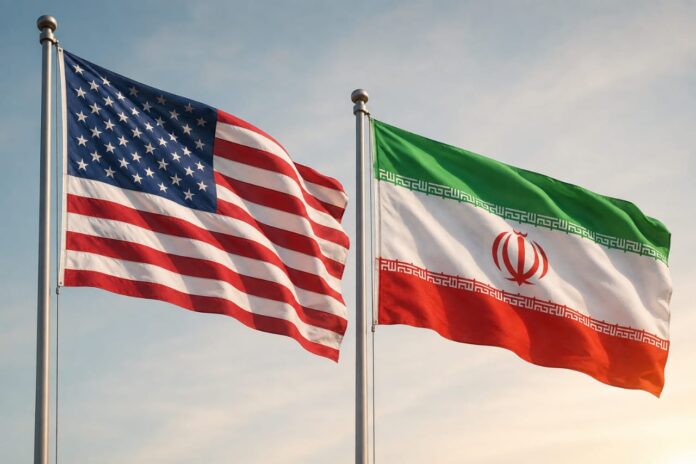
- President Trump stated that no military strikes against Iran would occur before the end of the weekend, addressing concerns about potential escalation
- The administration emphasized possession of advanced intelligence capabilities regarding Iranian activities and threats to American personnel in the Middle East
- Diplomatic efforts continue with reports of Qatari mediation attempting to restart negotiations between the United States and Iran
- Regional tensions remain elevated despite the weekend pause, with military activity continuing across multiple Middle Eastern theaters
What Happened
President Trump clarified the administration’s immediate intentions regarding Iran during remarks to reporters at the White House and subsequent comments at Joint Base Andrews in Maryland. The president indicated that military action would not proceed through the end of the weekend, providing a measure of reassurance following heightened tensions in the region. His statements came in the context of a Friday intelligence briefing detailing Iranian plans that pose threats to American interests throughout the Middle East.
The White House confirmed access to multiple intelligence assessments regarding Iranian capabilities and intentions. Administration officials noted that sophisticated surveillance and intelligence systems are providing comprehensive situational awareness. Meanwhile, diplomatic channels remained active as international mediators worked to explore potential pathways for resumed talks between Washington and Tehran, according to multiple reporting sources on developments unfolding simultaneously in the region.
- President Trump made statements at White House press gaggle and at Joint Base Andrews in Maryland
- Friday intelligence memo documented Iranian plans targeting Americans in the Middle East region
- Qatari delegation reportedly present in Iran Sunday attempting diplomatic engagement
- U.S. military presence maintained with CENTCOM leadership visiting the Strait of Hormuz
Why It Matters
Clarity regarding military intentions carries significant consequences for regional stability, global energy markets, and American strategic positioning in the Middle East. The president’s confirmation that immediate military action would be withheld removes uncertainty that had driven concerns about broader escalation. This measured approach reflects a deliberate strategy balancing deterrence against Iran with diplomatic possibilities, rather than pursuing an automatic military response to provocations.
The administration’s demonstrated access to advanced intelligence systems provides a foundation for informed decision-making about when and whether military responses are warranted. Distinguishing between different intelligence assessments allows policymakers to evaluate situations with greater nuance rather than defaulting to predetermined responses. The continued pursuit of diplomatic channels, even amid military tensions, indicates openness to negotiated solutions while maintaining robust defensive capabilities.
Economic implications extend to energy markets, with global oil and gas prices influenced by perceptions of Middle Eastern stability. The administration’s demonstrated control over decision-making and communication sends reassuring signals to markets and allies about predictability in American foreign policy during a volatile period.
- Reduced uncertainty about immediate military escalation stabilizes regional dynamics and global energy markets
- Diplomatic engagement remains viable despite military tensions, offering alternatives to prolonged conflict
- American intelligence superiority provides foundation for strategic decisions based on comprehensive situational awareness
- Clear communication about military intentions enhances predictability for allies and reduces miscalculation risks
Political and Public Context
Iran policy represents a complex intersection of security concerns, diplomatic possibilities, and domestic political considerations. The Trump administration has emphasized a firmer approach to Iranian activities compared to previous administrations, balancing deterrence with pragmatic engagement. Recent U.S. embassy evacuations and heightened military readiness reflected concerns about Iranian-directed threats, yet the administration has maintained flexibility regarding diplomatic pathways.
Regional conditions remain volatile despite the weekend pause in direct U.S.–Iran military engagement. Saudi Arabia reported interception of missile attacks from Houthi forces in Yemen, Israel maintained active military operations across multiple fronts, and Iran conducted air defense operations. These parallel developments illustrate the complex security environment throughout the Middle East, with multiple actors pursuing their respective strategic objectives.
The administration’s positioning reflects a nuanced strategy recognizing both the costs of prolonged military engagement and the necessity of maintaining credible deterrence. Previous approaches to Iran policy have yielded mixed results, making the current balanced framework—combining intelligence superiority, military readiness, and diplomatic openness—a distinctive approach to managing one of America’s most significant foreign policy challenges.
- Trump administration emphasizes firmer Iran policy compared to previous approaches while maintaining diplomatic flexibility
- Regional proxy conflicts continue involving Saudi Arabia, Yemen Houthis, Israel, Lebanon, West Bank, and Gaza
- Intelligence-driven decision-making allows differentiation between multiple assessments rather than automatic response protocols
- Qatari mediation efforts reflect ongoing international engagement attempts despite elevated military tensions
JUST IN: Trump says there will be no strike on Iran today — declines to discuss future military action. pic.twitter.com/WHnBF1LOzD
— Think BRICS (@RealBRICSnews) October 25, 2026
What Happens Next
The immediate focus remains on monitoring whether diplomatic initiatives gain traction and whether Iranian actions remain within bounds that the administration deems acceptable without triggering military responses. The Qatari mediation efforts provide a potential opening for reduced tensions if all parties demonstrate willingness to engage constructively. The administration will continue evaluating intelligence regarding Iranian activities and threats to American personnel and interests.
Future decisions regarding Iran policy will depend on multiple variables including the trajectory of diplomatic discussions, Iranian compliance or non-compliance with stated concerns, and developments in the broader regional security environment. The president has indicated willingness to pursue either negotiated resolutions or more decisive military action depending on circumstances, suggesting a decision-point framework rather than a predetermined path. Military readiness will remain elevated, and intelligence gathering will continue providing the foundation for informed policy choices.
Domestic political considerations will influence the communication strategy surrounding Iran policy, with clear messaging helping to shape public understanding of administration priorities and achievements. Economic implications will continue to influence market behavior, making clear communication about stability and predictability valuable for American interests.
- Qatari diplomatic mediation efforts may determine whether negotiations gain momentum or stall
- Administration will continue monitoring Iranian activities against established red lines and thresholds
- Decision-point framework suggests future actions will depend on Iranian behavior and diplomatic progress rather than predetermined timelines
- Military readiness will remain elevated while diplomatic channels operate in parallel
