

Story Highlights
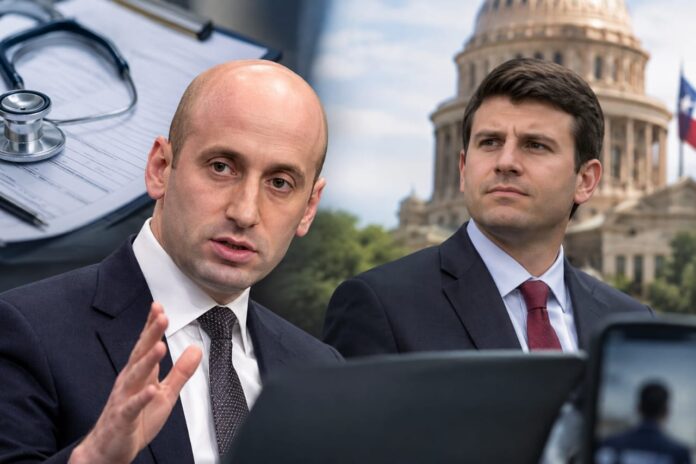
- White House Deputy Chief of Staff Stephen Miller demanded Democratic state representative James Talarico release medical records, igniting backlash over the administration’s lack of health disclosure transparency
- Miller’s social media post regarding Talarico’s nine-day campaign absence prompted critics to highlight contrasts between demanding records from others while withholding the president’s medical information
- The episode underscores broader questions about government accountability and selective application of transparency standards
- Democrats and observers seized on the perceived hypocrisy to renew calls for full disclosure of presidential health documentation
What Happened
A weekend social media post by White House Deputy Chief of Staff Stephen Miller escalated political tensions when he demanded that Texas Democratic state representative James Talarico release medical records. Talarico had been absent from campaign activities for nine days while seeking a Texas Senate seat, citing influenza as the reason. Miller’s intervention came after MAGA influencer Nick Sortor challenged the explanation, and Texas Attorney General Ken Paxton amplified the skepticism regarding Talarico’s absence. Both Talarico and the medical facility involved subsequently denied the alternative claims, but the incident sparked significant online discussion about the implications of Miller’s demand.
The Deputy Chief of Staff’s post quickly drew responses from observers who noted what many viewed as an ironic contradiction. Critics highlighted that while the White House was pressuring others to provide medical documentation, the administration itself has maintained considerable secrecy surrounding the president’s health information. The disparity became a focal point for those questioning whether transparency standards should apply equally to elected officials.
- Miller demanded Talarico produce medical records in a social media post on Sunday
- Talarico cited influenza for a nine-day campaign absence while running for Texas Senate
- Both Talarico and the involved medical facility denied alternative health claims about the representative
- Critics responded by questioning why similar transparency demands were not directed at the White House regarding presidential health records
Why It Matters
This incident reveals fundamental tensions within contemporary American politics regarding transparency and accountability. When high-ranking officials demand that political opponents release medical information while their own administration restricts access to similar documentation, it creates an appearance of inconsistency that erodes public trust. The principle of equal treatment under transparency norms should extend consistently across all levels of government.
Miller’s misstep demonstrates how easily such demands can backfire when perceived as applying different standards to allies versus opponents. This touches on legitimate questions about what information the American electorate deserves regarding those who hold executive power. The incident highlights how administration messaging can inadvertently undermine broader policy positions, as logical expectations follow that accountability standards should apply uniformly.
- Selective transparency standards damage public perception of institutional fairness
- Political opponents gain rhetorical advantage when perceived hypocrisy becomes apparent
- Citizens questioning official health disclosures represent a growing constituency demanding accountability
- The controversy diverts media attention from other policy initiatives the administration prioritizes
Political and Public Context
Questions about presidential health have become increasingly prominent in recent election cycles, reflecting genuine public interest in the fitness and capability of those holding high office. The precedent for medical disclosure has evolved significantly over decades, with various administrations establishing different standards. Some have released comprehensive health evaluations, while others have maintained stricter privacy boundaries.
The broader context includes ongoing public concerns about cognitive and physical stamina among aging political figures across both major parties. Citizens voting for leaders have a reasonable interest in understanding whether candidates can perform the duties of office. Miller’s misstep also occurs within a political environment where fact-checking and accountability standards have become intensely contested, with different media outlets applying varying rigor to examining claims.
- Presidential health disclosure has been inconsistently addressed across recent administrations
- Public interest in candidate fitness and capability represents legitimate democratic participation
- Partisan media ecosystems interpret similar events through divergent analytical frameworks
- Previous figures have faced scrutiny regarding health-related absences and transparency
Read "Stephen Miller’s Medical Records Demand Blows Up in His Boss’ Face" on SmartNews: https://t.co/7sz3oWeL4S
— Wm Mcnellis (@WmMcnellis) October 11, 2026
What Happens Next
The immediate aftermath of Miller’s post will likely see continued calls from critics demanding that the administration apply its newly asserted transparency standards uniformly. Democratic operatives and independent observers will reference this moment whenever the White House seeks to avoid disclosing information about the president’s health. The incident has provided opposition figures with a rhetorical tool that will persist throughout the political cycle.
Whether this controversy prompts any actual policy changes regarding medical disclosure transparency remains uncertain. The administration may need to develop more consistent messaging around transparency to avoid similar embarrassments. As the political cycle unfolds, voters will make their own determinations about what information they require to make informed decisions, and opponents will continue pressing for disclosure of any information they believe could influence electoral outcomes.
- Opposition figures will use this incident to justify future transparency demands on the administration
- The White House may need to clarify its position on uniform application of disclosure standards
- Continued political scrutiny of health matters will likely intensify as election season approaches
- The precedent established could influence how future transparency disputes are framed
