

Story Highlights
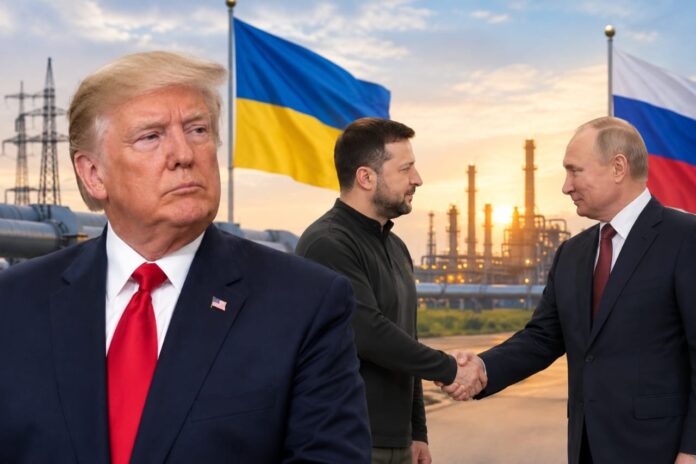
- Donald Trump announces an ‘energy ceasefire’ between Ukraine and Russia, effective immediately.
- Ukrainian President Zelensky expresses cautious support, contingent on Russian compliance.
- The proposal aims to stabilize energy supplies and mitigate rising fuel prices in the U.S. ahead of midterm elections.
- Critics raise concerns about the implications for sanctions on Russia and the potential impact on the ongoing conflict.
What Happened
In a bold move that has sent ripples through the international community, former President Donald Trump declared an ‘energy ceasefire’ between Ukraine and Russia. This announcement, made via social media, claimed that both nations had agreed to halt attacks on each other’s energy infrastructure, a significant step amid ongoing hostilities. The president asserted that this ceasefire was ‘effective immediately,’ although he did not provide specific details regarding the terms or enforcement of this agreement.
Ukrainian President Volodymyr Zelensky responded with a mix of surprise and cautious optimism. He indicated that Ukraine would support the ceasefire, but only if Russia adhered to the terms. Zelensky’s initial reaction highlighted the complexities of the situation, as he accused Russia of continuing to strike Ukrainian energy facilities even after Trump’s announcement. This ongoing conflict over energy resources has been a critical aspect of the war, with both sides targeting infrastructure that supports military operations.
- Trump’s announcement was made on social media, claiming an immediate ceasefire.
- Zelensky expressed conditional support, pending Russian compliance.
- Russia has not publicly commented on the ceasefire proposal.
- The announcement comes amid rising fuel prices and political pressure in the U.S.
Why It Matters
This proposal is significant for several reasons. Firstly, it reflects Trump’s ongoing efforts to navigate the complex geopolitical landscape while addressing domestic economic concerns. With midterm elections approaching, stabilizing energy supplies and mitigating rising fuel prices have become paramount issues for American voters. The president’s initiative aims to alleviate some of the economic pressures that have been exacerbated by the war in Ukraine and the subsequent sanctions on Russian energy exports.
However, the proposal has not been without its critics. Bipartisan concerns have emerged regarding the implications of temporarily lifting sanctions on Russian imports, particularly diesel. Critics argue that such a move could be perceived as a concession to Russian President Vladimir Putin, undermining the international stance against Russian aggression. Zelensky himself labeled the diesel deal as a ‘gift’ to Putin, indicating the delicate balance that must be maintained in international relations.
- The proposal aims to stabilize energy prices in the U.S. amid rising inflation.
- Critics fear it may weaken sanctions against Russia and embolden further aggression.
- U.S. voters are increasingly concerned about fuel prices and inflation.
- International support for the ceasefire is mixed, with some allies expressing skepticism.
Political and Public Context
To fully understand the implications of Trump’s energy ceasefire proposal, it is essential to consider the broader context of the ongoing conflict between Ukraine and Russia. Since the onset of the war, both nations have engaged in a series of strikes targeting each other’s energy infrastructure. This has resulted in significant disruptions to energy supplies, not only affecting the warring nations but also impacting global markets.
Moreover, the geopolitical landscape has shifted dramatically in recent months. European nations, heavily reliant on Russian energy, have been forced to seek alternative sources to mitigate the impact of sanctions. The U.S. has played a crucial role in supporting Ukraine, providing military aid and imposing sanctions on Russia. However, as the conflict drags on, the economic ramifications are becoming increasingly apparent, with rising fuel prices affecting American consumers and businesses alike.
- Both Ukraine and Russia have targeted energy infrastructure in their military strategies.
- European nations are seeking alternatives to Russian energy supplies amid sanctions.
- The U.S. has provided military and economic support to Ukraine throughout the conflict.
- Rising fuel prices have become a pressing issue for American voters ahead of the midterms.
Trump’s ‘energy ceasefire’ collides with the problem of dwindling fuel supplies https://t.co/WdsyfmgIFb
— MarketWatch (@MarketWatch) October 12, 2026
What Happens Next
The future of Trump’s energy ceasefire proposal remains uncertain. As the international community grapples with the implications of this announcement, several key questions arise. Will Russia comply with the ceasefire, or will it continue its aggressive tactics? How will the U.S. administration respond to bipartisan criticism regarding the potential lifting of sanctions? And what impact will this have on the upcoming midterm elections, where energy prices are a critical concern for voters?
In the coming weeks, it will be essential to monitor the reactions from both Ukraine and Russia, as well as the responses from U.S. lawmakers. The White House has yet to provide further details on the ceasefire, leaving many to speculate about the feasibility of this initiative. As the situation develops, the potential for diplomatic negotiations may emerge, but the path forward is fraught with challenges.
- Monitoring compliance from Russia will be crucial in the coming days.
- The U.S. administration may face pressure to clarify its stance on sanctions.
- Voter sentiment regarding fuel prices will likely influence midterm election outcomes.
- Diplomatic negotiations may be necessary to solidify any ceasefire agreement.
