

Story Highlights
- A new television special explores Senator Bernie Sanders’ influence on Democratic Party politics and a new generation of progressive leaders
- Sanders-endorsed candidates in Michigan and Minnesota have gained significant national attention during the current election cycle
- At 85 years old, Sanders has largely ruled out another presidential run, raising questions about political succession among progressives
- The upcoming midterm elections are being viewed as a critical test of whether Sanders-style politics can succeed without the senator leading the ticket
What Happened
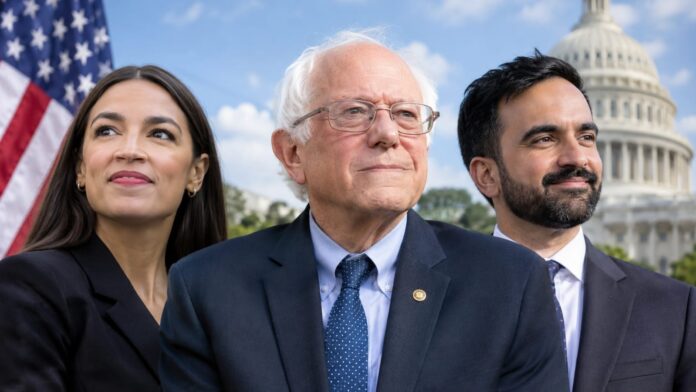
A new special titled The Bernie Sanders Effect is set to air on MS NOW, examining the Vermont senator’s lasting influence on American politics and the Democratic Party. The program features interviews with Sanders himself, along with Representative Alexandria Ocasio-Cortez of New York and New York City Mayor Zohran Mamdani. The special investigates how Sanders has shaped a new generation of political leaders and influenced the way they are redefining the Democratic Party’s direction and priorities.
The timing of this examination comes more than a decade after Sanders’ initial presidential campaign challenged the Democratic Party’s establishment approach. His populist, worker-focused political platform has continued to gain traction among voters, according to observers of the political landscape. Several candidates endorsed by Sanders have emerged as significant figures in the current election cycle, demonstrating the practical impact of his political model on contemporary campaigns.
- The special airs Saturday, October 17 on MS NOW
- Sanders-endorsed candidates include Abdul El-Sayed in Michigan and Peggy Flanagan in Minnesota
- The program features interviews with Sanders, Representative Alexandria Ocasio-Cortez, and New York City Mayor Zohran Mamdani
- Sanders’ political approach has been characterized as bottom-up, grassroots-oriented politics focused on door-to-door campaigning
Why It Matters
The emergence of this special reflects broader recognition that Sanders’ political philosophy has fundamentally shifted Democratic Party discourse and strategy. His emphasis on worker-first policies and grassroots organizing has created a template that younger politicians are adopting and adapting to their own campaigns. This represents a significant departure from the Democratic establishment’s traditional approach, with implications for how the party develops its platform and recruits candidates for future races.
The current midterm election cycle is being viewed as particularly consequential for assessing whether Sanders-style politics can maintain momentum and electoral success without Sanders himself leading a national ticket. Observers have noted that the stakes are substantial for multiple constituencies: for Sanders personally as his political legacy continues to develop, for the Democratic Party as it navigates ideological tensions between progressive and centrist wings, and for voters seeking to understand what policy directions may prevail in American governance.
The special comes at a moment when Sanders, now 85 years old, has effectively closed the door on running for president again in 2028. This development has intensified questions about political succession and whether any current or emerging Democratic leaders can replicate his appeal to voters or whether his movement will evolve in different directions under new leadership.
- Sanders-style progressive candidates are reshaping Democratic Party primary outcomes and campaign strategies
- Grassroots, worker-focused politics are gaining prominence as an alternative to establishment Democratic approaches
- The Democratic Party is experiencing ideological evolution driven by progressive and socialist-oriented candidates operating in the Sanders model
- Younger politicians are adopting Sanders’ organizational and messaging strategies with measurable electoral success
Political and Public Context
Sanders’ political rise began with his 2016 presidential campaign, which surprised many political observers by generating substantial enthusiasm among Democratic primary voters despite challenging the party’s preferred candidate at the time. His campaign emphasized economic inequality, healthcare reform, and opposition to what he characterized as establishment politics in Washington. That initial bid established him as a significant figure within Democratic politics even though he did not win the nomination.
In subsequent years, Sanders maintained his influence through endorsements, speaking engagements, and continued advocacy for progressive causes. His 2020 presidential campaign further solidified his status as a leading voice in progressive politics. The candidates he has endorsed and supported have increasingly gained prominence within Democratic politics, suggesting that his influence extends beyond his own electoral participation. Democratic socialists and progressives operating in a similar political tradition have become more visible and successful in Democratic primaries and general elections.
This evolution reflects broader demographic and ideological shifts within the Democratic Party, particularly among younger voters and urban constituencies. Issues that Sanders has prioritized, including healthcare access, student debt, minimum wage increases, and economic inequality, have become central to Democratic Party discourse in ways they were not before his initial presidential campaign. Political analysts have noted that establishment Democrats increasingly incorporate progressive policy language and positions that reflect Sanders’ influence on party priorities.
- Sanders’ 2016 primary campaign introduced democratic socialist politics to mainstream Democratic primary discussions
- Progressive and socialist-identified candidates have increased in number and electoral success in Democratic races
- Issues of economic inequality and worker rights have moved from peripheral to central positions in Democratic platform discussions
- The Democratic Party has experienced notable generational and ideological realignment influenced by Sanders-associated political movements
What Happens Next
The immediate focus for observers of Sanders’ political influence will be the performance of his endorsed candidates in the upcoming midterm elections. Success by these candidates could reinforce the viability of Sanders-style progressive politics and potentially position some of them as future national figures. Conversely, electoral setbacks could prompt reassessment of whether this political model sustains broad appeal or primarily resonates within specific demographic and geographic areas.
The question of political succession remains open and significant. With Sanders unlikely to run again, the Democratic Party and progressive movement will need to determine whether existing politicians can consolidate and advance his political legacy or whether his influence will fragment among multiple leaders with different emphases and strategies. The television special examining his effect may serve as a moment for both supporters and critics to assess his lasting contributions to American politics.
Beyond the immediate electoral cycle, Sanders’ influence on Democratic Party platform development and candidate recruitment will likely continue regardless of electoral outcomes. The political infrastructure he has helped build through endorsements, grassroots organizing networks, and advocacy organizations suggests his impact extends beyond any single election cycle. Future Democratic Party strategies, candidate profiles, and policy priorities will be shaped in part by the foundation Sanders helped establish within progressive politics.
- Midterm election results for Sanders-endorsed candidates will provide critical indicators of movement viability
- Potential successor figures within progressive politics will likely face scrutiny regarding their relationship to Sanders’ political model and legacy
- Democratic Party platform development will continue reflecting progressive priorities that Sanders has helped elevate
- Grassroots political organizing networks associated with Sanders’ movement will likely persist and evolve regardless of electoral outcomes
