

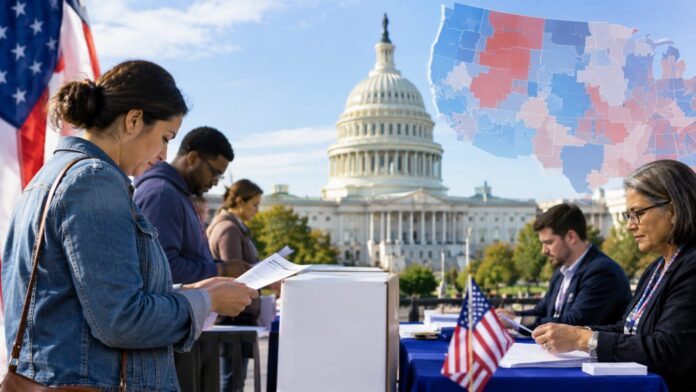
Story Highlights
- Primary season results indicate shifting voter sentiments ahead of the midterms.
- Republicans face challenges in key districts due to redistricting outcomes.
- Polling data suggests potential vulnerabilities for incumbents.
- Experts analyze implications for congressional control in November.
What Happened
The conclusion of the primary season has provided a wealth of information regarding the upcoming midterm elections, particularly in terms of voter sentiment and party dynamics. As candidates prepare for the November elections, the results from the primaries have illuminated key trends that could significantly impact the balance of power in Congress. The Republican Party, in particular, is facing a unique set of challenges as it navigates the aftermath of redistricting and the implications of recent polling data.
In several states, primary results have shown a notable shift in voter preferences, with some incumbents facing unexpected challenges from within their own party. This has raised questions about the overall strength of the Republican base and its ability to mobilize voters in critical districts. Additionally, the outcomes of redistricting battles have left some Republican candidates in precarious positions, as they attempt to appeal to a broader electorate while maintaining their core support. The stakes are high, and the party’s ability to adapt will be crucial in the coming months.
- Republican primaries in key states have resulted in surprising upsets.
- Redistricting has altered the landscape in several congressional districts.
- Polling indicates potential vulnerabilities for incumbent Republicans.
- Experts predict a competitive environment for the midterms.
Why It Matters
The implications of the primary results extend far beyond the immediate outcomes of individual races. They serve as a bellwether for the broader political climate as the nation approaches the midterm elections. The shifting dynamics within the Republican Party could signal a reevaluation of strategies as candidates seek to align themselves with the evolving priorities of their constituents. This is particularly important in light of the recent polling data, which suggests that some incumbents may not be as secure in their positions as previously thought.
Moreover, the results underscore the importance of voter turnout and engagement. With many races expected to be closely contested, mobilizing the base will be crucial for Republicans aiming to retain control of Congress. The primary season has highlighted the need for candidates to connect with voters on issues that resonate, particularly in light of economic concerns and social issues that have taken center stage in recent months. The ability to effectively communicate these issues will be a determining factor in the success of candidates in the upcoming elections.
- Incumbents may face challenges in retaining their seats due to shifting voter preferences.
- Republicans must adapt their messaging to address voter concerns effectively.
- Increased voter engagement is critical for success in the midterms.
- The outcomes of the primaries may influence campaign strategies moving forward.
Political and Public Context
Understanding the context surrounding the primary results is essential for grasping their significance. The political landscape has been shaped by a variety of factors, including economic conditions, social movements, and the ongoing impact of national policies. As the nation grapples with inflation, healthcare, and education, these issues are likely to play a pivotal role in shaping voter sentiment as the midterms approach.
Additionally, the redistricting process has introduced new dynamics into the electoral landscape. With district boundaries redrawn in several states, candidates must navigate unfamiliar territory and appeal to a potentially different electorate than they have in the past. This has led to increased competition in some areas, while also creating opportunities for candidates who can effectively communicate their vision and connect with voters. The interplay of these factors will be crucial in determining the outcomes of the midterm elections.
- Economic concerns are influencing voter sentiment ahead of the midterms.
- Redistricting has reshaped the electoral map in key states.
- Social issues are becoming increasingly important in voter decision-making.
- Candidates must adapt to new district dynamics to remain competitive.
Ahead of the midterms, the political environment has deteriorated so badly for Republicans that the battlefield now extends deep into states and districts that Trump won three times, often by double digitshttps://t.co/6hIWNk0tZj
— Alfons López Tena 🦇 (@alfonslopeztena) September 19, 2026
What Happens Next
As the midterm elections draw closer, candidates will need to refine their strategies based on the insights gained from the primary results. This includes not only addressing the concerns of their constituents but also effectively communicating their positions on key issues. The competitive nature of the upcoming elections suggests that every vote will count, making voter outreach and engagement more critical than ever.
Furthermore, the Republican Party will need to assess its approach to candidate selection and support, particularly in districts where incumbents may be vulnerable. The lessons learned from the primaries could inform decisions about resource allocation and campaign strategies as the party seeks to maintain its foothold in Congress. The next few months will be pivotal as candidates work to solidify their positions and connect with voters.
- Candidates will refine their messaging based on primary insights.
- Voter outreach efforts will intensify as the election date approaches.
- The Republican Party may reassess its support for certain candidates.
- Polling will continue to play a crucial role in shaping campaign strategies.
