

Story Highlights
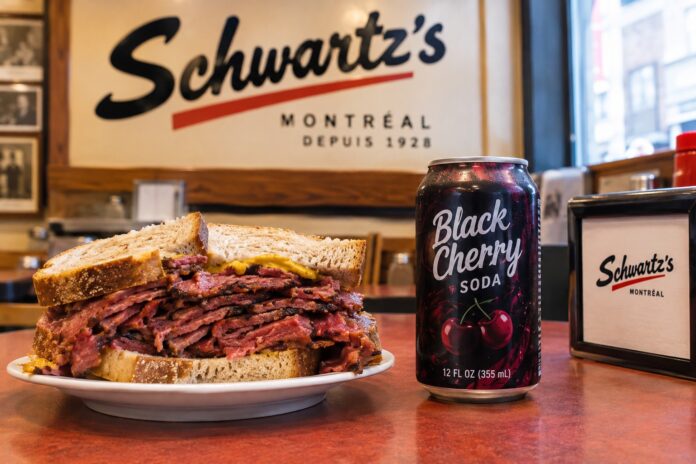
- Schwartz’s deli in Montreal has replaced its long-time black cherry soda with a local alternative.
- The change comes after supply issues persisted for eight years due to rising production costs.
- Customers have responded positively to the new soda option.
- The deli remains a staple in the Montreal food scene, adapting to changing circumstances.
What Happened
Schwartz’s, one of Montreal’s most famous delis, has made a significant change to its beverage offerings by discontinuing the iconic US-made black cherry soda that has been a beloved fixture at the restaurant for decades. The deli, renowned for its smoked meat sandwiches and rich history, faced ongoing supply challenges that ultimately led to this decision. For the past eight years, Schwartz’s struggled to maintain a consistent supply of the black cherry soda, as the distributor reduced production due to the rising costs associated with aluminium, a key component in soda can manufacturing.
Despite the deli’s efforts to secure a steady supply, the situation reached a tipping point when the cans of the soda vanished entirely from the market. In response to this disruption, Schwartz’s has now switched to a locally-made version of the soda, which has been met with a largely positive reception from its customers. This adaptation not only reflects the deli’s commitment to maintaining its beverage offerings but also highlights the resilience of local businesses in the face of supply chain challenges. The deli’s decision to embrace a local alternative is a testament to its ability to adapt and thrive amidst adversity.
- Schwartz’s deli has served black cherry soda for decades.
- The deli faced supply issues for eight years due to aluminium costs.
- The switch to a local alternative was made recently.
- Customer feedback on the new soda has been largely positive.
Why It Matters
The decision to replace the long-standing black cherry soda with a local alternative is significant for several reasons. Firstly, it underscores the broader challenges faced by the food and beverage industry, particularly in the wake of rising production costs and supply chain disruptions. The situation at Schwartz’s is not an isolated incident; many businesses are grappling with similar issues, which can lead to changes in product offerings that may not always align with customer preferences.
Moreover, the deli’s ability to pivot and embrace a local product speaks to the growing trend of supporting local businesses and products. In an era where consumers are increasingly conscious of where their food and beverages come from, Schwartz’s decision to source a local alternative not only helps to sustain the local economy but also resonates with customers who value community engagement and sustainability. This shift may encourage other businesses to consider local sourcing as a viable option in their operations.
- Changes in product offerings reflect broader industry challenges.
- Local sourcing supports the community and economy.
- Consumer preferences are shifting towards local products.
- Schwartz’s adaptation may inspire other businesses facing similar issues.
Political and Public Context
To fully understand the implications of Schwartz’s decision, it is essential to consider the context in which this change is occurring. The food and beverage industry has been under significant pressure due to various factors, including the COVID-19 pandemic, which disrupted supply chains globally. As businesses struggled to keep their doors open, many faced shortages of key ingredients and products, leading to a reevaluation of their offerings.
Additionally, the rising costs of raw materials, such as aluminium, have forced many companies to reconsider their production strategies. This has resulted in a ripple effect throughout the industry, impacting everything from small delis to large beverage manufacturers. Schwartz’s decision to switch to a local soda is a microcosm of a larger trend where businesses are increasingly looking to local suppliers to mitigate risks associated with global supply chains. This trend highlights the importance of community resilience in the face of economic challenges.
- The COVID-19 pandemic has disrupted global supply chains.
- Rising costs of raw materials are affecting production strategies.
- Local sourcing is becoming a trend among businesses.
- Schwartz’s is part of a larger movement towards community engagement.
What Happens Next
Looking ahead, the future of Schwartz’s deli and its new beverage offering will depend on several factors. Firstly, the continued reception of the local soda by customers will be crucial. If the feedback remains positive, it could solidify the deli’s decision to embrace local products and potentially lead to further collaborations with local suppliers. This could enhance the deli’s reputation as a supporter of local businesses and products.
Moreover, the deli may explore additional ways to enhance its menu and beverage offerings, possibly incorporating more local products in response to customer demand. This could not only strengthen its brand identity but also position Schwartz’s as a leader in the local food movement. However, the deli must remain vigilant about potential future supply chain disruptions and be prepared to adapt as necessary. The ability to pivot quickly will be essential in maintaining customer satisfaction and operational efficiency.
- Customer feedback will determine the future of the new soda.
- Potential for further local collaborations exists.
- Schwartz’s may expand its local product offerings.
- Future supply chain disruptions could impact operations again.
