

Story Highlights
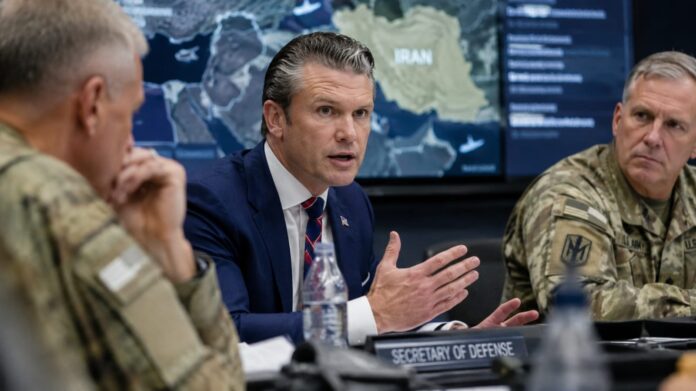
- Defense Secretary Pete Hegseth has initiated a sweeping investigation into leaks at the Pentagon.
- Approximately 50 members of the Joint Staff have undergone polygraph tests as part of this effort.
- Critics express concerns regarding management practices and the potential impact on military morale.
- President Trump has publicly supported Hegseth’s aggressive approach to securing classified information.
What Happened
Following a series of troubling news reports that have raised alarms about national security, Defense Secretary Pete Hegseth has embarked on an unprecedented hunt for leakers within the Pentagon. This initiative has seen around 50 members of the Joint Staff subjected to polygraph tests, a move that has sparked significant debate regarding its implications for military culture and leadership dynamics. The investigation appears to be particularly focused on leaks concerning the ongoing war in Iran and a critical shortage of munitions, which have been highlighted in various media outlets.
The tests were conducted in August, and officials have indicated that the overarching goal is not only to identify the source of the leaks but also to serve as a deterrent for any potential future leakers. This aggressive stance has drawn both support and criticism from various quarters, reflecting the complex nature of military oversight in contemporary times.
- Defense Secretary Pete Hegseth initiated the leak investigation in July.
- Polygraph tests were administered to approximately 50 members of the Joint Staff in August.
- The focus of the investigation includes leaks related to the Iran war and munitions shortages.
- Criticism has emerged from figures such as Sen. Thom Tillis regarding Hegseth’s management style.
Why It Matters
The implications of Hegseth’s leak investigation extend far beyond the immediate goal of securing classified information. Critics argue that the methods employed, particularly the mass polygraph testing, could undermine trust within the military ranks. The potential for intimidation may lead to a chilling effect, where personnel feel less inclined to communicate openly about critical issues, fearing repercussions. This could ultimately hinder the effectiveness of military operations and the morale of service members.
Furthermore, the investigation has raised questions about the management style of Hegseth, who has faced scrutiny for his handling of military affairs and his approach to transparency. The president’s backing of Hegseth’s actions suggests a commitment to a more aggressive stance on national security, but it also places the administration in a precarious position regarding public perception and military cohesion.
- Concerns about military morale may arise from the aggressive leak investigation.
- Potential intimidation could lead to a chilling effect on open communication within the military.
- Hegseth’s management style has drawn criticism from both political allies and opponents.
- The investigation reflects a broader commitment to national security under President Trump’s administration.
Political and Public Context
The current situation at the Pentagon is not occurring in a vacuum. The backdrop of ongoing military operations, particularly in the Middle East, has created a complex environment where information leaks can have serious consequences. Hegseth’s approach to managing these leaks is indicative of a broader trend within the military to prioritize security over transparency. This has been met with mixed reactions, as some view it as a necessary step to protect national interests, while others see it as a potential overreach that could stifle dissent and critical dialogue.
The historical context of military oversight and the balance between security and transparency is crucial in understanding the implications of Hegseth’s actions. The ongoing war in Iran has heightened concerns about information security, and previous administrations have faced similar challenges regarding leaks and transparency.
- The ongoing war in Iran has heightened concerns about information security.
- Previous administrations have faced similar challenges regarding leaks and transparency.
- Hegseth’s management style has been compared to past military leaders who prioritized secrecy.
- The political landscape surrounding military operations continues to evolve, impacting public perception.
Ironic that Pete Hegseth leak hunting with forced mass polygraph tests – got leaked. pic.twitter.com/w4WrGQQjGJ
— anyone_want_chips (@anyonewantchips) September 5, 2026
What Happens Next
Looking ahead, the future of Hegseth’s leak investigation remains uncertain. As the investigation unfolds, it will be essential to monitor its impact on military morale and the broader implications for leadership within the Pentagon. Questions surrounding the effectiveness of polygraph tests as a tool for identifying leaks will also come to the forefront. Additionally, the response from military personnel and the public will play a significant role in shaping the narrative around this investigation.
The potential for further scrutiny of Hegseth’s management practices may lead to changes in how the Pentagon approaches issues of transparency and security in the future. Continued monitoring of military morale and leadership dynamics is essential, and the effectiveness of polygraph tests in identifying leaks will be evaluated. Furthermore, the administration’s handling of this situation could set a precedent for future investigations and military oversight.
- Continued monitoring of military morale and leadership dynamics is essential.
- The effectiveness of polygraph tests in identifying leaks will be evaluated.
- Public and military personnel responses will shape the narrative surrounding the investigation.
- Potential changes in Pentagon policies regarding transparency and security may emerge.
