

Story Highlights
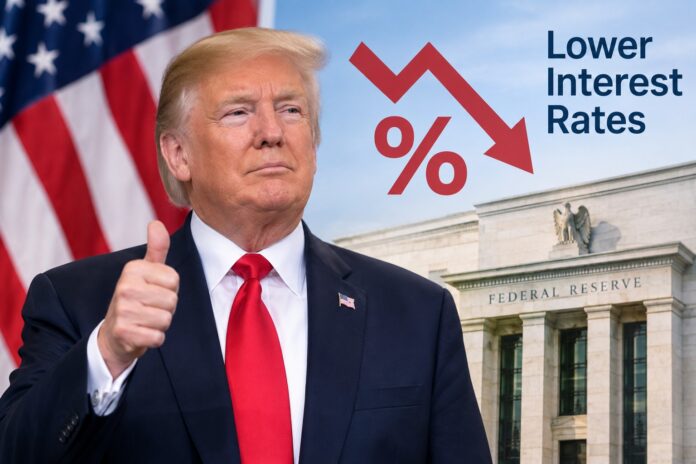
- President Trump calls for interest rate cuts to support American households.
- Job growth in August exceeded expectations, with 162,000 new roles added.
- Inflation remains a concern, with prices up 3.4% over the past year.
- Upcoming Federal Reserve meeting on September 15-16 may influence interest rate decisions.
What Happened
In a bold move that underscores his commitment to the American economy, President Trump has urged the Federal Reserve to lower interest rates. His call comes in light of recent job growth figures that have surpassed expectations, suggesting a robust labor market. The president’s remarks were made via social media, where he emphasized that high interest rates place the United States at a ‘very unfair disadvantage’ compared to other nations. He argued that the U.S. should have the ‘lowest rate of any country in the world’ to foster economic growth and support American households struggling with inflation.
The latest employment data revealed that the U.S. economy added 162,000 jobs in August, nearly tripling the forecast of 56,000. This surge was largely driven by increased hiring in the hospitality and education sectors, indicating a rebound in areas that were heavily impacted by the pandemic. Despite these positive figures, inflation remains a pressing issue, with prices rising 3.4% over the past year, well above the Federal Reserve’s target of 2%.
- 162,000 jobs added in August, exceeding expectations.
- Inflation at 3.4%, above the Fed’s target.
- Next Federal Reserve meeting scheduled for September 15-16.
- High diesel prices hit an all-time high of $5.85 per gallon.
Why It Matters
The implications of Trump’s call for interest rate cuts are significant for both the economy and American households. By advocating for lower rates, the president aims to alleviate the financial burden on families facing rising costs of living. High interest rates can stifle economic growth by making borrowing more expensive, which in turn can lead to reduced consumer spending and investment. This is particularly concerning as inflation continues to erode purchasing power.
Moreover, the president’s remarks highlight a critical moment for the Federal Reserve, which is tasked with balancing the dual mandate of promoting maximum employment and stabilizing prices. With the labor market showing signs of strength, the Fed faces pressure to consider a rate hike. However, Trump’s insistence on lower rates suggests a preference for prioritizing growth over inflation control, a stance that resonates with many conservative economists who argue that the economy should be allowed to flourish without the constraints of high borrowing costs.
- Lower interest rates could stimulate consumer spending and investment.
- High rates may lead to reduced economic growth and increased financial strain on households.
- The Federal Reserve’s decision will impact the broader economy and financial markets.
- American families are directly affected by inflation and interest rate policies.
Political and Public Context
Understanding the current economic landscape requires a look at recent developments that have shaped the dialogue around interest rates and inflation. The Federal Reserve has maintained a cautious approach to monetary policy, leaving rates unchanged between 3.5% and 3.75% for several consecutive meetings. This decision reflects ongoing concerns about inflation, which has been exacerbated by global events, including geopolitical tensions that have driven up oil prices.
In addition to rising diesel prices, which recently hit an all-time high, the overall cost of living has increased, prompting many Americans to feel the pinch. However, the positive job growth figures indicate that the labor market is recovering, which could provide the Fed with the confidence needed to adjust rates. The revisions to previous job figures also paint a more optimistic picture of the economy, suggesting that the labor market is stronger than initially thought.
- Federal Reserve has kept rates unchanged for several meetings.
- Geopolitical tensions have contributed to rising oil prices.
- Revisions to job figures indicate a stronger labor market.
- Inflation remains a key concern for policymakers.
President Donald Trump called on the Federal Reserve to sharply lower interest rates Friday, saying the United States should have "the LOWEST RATE of any country in the World" after a surprisingly strong August jobs report showed employers added 162,000 jobs.… pic.twitter.com/Q134xNyQLb
— NEWSMAX (@NEWSMAX) September 5, 2026
What Happens Next
Looking ahead, the upcoming Federal Reserve meeting on September 15-16 will be pivotal in determining the future of interest rates. Analysts and traders are closely monitoring economic indicators, including inflation data and employment figures, to gauge the likelihood of a rate hike. With nearly 60% of traders betting on an increase, the pressure is mounting on the Fed to take action.
As the president continues to advocate for lower rates, the Federal Reserve will need to weigh the potential benefits of stimulating the economy against the risks of allowing inflation to spiral further. The outcome of this meeting could have far-reaching implications for American households, businesses, and the overall economy. Questions remain about how the Fed will respond to the president’s call and whether it will prioritize growth or inflation control in its decision-making process.
- Federal Reserve meeting on September 15-16 will be crucial for interest rate decisions.
- Traders are anticipating a potential rate hike based on economic indicators.
- The president’s advocacy may influence the Fed’s approach to monetary policy.
- Future inflation data will play a key role in shaping the Fed’s decisions.
