

Story Highlights
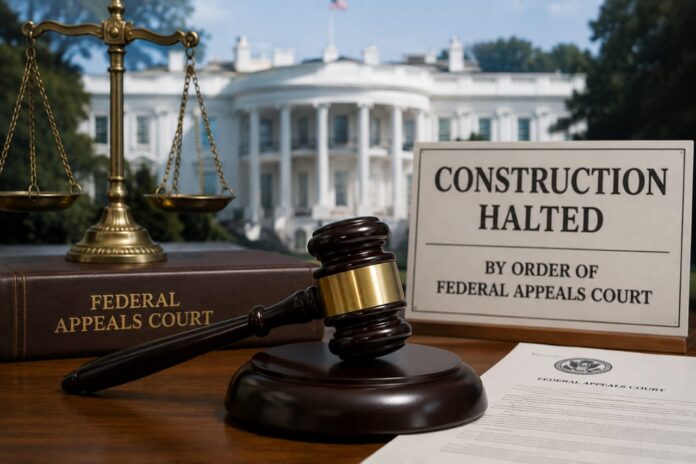
- The U.S. Court of Appeals for the District of Columbia issued a 2-1 ruling halting construction on the White House ballroom renovation, with only a Trump-appointed judge dissenting
- The president’s administration has two weeks to file an appeal to the Supreme Court before the construction halt takes effect
- The administration contends the ballroom project is vital for national security and military operations
- Congressional approval would be required to proceed, presenting significant legislative and time constraints
What Happened
A federal appeals court delivered a significant blow to the White House ballroom project on Friday, ordering an immediate halt to construction efforts. The three-judge panel ruled that Congress, rather than the executive branch, maintains ultimate authority over major renovations to the nation’s most iconic residence. The court emphasized that each president serves as a temporary steward of the People’s House rather than its owner, and therefore cannot unilaterally undertake dramatic redesigns without legislative approval.
The panel’s reasoning centered on the constitutional limits of executive power when it comes to federal property and appropriations. A Trump-appointed judge registered the sole dissent, underscoring the significance of the decision’s ideological composition. The ruling was stayed for two weeks to permit the administration time to pursue further legal remedies through an appeal to the Supreme Court.
- U.S. Court of Appeals for the District of Columbia issued the 2-1 ruling on Friday
- Two-week stay period allows time for Supreme Court appeal filing
- Trump-appointed judge cast the only dissenting vote on the three-judge panel
- Construction on the ballroom renovation has been ordered to cease pending appeal resolution
Why It Matters
This legal setback represents a critical juncture in a broader debate about executive authority and constitutional governance. The ruling reasserts congressional oversight as a fundamental check on presidential power, particularly regarding federal expenditures and structural modifications to government property. The decision carries implications that extend beyond this single project, potentially affecting how future administrations approach major renovations or alterations to federal facilities.
The ballroom initiative had been framed by the administration as essential infrastructure with national security dimensions. The court’s decision to prioritize legislative authority over executive discretion reflects ongoing constitutional tensions in how the branches of government balance their respective powers. The timing pressure created by this ruling forces the administration to make rapid strategic decisions about whether to pursue Supreme Court intervention or to shift toward securing congressional authorization.
- Establishes precedent that Congress retains final authority over major White House structural modifications and expenditures
- Restricts executive branch discretion in unilaterally undertaking federal property renovations without legislative approval
- Creates urgency for the administration to pursue either Supreme Court relief or congressional legislative pathways within compressed timeframes
- Impacts future presidential administrations’ ability to undertake similar capital projects without explicit congressional backing
Political and Public Context
The White House ballroom controversy reflects deeper partisan divisions over presidential power and resource allocation. The administration has consistently maintained that the project serves vital national security and military operational purposes, positioning it as essential infrastructure rather than discretionary renovation. This framing contrasts sharply with critics who view the initiative through a different lens, setting up a fundamental disagreement about the project’s true purpose and necessity.
The political calendar adds considerable complexity to any legislative resolution. Congress faces competing priorities, and obtaining the necessary authorization would require navigating both chambers, particularly given the current legislative environment. The stakes involve not only the ballroom project itself but broader questions about how much deference courts will afford to executive assertions of national security necessity when appropriations and federal property modification are at issue.
- Administration characterizes the ballroom as integral to national security and military operations
- Congressional recess periods and competing legislative priorities complicate path to authorization
- Partisan divisions frame how different political actors view the project’s legitimate scope and necessity
- Supreme Court petition represents next legal battleground for administration’s position on executive authority
Trump to Appeal Ballroom Construction Halt to Supreme Court https://t.co/G1GZLOqR6E #TempoEnglish
— Tempo English (@tempo_english) August 8, 2026
What Happens Next
The administration faces a critical decision point regarding its next legal strategy. Filing a petition for Supreme Court review represents one path, though success is not assured and would require the justices to accept the case. The alternative involves pursuing congressional authorization, a process complicated by the compressed timeline, legislative schedules, and the political calculus surrounding such expenditures during election cycles.
If the Supreme Court declines to intervene or rules against the administration, the ballroom project would require explicit congressional action to proceed. This would necessitate drafting and advancing legislation through both chambers, a process that legislative observers suggest presents formidable practical and political obstacles. The two-week window provides a narrow opportunity for the administration to file its appeal and make the case for higher court intervention, after which the statutory pause expires and the construction halt becomes fully effective absent successful legal challenge.
- Administration must decide within two weeks whether to file Supreme Court appeal petition
- Alternative pathway requires obtaining congressional authorization through legislation, complicated by recess schedules and political dynamics
- If Supreme Court declines review or rules against administration, congressional action becomes only viable path forward
- Compressed timeline through January creates urgency around both legal and legislative strategies
