

Story Highlights
- Progressive House candidate Will Lawrence allowed his Democratic Socialists of America membership to lapse in recent weeks
- Lawrence won Michigan’s 7th District Democratic primary on Tuesday and will face Republican Rep. Tom Barrett in November
- The candidate emphasized that his campaign platform is based on district-specific concerns rather than national organizational affiliations
- Lawrence stated his focus is on uniting swing voters around issues including cost of living, healthcare, gasoline, and groceries
What Happened
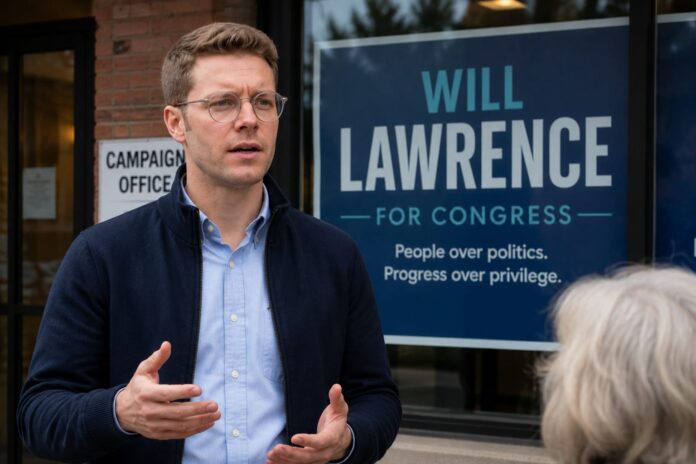
Will Lawrence, a progressive House candidate in Michigan’s 7th District, announced that he allowed his Democratic Socialists of America membership to lapse within the past month. Lawrence made this announcement during a Wednesday interview, explaining that the decision was intended to clarify his campaign’s direction and focus on district-specific concerns rather than national organizational affiliations. The candidate indicated that his platform has developed through conversations with residents across the Lansing-based congressional district and that he wanted voters to understand his commitment to local representation.
Lawrence expressed respect for the Democratic Socialists of America and their work nationally, but emphasized that his campaign platform emerges from direct engagement with constituents in the seventh district. He characterized himself as an organizer and coalition builder whose agenda is rooted in the specific needs and concerns of the community he seeks to represent. Lawrence further clarified that his decision to allow his membership to lapse was not connected to his advancement to the general election, nor did it reflect a broader disagreement with the organization.
- Lawrence won Tuesday’s Democratic primary in Michigan’s 7th District with support from Senator Bernie Sanders
- He defeated former U.S. Ambassador to Ukraine Bridget Brink and former Navy SEAL Matt Maasdam in the three-way primary
- Lawrence will face Republican Rep. Tom Barrett in the November general election
- The candidate allowed DSA membership to lapse in recent weeks as part of his campaign strategy
Why It Matters
The shift in Lawrence’s organizational affiliations reflects broader campaign dynamics in competitive districts where candidates seek to position themselves as representatives of diverse constituencies. By stepping back from visible affiliation with national progressive organizations, Lawrence appears to be attempting to broaden his appeal to swing voters who may be concerned about party ideology or organizational influence on a candidate’s voting record. This strategic repositioning is particularly significant in Michigan’s 7th District, which is characterized as a battleground area where moderate and independent voters could determine election outcomes.
Lawrence’s decision signals an effort to emphasize local issue-focused governance over adherence to national organizational platforms. The candidate highlighted cost-of-living concerns, healthcare access, gasoline prices, and grocery expenses as unifying issues that resonate across the district regardless of voters’ broader political affiliations. This approach suggests a belief that district-level concerns should take precedence over alignment with national ideological movements, potentially allowing him to appeal to voters across the political spectrum who prioritize practical solutions to economic pressures.
- Lawrence’s strategy could influence how swing voters in the district perceive his representation and independence
- The move addresses voter concerns about national organizational influence on congressional candidates’ voting patterns
- Economic issues identified by Lawrence affect household budgets across political demographics in the district
- Campaign positioning may impact voter enthusiasm among different segments of the primary coalition
Political and Public Context
Lawrence’s primary victory came with endorsements from high-profile national figures including Senator Bernie Sanders, positioning him as a progressive candidate despite his decision to distance himself from DSA organizational membership. His opponents in the primary drew support from different political networks: former Ambassador Bridget Brink was backed by former Michigan Governors Jennifer Granholm and Jim Blanchard, while former Navy SEAL Matt Maasdam received support from Senator Elissa Slotkin. These competing endorsements illustrated the diversity of political perspectives within Michigan’s Democratic Party and the district’s voters.
Michigan’s 7th District has been identified as a key battleground in national elections, attracting significant candidate recruitment and resources from both parties. The district’s characterization as a swing area reflects its population’s mixed political leanings and the competitive dynamics that make it pivotal in statewide and national electoral outcomes. Lawrence’s emphasis on local concerns and coalition-building reflects a broader pattern among candidates in competitive districts who attempt to appeal to voters beyond their party’s traditional base while maintaining support from progressive allies and donors.
- Lawrence is backed by Senator Bernie Sanders despite stepping back from DSA membership
- His primary opponents included former Ambassador Bridget Brink, backed by former Michigan governors, and former Navy SEAL Matt Maasdam, backed by Senator Slotkin
- Michigan’s 7th District is considered a battleground area with mixed political leanings
- The Sunrise Movement co-founder has experience in progressive organizing and climate activism
What Happens Next
Lawrence’s campaign will enter the general election phase with the challenge of maintaining support from progressive voters and donors while simultaneously appealing to swing voters who may be concerned about progressive organizational influence. His messaging will likely continue to emphasize local issues and district-specific solutions to economic challenges. The general election matchup against Republican Rep. Tom Barrett will test whether Lawrence’s repositioning strategy effectively expands his coalition without alienating the progressive base that supported him in the primary.
The outcome of this race could provide insights into how progressive candidates navigate the tension between maintaining organizational support and appealing to moderate swing voters in competitive districts. Lawrence’s approach to this balance may influence campaign strategies employed by other candidates facing similar dynamics in battleground areas. The general election campaign will likely feature continued focus on economic issues, healthcare, and governance competence as candidates compete for persuadable voters in the district.
- Lawrence faces Republican Rep. Tom Barrett in the November general election
- Campaign messaging will likely maintain focus on district-specific economic concerns and kitchen-table issues
- The race will test whether the primary coalition remains engaged in the general election phase
- Results may influence campaign strategies in other competitive districts with similar voter demographics
