

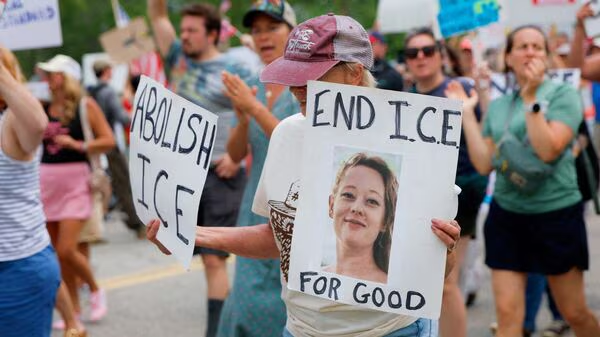
Immigration and Customs Enforcement has ordered agents to halt most vehicle stops nationwide following fatal shootings of two men in less than a week, neither of whom was the target of the enforcement operations that led to their deaths. The pause, described by officials as temporary, comes amid mounting bipartisan criticism, including from Republican Senator Susan Collins of Maine, and renewed scrutiny of ICE’s use of force and lack of body cameras. The decision marks one of the most significant operational shifts in immigration enforcement tactics since Trump returned to office.
Story Highlights
- ICE has suspended most vehicle stops nationwide except in cases involving serious criminal targets, following fatal shootings in Biddeford, Maine, and Houston, Texas.
- Neither victim, Johan Sebastián Durán Guerrero, 25, nor Lorenzo Salgado Araujo, 52, was the intended target of the operations in which they were killed.
- Neither agent involved in the shootings was wearing a body camera, reviving questions about a delayed nationwide rollout first promised in February.
- At least 22 people have been shot at by ICE agents since Trump returned to office, according to Axios reporting.
What Happened
Immigration and Customs Enforcement issued a nationwide directive instructing officers in its Enforcement and Removal Operations division to immediately suspend most vehicle stops during enforcement actions, according to multiple law enforcement sources. The order does not apply to Homeland Security Investigations, the division that handles criminal investigations, and officials described the move as a temporary pause tied to additional training on vehicle-stop tactics rather than a permanent policy change. Border czar Tom Homan told Fox News that ICE leadership and the Department of Homeland Security “want to look at these last couple of incidents.”
The directive followed two fatal shootings within a week of each other. On July 13, ICE agents shot and killed Johan Sebastián Durán Guerrero, a 25-year-old Colombian national, in Biddeford, Maine, after he attempted to flee during what DHS described as a vehicle stop connected to surveillance of a different individual’s last known address. DHS said an officer “fearing for public safety” discharged his weapon. Durán Guerrero’s father told reporters his son left behind a wife and a 3-year-old daughter. Six days earlier, ICE agents fatally shot Lorenzo Salgado Araujo, 52, during an enforcement operation in Houston. In both cases, DHS confirmed the men killed were not the intended targets of the operations.
Neither of the agents involved in the two shootings was wearing a body camera, a fact that has reignited criticism of the department’s slow rollout of body-worn cameras. Then-DHS Secretary Kristi Noem had pledged in February, following the fatal shooting of two U.S. citizens by federal immigration agents, to “rapidly” deploy cameras nationwide. More than five months later, that distribution remains incomplete, with officials citing this year’s government shutdown as a contributing factor to the delay. A DHS spokesperson called equipping all agents with body cameras a “top priority.”
The political response was swift and crossed party lines. Maine’s Republican Senator Susan Collins, who faces a competitive reelection campaign, said she personally urged DHS Secretary Markwayne Mullin to halt non-urgent vehicle stops even before the investigation into the Biddeford shooting was complete. Independent Senator Angus King of Maine, who caucuses with Democrats, called for a “full, fair, open, transparent investigation” not run solely by federal agencies, saying “the feds don’t have the credibility today.” The FBI and the Maine Attorney General’s Office have opened investigations into the Biddeford shooting.
A separate, related incident added to the scrutiny this week when a person was fatally struck by a tractor-trailer in St. Augustine, Florida, while fleeing an ICE encounter. According to the Florida Highway Patrol, four occupants of a vehicle ran from agents, and one was struck while crossing a state road. Together, the incidents have intensified calls from lawmakers and advocacy groups for a broader review of ICE’s enforcement tactics under an administration that has significantly expanded interior immigration enforcement operations.
Why It Matters
The suspension of vehicle stops represents a meaningful, if temporary, retreat from tactics that have become central to the administration’s expanded immigration enforcement strategy. Vehicle stops have been widely used by ICE agents to make arrests away from courthouses, workplaces and residences, and a pause in this tactic could materially slow the pace of interior enforcement actions in the near term, even as officials stress the change is not a formal policy shift.
For communities across the country, the shootings have heightened anxiety among immigrant populations already navigating an aggressive enforcement environment. The fact that neither victim was the actual target of the operations that killed them has fueled concerns about the accuracy of ICE’s intelligence and the risks posed to bystanders during enforcement actions, regardless of a person’s immigration status.
The bipartisan nature of the criticism, particularly from a Republican senator in a competitive race, signals that immigration enforcement tactics are becoming a political liability even within the GOP, not solely a partisan flashpoint. Collins’s intervention illustrates how localized incidents can shift the national conversation around enforcement oversight and accountability, especially heading into a midterm election cycle where immigration remains a central issue.
The delayed body camera rollout adds a layer of institutional accountability concern. Without video documentation, investigations into use-of-force incidents rely heavily on officer accounts and witness statements, which have already been described as disputed in both the Maine and Texas cases, complicating efforts to establish a clear public record of what occurred.
Economic and Global Context
While immigration enforcement operations are primarily a domestic policy matter, they carry economic implications tied to labor markets in sectors that rely heavily on immigrant workers, including agriculture, construction and hospitality. A pause in aggressive vehicle-stop tactics, even temporary, could offer short-term relief to employers in these industries who have reported disruptions from enforcement sweeps in recent months.
The broader enforcement apparatus has also drawn attention internationally, particularly from countries whose citizens have been affected by fatal encounters with ICE agents. Colombian officials and media have closely tracked the Biddeford shooting, given that the victim was a Colombian national, and diplomatic inquiries from foreign governments regarding treatment of their citizens during U.S. immigration enforcement are not uncommon following high-profile incidents.
Federal spending tied to immigration enforcement remains substantial, and the body camera distribution delay, partly attributed to this year’s government shutdown, highlights how broader fiscal disputes in Washington can directly affect operational capacity at agencies like DHS. Any additional funding requests tied to expanded training or equipment following this pause would need to move through a Congress already divided over immigration and defense spending priorities.
The scale of enforcement activity remains significant nationally, with reporting indicating that at least 22 people have been shot at by ICE agents since the start of the current administration, including several fatalities involving U.S. citizens earlier this year. This sustained pace of enforcement-related incidents has made ICE tactics a recurring subject of both congressional and media scrutiny throughout the year.
Implications
In the immediate term, the vehicle-stop pause will likely reduce the frequency of certain arrest operations while agents undergo additional training, though officials have not specified a timeline for when normal operations might resume. How ICE defines “serious criminal targets” exempt from the pause will be closely watched, as it will determine how much practical effect the suspension actually has on day-to-day enforcement.
For congressional oversight committees, the shootings and the response are likely to generate hearings and formal information requests, particularly regarding the body camera rollout delay and the criteria agents use before initiating vehicle stops. Lawmakers from both parties have signaled interest in independent review mechanisms separate from DHS’s internal processes.
For Republican lawmakers in competitive districts and states, including Collins, balancing support for the administration’s immigration priorities with public safety and accountability concerns will remain a delicate task through the midterm cycle. Continued incidents could accelerate calls for legislative guardrails on enforcement tactics.
For immigrant communities and advocacy organizations, the pause offers a temporary reprieve but is unlikely to resolve deeper concerns about oversight, given DHS’s characterization of the change as tactical rather than a fundamental shift in enforcement philosophy.
Sources