

Story Highlights
- The Trump administration finalized a rule eliminating the federal regulatory definition of “harm” under the Endangered Species Act.
- Officials argue that the previous interpretation improperly expanded the law to cover indirect injuries caused by habitat modification.
- Directly killing or injuring protected wildlife remains prohibited, while separate critical-habitat and federal-consultation requirements remain in effect.
- Environmental organizations have promised legal challenges once the rule formally takes effect.
What Happened
The Trump administration finalized a major revision to how the federal government enforces the Endangered Species Act, narrowing when habitat modification may be treated as an illegal “taking” of protected wildlife.
The Interior Department’s U.S. Fish and Wildlife Service and the Commerce Department’s National Marine Fisheries Service rescinded their longstanding regulatory definition of “harm.”
That definition previously stated that harming a protected animal could include significant habitat modification or degradation when it actually killed or injured wildlife by disrupting essential behaviors such as breeding, feeding, spawning, migrating, or sheltering.
- The Endangered Species Act itself prohibits the unauthorized “take” of endangered wildlife.
- Congress included “harm” within its definition of prohibited taking.
- Federal agencies later interpreted harm to include certain indirect injuries caused by habitat destruction.
- The new rule removes that agency-created definition from federal regulations.
Trump administration officials argue that the statute’s ordinary language focuses on actions directed against animals rather than every land-use decision that may affect their habitat.
Interior Secretary Doug Burgum said the broader interpretation turned routine activities into regulatory traps, creating delays and uncertainty for landowners, farmers, builders, energy producers, and other businesses.
Commerce Secretary Howard Lutnick said narrowing the rule would provide clearer standards for commercial fishing and other industries without eliminating the Endangered Species Act’s central protections.
The change does not legalize intentionally killing or directly injuring an endangered animal. It instead limits the government’s ability to treat habitat modification alone as a prohibited taking under this specific portion of the law.
Why It Matters
The final rule delivers another major element of Trump’s deregulation agenda by reducing an interpretation that businesses and private landowners have criticized for decades.
Supporters say the former standard allowed agencies to classify lawful construction, agriculture, logging, mining, fishing, and energy development as wildlife violations even when no protected animal was directly targeted.
They argue that environmental enforcement should be based on clear statutory language rather than expansive agency interpretations capable of changing with each administration.
- Project developers could face fewer habitat-based enforcement actions under the “take” prohibition.
- Landowners may receive clearer notice about which activities violate federal law.
- Energy and infrastructure projects could encounter fewer regulatory delays.
- Direct killing and injury of endangered wildlife remain prohibited.
The administration also maintains that rescinding the definition restores authority to Congress. Officials argue that lawmakers may amend the statute if they want habitat modification expressly included as a prohibited act.
Environmental groups strongly dispute that interpretation. They contend that destroying places where animals feed, reproduce, or shelter can kill a species just as effectively as directly attacking individual animals.
The dispute will therefore center on where lawful land use ends and legally actionable injury to protected wildlife begins.
Political and Public Context
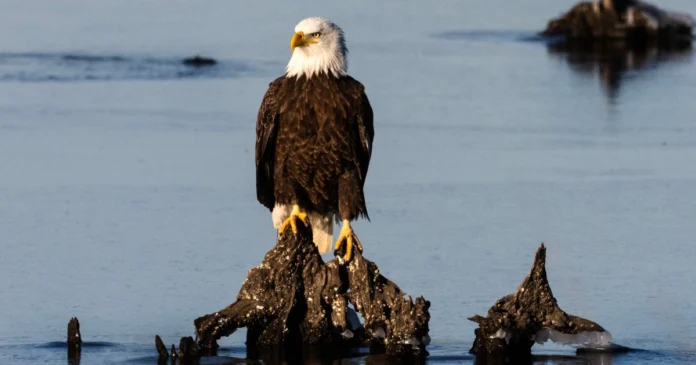
The Endangered Species Act has protected wildlife since 1973 and has contributed to the recovery of species including the bald eagle, American alligator, and peregrine falcon.
The debate is not over whether endangered animals should receive protection. It is over how far federal agencies may extend those protections into private property, resource development, and ordinary economic activity.
Trump has repeatedly argued that environmental laws should protect natural resources without allowing federal regulators to impose excessive costs on workers and businesses.
- Farmers and ranchers have criticized uncertainty surrounding habitat regulations.
- Energy producers say broad interpretations can delay drilling and infrastructure projects.
- Homebuilders argue that compliance costs can restrict development and increase housing prices.
- Conservation groups say habitat loss remains one of the greatest threats to wildlife survival.
The Supreme Court upheld the previous regulatory definition in the 1995 case Babbitt v. Sweet Home Chapter of Communities for a Great Oregon.
That ruling determined that the agencies were permitted to interpret “harm” as including habitat modification that actually kills or injures protected wildlife. It did not necessarily hold that the agencies were permanently required to retain that interpretation.
The Trump administration is relying on that distinction, arguing that agencies may rescind a permissible regulation when they conclude that it exceeds the best reading of the statute.
Environmental organizations are expected to argue that the change conflicts with the law’s text, purpose, and decades of precedent.
What Happens Next
The final rule will become effective after publication in the Federal Register and completion of the required waiting period.
Environmental organizations, including Earthjustice and the Center for Biological Diversity, have announced plans to challenge the decision in federal court.
A judge could allow the rule to take effect, temporarily block it, or ultimately determine whether the administration adequately explained its change in interpretation.
- Federal agencies will revise enforcement and permitting guidance.
- Businesses may reassess projects previously affected by habitat-based liability.
- Conservation groups will seek an injunction against the new rule.
- The dispute could eventually return to the Supreme Court.
Separate Endangered Species Act protections will continue. Federal agencies generally must still consult wildlife authorities when government-authorized projects may jeopardize listed species or destroy or adversely modify officially designated critical habitat.
Those provisions mean the final rule does not eliminate every federal habitat safeguard, even though it substantially narrows liability under the law’s prohibition against taking protected wildlife.
For Trump, the change represents an effort to preserve direct wildlife protections while stopping regulators from using an expansive definition to control large areas of private and public land.
The final outcome will depend on whether federal courts accept the administration’s narrower interpretation or restore the definition that governed enforcement for decades.
