

Story Highlights
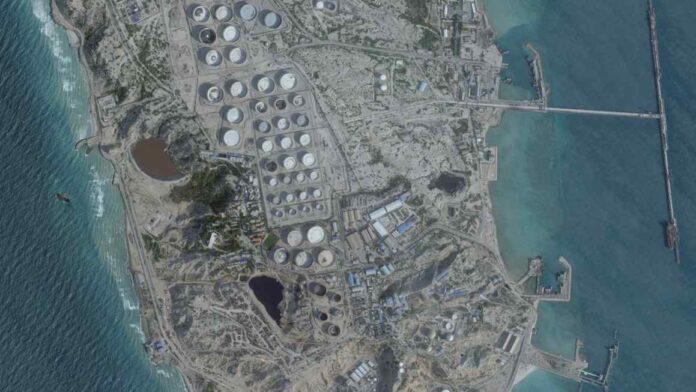
- President Donald Trump threatened another major round of strikes against Iran and possible U.S. control of the Kharg Island oil hub.
- Trump later called off the planned third night of attacks after reporting progress in high-level negotiations with Tehran.
- Iran announced restrictions in the Strait of Hormuz as military exchanges increased across the region.
What Happened
President Donald Trump threatened to launch a third consecutive night of heavy military strikes against Iran, warning that the United States could eventually take control of Kharg Island and other parts of Iran’s oil infrastructure.
In a Truth Social post, Trump said American forces would hit Iran “VERY HARD TONIGHT” and warned that the United States could assume control of the country’s oil and gas markets if Tehran continued resisting a peace agreement.
Kharg Island is Iran’s most important oil-export facility and a central source of revenue for the government. A strike or seizure involving the island would have placed intense economic pressure on Tehran.
- Trump warned that additional military action was ready to begin.
- Defense Secretary Pete Hegseth said the United States was prepared to continue striking Iran.
- The administration presented the pressure as an effort to force Tehran back toward negotiations.
Iran responded by announcing that the Strait of Hormuz was closed to marine traffic and warning that vessels attempting to cross the strategic waterway could be targeted.
Iran’s Islamic Revolutionary Guard Corps also claimed attacks against American military positions in Bahrain, Kuwait and Jordan. Regional governments reported intercepting missiles and drones, although several Iranian claims could not immediately be independently verified.
Hours after threatening another major attack, Trump announced that the planned strikes had been called off.
The president said discussions had reached the highest levels of Iran’s leadership and that diplomatic progress justified pausing the military operation.
Trump also said a direct attack on Kharg Island was off the table for the moment, indicating that the threat had served as leverage rather than an immediate, irreversible military decision.
Why It Matters
Trump’s decision demonstrates the central strategy behind his approach to Iran: apply overwhelming pressure while preserving an opportunity for diplomacy.
The threat against Kharg Island placed Iran’s most important economic asset at risk. By showing that the United States was prepared to target the financial infrastructure supporting Tehran’s government and military, Trump increased the cost of refusing negotiations.
The later decision to cancel the strikes allowed the president to avoid unnecessary escalation after receiving indications that talks were advancing.
- The threat showed that the United States retained major military options.
- The pause gave Iranian leaders an opportunity to complete negotiations.
- Trump avoided launching an attack that could have caused another sharp increase in oil prices.
Supporters of the president’s approach argue that the sequence reflects deliberate pressure rather than inconsistency. Trump established a clear military consequence, secured diplomatic movement and then withheld the attack when the immediate objective appeared closer.
The decision also reduced the risk to American troops and regional allies. A sustained attack on Iran’s oil facilities could have triggered a larger wave of missile and drone retaliation against U.S. bases throughout the Gulf.
The neutral concern is that repeated threats followed by reversals could create uncertainty if Iran begins to believe that announced deadlines will not be enforced.
However, Trump did not permanently remove military action from consideration. He made clear that strikes could resume if Tehran abandoned negotiations or launched additional attacks.
The Strait of Hormuz remains the most serious immediate risk. The waterway normally carries a major portion of the world’s oil and liquefied natural gas, and a prolonged disruption could increase gasoline, transportation and consumer prices internationally.
Political and Public Context
The confrontation unfolded as Trump attempted to balance two major promises: preventing Iran from threatening the United States and its allies while avoiding an open-ended Middle Eastern war.
The president’s supporters argue that previous administrations allowed Iran to use prolonged negotiations to gain time without making meaningful concessions.
Trump has taken a different approach by combining sanctions, military strikes, threats against economic assets and direct diplomatic pressure.
- Republican defense hawks support maintaining strong military pressure on Tehran.
- America First conservatives want Trump to avoid deploying ground forces.
- Voters remain concerned about gasoline prices and the financial cost of the conflict.
Trump appeared to recognize those domestic limits when he expressed doubt that Americans wanted a ground operation inside Iran.
His strategy has therefore focused on air power, naval pressure and threats against infrastructure rather than a large American occupation force.
The decision to pause the third night of strikes may help Trump argue that he is using military strength selectively rather than pursuing war for its own sake.
Democrats and some Republicans are likely to continue questioning whether the president has sufficient congressional authorization for the military campaign.
Congress has not formally declared war, and lawmakers from both parties have raised constitutional concerns about the scale and duration of American operations.
The White House maintains that the strikes were defensive responses to Iranian aggression and were necessary to protect American forces, commercial shipping and regional allies.
Politically, a negotiated settlement would allow Trump to claim that strength brought Iran to the table. A renewed escalation would increase pressure on the administration to explain its long-term objectives and exit strategy.
What Happens Next
The next phase depends on whether Iran follows through on the diplomatic progress Trump cited when canceling the strikes.
Negotiators are expected to continue discussing a ceasefire framework, access to the Strait of Hormuz and restrictions involving Iran’s nuclear and military programs.
The United States is likely to keep military forces positioned near Iran while talks continue, giving Trump the ability to rapidly restore pressure if negotiations fail.
- Watch whether Iran eases restrictions in the Strait of Hormuz.
- Monitor whether the United States announces a formal ceasefire framework.
- Follow any further missile or drone attacks against American positions.
- Track whether Kharg Island remains excluded from future military operations.
Commercial shipping companies will also be watching for evidence that the strait is becoming safer. Formal announcements alone may not restore normal traffic unless insurers and vessel operators believe the threat of attack has declined.
Oil markets are expected to respond quickly to any diplomatic breakthrough. Prices fell after Trump canceled the planned strikes, reflecting expectations that a wider attack on Iran’s energy infrastructure had become less likely.
If Iran reaches an agreement and restores secure passage through Hormuz, Trump can argue that military pressure produced both a diplomatic breakthrough and economic relief.
If Tehran reverses course, the president has preserved the option of renewed strikes and made clear that Kharg Island and other oil facilities could again become targets.
For now, Trump has chosen to pause escalation while giving negotiations another opportunity to succeed.
Sources
- Associated Press: Trump calls off new military strikes on Iran hours after threatening escalation
- Reuters: Trump says attack on Kharg Island is off the table for now
- Reuters: Trump says U.S. will hit Iran “very hard” and threatens oil infrastructure
- Reuters: Oil prices fall after Trump cancels planned Iran strikes
