

Story Highlights
- President Donald Trump signed the $70 billion Secure America Act, funding ICE and Border Patrol through 2029.
- The House passed the bill 214-212 after a months-long fight over immigration enforcement and accountability rules.
- Democrats opposed the measure unanimously, arguing it gives the administration broad enforcement power with few new safeguards.
What Happened
President Donald Trump signed the Secure America Act on Wednesday, locking in nearly $70 billion for Immigration and Customs Enforcement and Customs and Border Protection through fiscal year 2029.
The law marks a major victory for Trump’s immigration agenda after months of congressional deadlock. The House passed the measure one day earlier in a narrow 214-212 vote, following Senate passage the previous week.
- The bill provides $38 billion for ICE.
- It allocates $26 billion to Border Patrol.
- It includes another $5 billion for unforeseen enforcement costs.
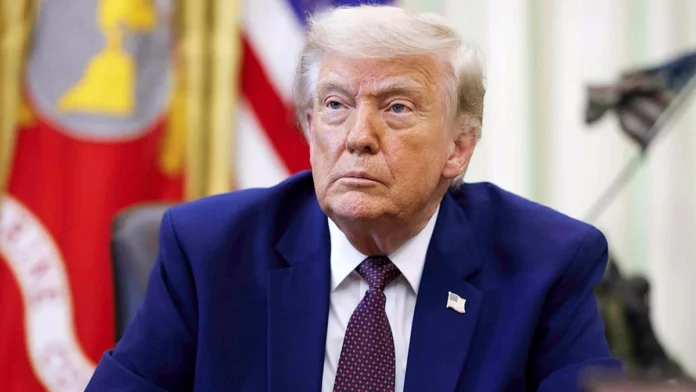
Trump signed the bill in the Oval Office alongside Republican leaders and senior homeland security officials. House Speaker Mike Johnson praised the law as a major step toward giving enforcement agencies the long-term support they need.
Republicans used budget reconciliation to pass the bill in the Senate with a simple majority, avoiding the 60-vote threshold normally required to overcome a filibuster. Democrats criticized that approach and said the final bill stripped out the oversight requirements they had demanded.
Why It Matters
The Secure America Act matters because it removes one of the biggest remaining constraints on Trump’s immigration enforcement strategy: annual funding uncertainty. ICE and Border Patrol will now have multi-year funding through the end of Trump’s second term.
For the administration, that means more room to expand detention capacity, hire agents, increase removals, and pressure sanctuary jurisdictions without returning to Congress each year for new funding fights.
- The law gives Trump a major immigration win before the midterms.
- It reduces Democratic leverage over ICE and Border Patrol funding.
- It sets up a larger fight over enforcement practices and civil liberties.
Democrats argue the law gives ICE and Border Patrol too much money with too few restrictions. They had pushed for guardrails such as body cameras, visible agent identification, limits on home entries, and enforcement-free zones around schools.
Those conditions were not included in the final bill, giving Democrats a clear campaign argument: that Republicans expanded immigration enforcement without requiring stronger accountability.
Political and Public Context
The law comes after a bitter standoff that began with Democratic demands for stricter oversight of immigration enforcement. Republicans rejected those conditions and framed the dispute as an effort by Democrats to block funding for border security.
The final vote showed how sharply divided Congress remains on immigration. Republicans largely unified behind the bill, while Democrats opposed it unanimously and accused the administration of seeking a blank check for mass deportation operations.
- Republicans will campaign on the law as a border security achievement.
- Democrats will campaign against it as an unchecked enforcement expansion.
- Immigration enforcement is now positioned as a defining midterm issue.
The legislation also strengthens the administration’s hand against Democratic-led states and cities with sanctuary policies. With funding secured, federal officials are expected to intensify pressure on jurisdictions that limit cooperation with ICE.
The political risk for Republicans is that expanded enforcement could produce high-profile confrontations in major cities, schools, workplaces, and neighborhoods. For Democrats, the challenge is turning opposition to enforcement tactics into a broader electoral message.
What Happens Next
With the Secure America Act now signed, the administration is expected to move quickly to expand enforcement capacity. That could include new detention contracts, expanded hiring, additional deportation operations, and stronger action against sanctuary jurisdictions.
Civil liberties groups and immigrant-rights organizations are expected to challenge specific enforcement practices in court. Democrats may also use congressional hearings and campaign messaging to keep attention on the law’s lack of new oversight provisions.
- ICE and Border Patrol will begin planning around multi-year funding certainty.
- Sanctuary cities may face more aggressive federal enforcement pressure.
- Legal challenges are likely to focus on how the new resources are used.
For Trump, the signing delivers a clear political win on one of his central issues. It gives him both the resources and the message to argue that Republicans delivered on border security where Democrats resisted.
For opponents, the fight now shifts from stopping the funding to challenging the enforcement operations that the funding makes possible. The Secure America Act may be signed into law, but the political and legal battle over how it is used is just beginning.
