

Story Highlights
- U.S. military intercepted Iranian ballistic missiles and drones directed at the Strait of Hormuz and Gulf Arab allies
- American forces struck Iranian coastal surveillance radar sites in retaliation, per U.S. Central Command
- Sirens activated in Kuwait and Bahrain; the UN World Food Programme warns the conflict is pushing 45 million people toward food insecurity
What Happened
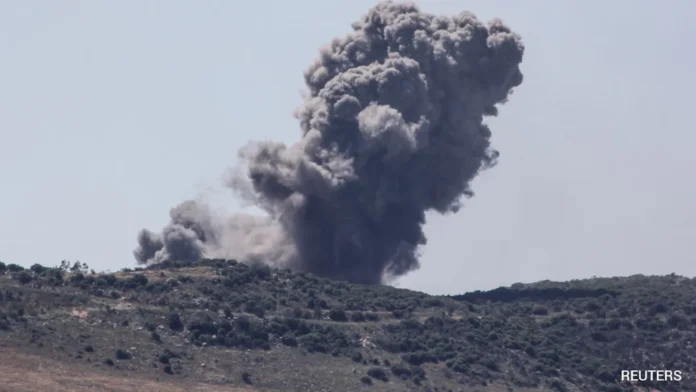
U.S. Central Command confirmed early Saturday that American forces intercepted Iranian ballistic missiles and drones launched toward the Strait of Hormuz and Gulf Arab partner nations. In response, U.S. military assets struck Iranian coastal surveillance radar facilities, marking one of the more direct exchanges of fire since the war’s opening salvos in late February. Sirens were activated in Kuwait and Bahrain, with Kuwait’s army acknowledging that it was responding to active missile and drone threats in its airspace.
Iran’s semi-official Mehr news agency offered a different framing, describing the launches as “warning shots” tied to the repositioning of U.S. naval vessels near the strategic waterway. According to Mehr, the intended targets were at sea near Larak Island, off the coast of the port city of Bandar Abbas, and were not directed at civilian population centers. The discrepancy in accounts reflects the persistent information fog surrounding the conflict, in which both sides have repeatedly issued contradictory statements about the scope of hostilities.
President Donald Trump told NBC News on Friday that he is “moving very fast” with the Iran war, pushing back on critics who have highlighted that the conflict has now entered its third month, well past the four-to-six-week timeline he initially projected. “I’m into three months, you know. Vietnam lasted 19 years. I’m into my third month,” Trump remarked, framing the war’s duration in historical terms while defending the administration’s military strategy.
Trump also disclosed that Tehran still retains roughly 21 to 22 percent of its pre-war missile stockpile, a figure that Pentagon officials have used to justify continued pressure operations. The president added that Iran had tentatively agreed to allow U.S. personnel into the country to locate and remove buried nuclear material once the conflict ends, though Iranian officials have not publicly confirmed that concession. Peace talks between U.S. and Iranian officials have continued through intermediaries, but significant gaps remain, particularly over Iran’s demand that the U.S. unfreeze approximately $24 billion in frozen Iranian assets as a precondition for a final agreement.
Why It Matters
The renewed exchange of strikes raises serious questions about whether the ceasefire framework, already extended indefinitely by Trump, retains any practical meaning. Each episode of fire risks triggering a wider escalation, particularly given Iran’s stated warning that any Israeli strike on Beirut would constitute a complete ceasefire breakdown and prompt an armed response from Tehran. With Hezbollah continuing operations in southern Lebanon and more than 20 people killed in Israeli strikes there on Friday alone, the regional architecture is under severe strain.
For American policymakers, the weekend’s exchange signals that Iran has not been sufficiently degraded militarily to accept U.S. terms outright, despite the administration’s repeated assertions that the country’s armed forces have been nearly eliminated. The continued ability of Iran to launch coordinated drone and missile salvos demonstrates that Tehran retains meaningful capability to disrupt regional stability and threaten the free flow of commerce through the Strait of Hormuz, which handles approximately 20 percent of global oil supply.
The conflict also represents an enormous test of Trump’s credibility. His initial assurances that the war would be brief and decisive have given way to a more open-ended commitment that the administration has struggled to define. Congressional frustration has been rising, with the House having passed a war powers resolution seeking to constrain the president’s authority to continue offensive operations without explicit legislative approval.
Economic and Global Context
The disruption to the Strait of Hormuz has sent oil prices surging. Benchmark crude has remained above $100 per barrel since the war’s opening phase, a level that Energy Secretary Chris Wright described as manageable while attributing broader fuel price increases to prior Democratic energy policies. At the pump, however, Americans have felt the strain directly, with $5-per-gallon gasoline common in much of the country and diesel costs particularly damaging to agricultural and transportation sectors.
The UN World Food Programme warned this week that as many as 45 million people globally could face acute food insecurity if oil prices remain elevated through June, a threshold now being breached. Nations including Somalia, Afghanistan, and Sri Lanka face the most severe humanitarian pressure, as higher fuel costs ripple through food production and distribution systems worldwide.
U.S. naval blockade operations, supplemented by partner nation vessels, have attempted to keep critical shipping lanes open under what the administration has dubbed “Project Freedom.” However, that operation was temporarily paused in early May to assess peace prospects, and Iranian threats to resume mining operations in the strait remain a persistent concern for commercial shippers and allied governments alike.
Implications
For the Trump administration, the path forward involves sustaining military pressure while keeping diplomatic options alive — a balance that grows harder to maintain with each new exchange of fire. The unfreezing of Iranian assets, which Tehran has made central to any deal, presents a politically toxic proposition domestically. Granting Iran a financial concession after months of costly warfare would face intense scrutiny from hawks in Congress and from the public.
Gulf Arab allies, while formally supportive of U.S. objectives, are growing increasingly anxious about Iranian retaliation on their soil. Kuwait and Bahrain, both key hosts for U.S. military infrastructure, have now faced direct aerial threats. Their governments will press Washington for clearer timelines and stronger defensive guarantees, complicating alliance management at a moment when coherence matters most.
For voters back home, the war’s economic consequences — elevated fuel prices, supply chain disruptions, and rising grocery costs — are converging with growing fatigue over the conflict’s apparent lack of a defined endpoint. With the 2026 midterms approaching, Republican strategists are increasingly worried that the war’s costs could be a decisive liability at the ballot box if resolution remains elusive through the fall campaign season.
