

Story Highlights
- Senator Roger Wicker expresses concerns over human rights issues in China ahead of the summit.
- President Trump is set to meet with Xi Jinping to discuss trade and artificial intelligence.
- The summit marks the first in-person meeting between the two leaders since May.
- Wicker emphasizes the importance of addressing China’s oppressive policies during the discussions.
What Happened
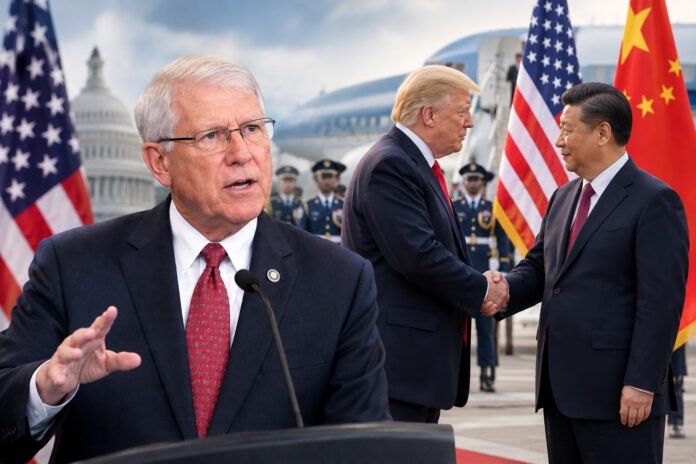
In a significant diplomatic event, President Trump is preparing to welcome Chinese President Xi Jinping to Washington, D.C. The meeting, scheduled for Wednesday at Joint Base Andrews, is poised to be a pivotal moment in U.S.-China relations. However, not all voices are in favor of the lavish welcome being extended to Xi. Senator Roger Wicker, a prominent Republican and chair of the Senate Armed Services Committee, has publicly criticized the decision to host the Chinese leader, citing serious concerns regarding human rights abuses perpetrated by the Chinese Communist Party.
Wicker’s remarks on the Senate floor reflect a growing unease among lawmakers regarding the implications of engaging with a leader who has been accused of numerous human rights violations. He stated that had the White House sought his advice, he would have recommended against inviting Xi for such a grand reception. The senator’s comments underscore the tension that exists between the necessity of diplomatic engagement and the moral imperative to address human rights issues.
- Senator Roger Wicker criticized the invitation extended to Xi Jinping.
- The summit will focus on trade and artificial intelligence advancements.
- President Trump and First Lady Melania Trump will host a state dinner for Xi and his wife.
- The meeting occurs just before a U.S.-China trade truce is set to expire on November 10.
Why It Matters
The upcoming summit between President Trump and President Xi is not merely a ceremonial event; it carries significant implications for both nations and the global landscape. As the two leaders prepare to discuss critical issues such as trade and artificial intelligence, the backdrop of human rights abuses in China looms large. Wicker’s insistence on addressing these issues highlights the delicate balance that must be struck between fostering economic relations and advocating for fundamental human rights.
China’s track record under Xi’s leadership has raised alarms internationally, particularly concerning the treatment of Uyghur Muslims, Tibetans, and other religious and ethnic minorities. Wicker pointed out that over a million Uyghurs are currently detained in concentration camps in Xinjiang, a fact that cannot be overlooked during discussions of trade and technology. The senator’s call for President Trump to advocate for these oppressed groups during the summit is a reminder that economic cooperation should not come at the expense of human dignity.
- Failure to address human rights could lead to international backlash against the U.S.
- U.S. businesses may face scrutiny over their ties to China.
- Continued human rights abuses could destabilize the region.
- Advocating for human rights aligns with American values and interests.
Political and Public Context
The context surrounding this summit is critical to understanding its potential impact. The meeting comes at a time when U.S.-China relations are particularly strained, with both nations vying for technological supremacy in artificial intelligence. As the two countries compete for dominance in this vital sector, the stakes are higher than ever. The expiration of the U.S.-China trade truce on November 10 adds another layer of urgency to the discussions, as both sides consider the implications of renewed tariffs and trade barriers.
Moreover, the geopolitical landscape is shifting, with China increasingly asserting its influence in global affairs. The recent tensions in the South China Sea and China’s support for regimes like Iran further complicate the relationship. Wicker’s concerns about Xi’s oppressive regime are not unfounded; they reflect a broader apprehension among lawmakers about the implications of engaging with a leader who has shown little regard for human rights.
- China’s influence in global affairs is growing, raising concerns among U.S. lawmakers.
- The expiration of the trade truce could lead to renewed economic tensions.
- Geopolitical shifts are prompting calls for a more assertive U.S. foreign policy.
- Previous summits have yielded mixed results, raising questions about their effectiveness.
The chairman of the Senate Armed Services Committee, Republican Sen. Roger Wicker, says he disagrees with the “lavish welcome” planned for the China’s Xi Jinping, whom he calls an “oppressive dictator.” https://t.co/XOKc49teP8
— The Washington Post (@washingtonpost) September 23, 2026
What Happens Next
Looking ahead, the outcomes of this summit will be closely monitored by both domestic and international observers. The discussions between President Trump and President Xi will likely set the tone for future U.S.-China relations, particularly in the realms of trade and technology. However, the pressing question remains: will human rights be adequately addressed during these talks?
As the summit approaches, there are several key considerations that will shape the dialogue. The administration must navigate the complexities of engaging with a leader whose policies have drawn widespread condemnation while also pursuing vital economic interests. The potential for progress on trade and artificial intelligence exists, but it must not overshadow the urgent need to advocate for human rights.
- Will President Trump raise human rights issues during the summit?
- How will the outcome of the summit affect U.S.-China trade relations?
- What measures will be taken to address concerns over artificial intelligence?
- Will there be a shift in U.S. policy towards China following the summit?
