

Story Highlights
- Fox News host Jesse Watters declined to condemn Senator Jon Ossoff’s critical remarks about President Trump, distinguishing himself from other conservative commentators
- Ossoff made pointed comments during a speech suggesting the president prioritizes personal interests over his duties
- Watters acknowledged the president has made comparably harsh statements and defended those positions consistently
- The host’s measured response stood in contrast to defensive reactions from other MAGA-aligned voices and White House officials
What Happened
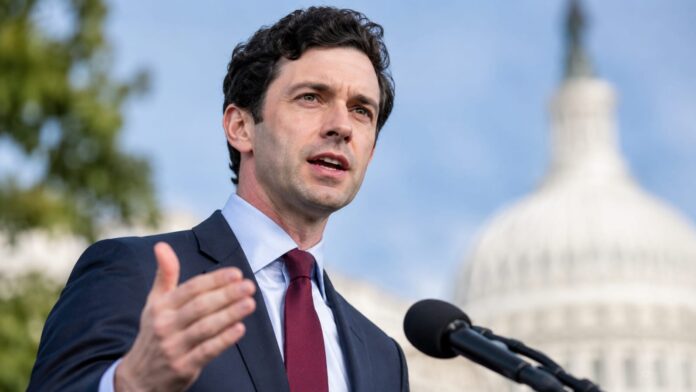
Senator Jon Ossoff of Georgia delivered remarks during a weekend speech that went viral, in which he suggested the president does not genuinely want to perform his duties but instead prefers to focus on personal projects and leisure activities. Ossoff’s commentary included references to Trump aide Natalie Harp and referenced travel aboard what he characterized as a luxury aircraft.
The comments prompted swift defensive reactions across conservative media and the White House. White House Communications Director Steven Cheung responded by using derogatory language to describe Ossoff, while other MAGA-aligned commentators moved to defend the administration. However, Watters took a noticeably different approach during an appearance on Fox News’ The Five.
When co-panelist Dana Perino noted that Ossoff’s remarks were part of a prepared speech rather than an impromptu comment, Watters explained his lack of concern. He acknowledged that the president has made substantially harsher statements directed at others throughout his public career, and that he himself has defended those statements. Based on this consistency, Watters indicated he would not feign outrage over Ossoff’s critique.
- Senator Jon Ossoff made viral remarks during a weekend speech characterizing the president’s priorities
- White House Communications Director Steven Cheung responded with inflammatory language
- Jesse Watters declined to join other conservatives in condemning Ossoff’s comments
- The exchange occurred on Fox News’ The Five program
Why It Matters
Watters’ response represents a significant moment of consistency within conservative media discourse. Rather than adopting the defensive posture that has become standard practice in defending the president against criticism, the Fox News host chose instead to acknowledge a fundamental reality: the president has engaged in pointed, caustic rhetoric directed at political opponents and critics throughout his career. This honesty stands in marked contrast to selective outrage that characterizes much of contemporary political commentary.
The incident highlights the asymmetry that often emerges when defensive mechanisms activate around political figures. Conservatives who have steadfastly defended harsh presidential rhetoric now find themselves in the position of condemning similar language when directed at their preferred candidate. Watters’ refusal to participate in this performative outrage demonstrates an understanding that consistency requires either accepting forceful language as part of political discourse or renouncing it entirely for all participants.
Additionally, the exchange illustrates how Natalie Harp, a White House aide whose responsibilities include managing the president’s social media presence and curating information for his consumption, has become a minor focal point in the broader discussion about presidential priorities and decision-making processes. Her role, as characterized in available reporting, speaks to particular concerns about information flow and staff dynamics within the administration.
- Watters demonstrated intellectual consistency by acknowledging the president’s own rhetoric standards
- The response exposed selective outrage patterns within conservative commentary
- The incident revealed broader questions about information management and staff roles within the administration
- Watters’ position challenged other commentators to reckon with their own defensive inconsistencies
Political and Public Context
The broader context for this exchange involves the president’s well-documented history of using pointed, often caustic language in his public communications. Throughout his political career, he has directed harsh criticism at political opponents, journalists, and public figures. This rhetorical approach has become normalized within his political movement and has been defended extensively by his supporters and aligned media figures.
Senator Ossoff represents the Democratic opposition to the president and his administration. As a relatively younger Democratic senator from a Southern state that has been competitive in recent election cycles, Ossoff occupies a particular political position. His willingness to deliver pointed criticism in a public forum reflects the adversarial nature of contemporary political discourse, where both parties engage in increasingly sharp rhetorical combat.
The incident also reflects broader media dynamics in which outlets and commentators often engage in what might be characterized as selective principle application. When criticism is directed at one’s preferred political figures, urgency typically emerges to defend them vigorously. Watters’ approach suggested a different standard: consistent acknowledgment of how political discourse actually functions, rather than pretending that harsh rhetoric represents a unique transgression when applied to particular individuals.
- The president has employed pointed rhetoric throughout his political career with consistent media defense
- Senator Ossoff’s criticism reflects standard adversarial political communication patterns
- Media commentary often reflects selective application of standards depending on target political alignment
- Watters’ response contrasted with typical defensive media posturing
Jesse Watters Shrugs Off Right Wing Freakout Over Ossoff Jab At Trump #CrooksAndLiars https://t.co/OpuHVp9JyF
— #TuckFrump (@realTuckFrumper) August 20, 2026
What Happens Next
The significance of Watters’ response likely extends beyond this particular incident. His willingness to break from the standard defensive playbook may influence how other conservative commentators approach similar situations going forward. Whether this represents a broader shift toward greater candor within conservative media remains to be seen, but the positive reception his comments received on social media suggests an appetite for this kind of intellectual honesty.
Senator Ossoff will presumably continue his role as a Democratic voice critical of the administration. The underlying tensions regarding how political figures are discussed, defended, and critiqued will persist as the political landscape evolves. The administration’s communications strategy, as exemplified by the White House Communications Director’s response, may also face questions about effectiveness and consistency.
More broadly, this moment raises questions about whether conservative media figures will increasingly acknowledge the president’s own rhetorical standards rather than adopting performative outrage when similar language is deployed against him. Watters’ precedent, if followed by others, could represent a modest but meaningful shift toward greater authenticity in political commentary, even when that authenticity requires acknowledging uncomfortable truths about preferred political figures.
- Watters’ approach may influence how other conservative commentators address similar criticisms
- The positive reception suggests audience appetite for candid political commentary
- Democratic criticism of the administration will likely continue through various forums
- The broader question of selective application of rhetorical standards remains unresolved in political discourse
