

Story Highlights
- Trump declared the U.S.-Iran deal “complete” in a Truth Social post, announcing the Strait of Hormuz would reopen toll-free following a formal signing ceremony set for Friday in Switzerland
- U.S. crude oil futures dropped approximately 4.9 percent on Monday to $80.75 per barrel following the announcement
- CIA Director John Ratcliffe and senior advisers privately doubted Iran would follow through on the nuclear terms Washington sought, according to a U.S. official
What Happened
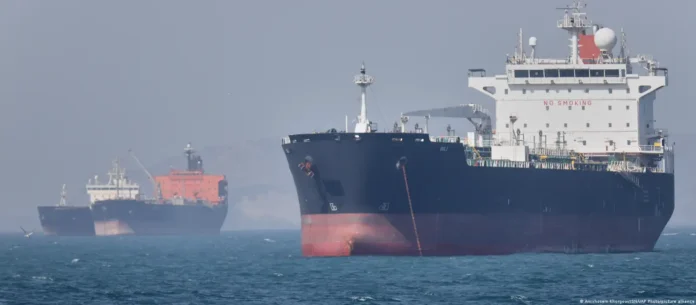
President Donald Trump announced on Sunday that the United States and Iran had reached a Memorandum of Understanding to end the conflict that had disrupted global energy markets since late February. “The Deal with the Islamic Republic of Iran is now complete,” Trump posted on Truth Social. “Ships of the World, start your engines. Let the oil flow!” The agreement, which is set to be formally signed in Geneva on Friday, includes a 60-day ceasefire extension, the lifting of the U.S. naval blockade of Iranian ports, and the reopening of the Strait of Hormuz to all international shipping without tolls.
The deal, mediated in part by Pakistan and Oman, had been months in the making and came after a series of escalating ultimatums, military strikes, and near-collapses in negotiations. Vice President JD Vance is expected to attend the signing ceremony in Geneva on Friday. Trump said he would decide whether to attend himself, but that Vance would represent the administration regardless. Senior officials said the Memorandum of Understanding also provides for a ceasefire in Lebanon, though Israel’s defense establishment immediately signaled it did not consider itself bound by those terms.
The deal leaves many of the most difficult issues for a follow-on 60-day negotiation period. Critically, the question of Iran’s stockpile of near-weapons-grade uranium and its enrichment capabilities has not been resolved. Trump said he would send the eventual text of any final agreement with Iran to Congress for review, a statement that surprised even some of his allies — including Senator Lindsey Graham, who has said that a final nuclear agreement will indeed be subject to congressional scrutiny.
Intelligence officials have complicated the picture significantly. CIA Director John Ratcliffe and acting national security adviser Marco Rubio privately told Trump and senior administration officials that U.S. intelligence assessments suggest Iran is unlikely to agree to the nuclear concessions Washington is seeking in the next phase of negotiations. That internal skepticism, which has not been publicly acknowledged by the White House, raises fundamental questions about what the deal actually achieves beyond a temporary halt to hostilities.
Iran’s own characterization of the agreement differs materially from Washington’s. Iranian officials stated that the 60-day nuclear negotiations would not begin until the United States releases billions of dollars in frozen Iranian assets. U.S. officials rejected that framing, but the discrepancy has fed uncertainty in markets and diplomatic circles about whether the two sides are actually working from the same text.
Why It Matters
The significance of the U.S.-Iran framework agreement extends well beyond the immediate cessation of hostilities. The closure of the Strait of Hormuz since late February had effectively cut off roughly 20 percent of the world’s oil supply from global markets, triggering a supply shock that drove energy prices sharply higher, stoked inflationary pressures in the United States and Europe, and threatened the stability of energy-importing economies across Asia and Africa.
For the Trump administration, successfully brokering a deal with Iran — after months of military pressure, threats, and diplomacy — represents one of the most significant foreign policy accomplishments of the president’s second term, regardless of the lingering questions about implementation. Trump has framed the agreement as a vindication of his “maximum pressure” strategy, which combined economic sanctions, naval blockades, and military strikes with backchannel diplomatic engagement.
For the American economy, the reopening of the Strait of Hormuz — assuming it holds — would provide meaningful relief from elevated energy costs that have weighed on consumer spending and business investment. Lower oil prices directly reduce gasoline prices for American consumers and cut input costs for manufacturers, logistics companies, and airlines.
The domestic political stakes are also considerable. Congressional Republicans will scrutinize the nuclear terms closely. Some have already signaled that any final agreement permitting Iran to retain enrichment capabilities will face resistance.
Economic and Global Context
The market reaction to the U.S.-Iran deal was swift and significant. U.S. crude oil futures declined approximately 4.9 percent on Monday, settling at $80.75 per barrel. Brent crude fell roughly 4.8 percent to $83.17. Both figures represent a sharp reversal from the elevated price levels that persisted throughout the conflict, when West Texas Intermediate futures had briefly traded above $115 per barrel at the height of tensions in early April. Stock markets surged alongside the oil decline, reflecting investor optimism that a major source of geopolitical risk had been at least partially resolved.
However, commodity analysts and shipping industry executives cautioned that a full restoration of normal Hormuz traffic could take weeks. Iran deployed mines in the strait during the conflict, and Secretary of State Rubio told Congress that large segments of the waterway remain mined. Britain and France have expressed readiness to deploy mine-clearing vessels to assist, and Macron said Monday that French naval assets already in the region could begin operations within days of the deal’s signing. Still, tanker operators remain cautious, and insurance premiums for vessels transiting the region remain elevated.
Deutsche Bank researchers noted in a June analyst report that while optimism was running high, the actual restoration of pre-conflict oil flow levels would depend on the physical clearance of the strait and on market confidence that the ceasefire would hold over the 60-day negotiation period and beyond.
Implications
The most immediate near-term test of the deal will be the formal signing ceremony in Geneva on Friday. If that event proceeds without incident, it will signal that the basic framework holds and allow mine-clearing operations to begin in earnest. Markets will watch closely for any disruption — particularly any additional Israeli military action in Lebanon — that could threaten to derail the process.
Over the 60-day negotiation window that follows, the Trump administration will face the harder task of converting the Memorandum of Understanding into a durable, verifiable agreement on Iran’s nuclear activities. The CIA’s internal skepticism about Iran’s intentions suggests that path will be considerably harder than the president has publicly indicated.
For American voters and businesses, the most tangible near-term outcome will be whether the deal produces a sustained decline in energy prices. If gasoline prices fall meaningfully in the weeks ahead, the administration will be able to point to that as a concrete economic dividend. If the deal falters and prices spike again, the political cost to Trump could be significant heading into the midterm election environment.
Sources
“U.S. and Iran reach framework deal to end war and reopen the Strait of Hormuz”
