

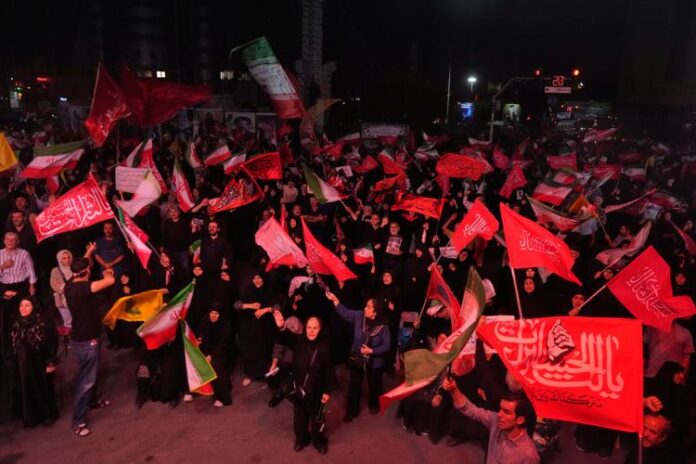
American forces launched fresh strikes against Iran overnight as the conflict over control of the Strait of Hormuz entered its second week, with President Trump warning the situation could get “really bad” if Tehran does not reach a deal soon. Iran claims it targeted a U.S. base in Syria in retaliation, and a child was reported injured by shrapnel in Qatar, underscoring how the fighting has spilled beyond Iran’s borders into the wider Gulf region. Despite a memorandum of understanding signed by both countries in June aimed at ending the conflict, strikes have continued on both sides.
Story Highlights
- U.S. forces have now conducted strikes against Iran for multiple consecutive nights, focused on degrading Tehran’s ability to target shipping in the Strait of Hormuz
- Iran claims it struck a U.S. base in Syria; a child was injured by shrapnel in Qatar in related regional fallout
- Trump has floated and then withdrawn a proposed 20 percent toll on cargo transiting the strait, instead pursuing trade and investment deals with Gulf states
What Happened
The conflict between the United States and Iran, which began with what Trump described as “major combat operations” on February 28 involving joint U.S.-Israeli strikes on Iranian military, government and infrastructure sites, has continued despite a memorandum of understanding signed by both nations in June intended to end the fighting. U.S. Central Command confirmed additional strikes overnight, with Iran claiming in response that it targeted an American base in Syria. Officials in Qatar reported that a child was injured by shrapnel, illustrating how the conflict continues to affect civilians across the wider Gulf region even as both governments maintain that formal negotiations toward a lasting deal are ongoing.
The current phase of fighting has centered heavily on the Strait of Hormuz, the narrow waterway between the Persian Gulf and the Gulf of Oman through which roughly a fifth of the world’s oil and liquefied natural gas passes. The U.S. military has conducted a sustained campaign aimed at degrading Iran’s ability to threaten commercial vessels in the strait, including strikes on Iranian ports and a naval blockade targeting Iranian oil shipments. CBS News reported that the U.S. completed its sixth consecutive night of strikes this week, with visible damage reported near the Iranian port town of Chabahar.
Trump has repeatedly signaled a desire for the United States to assume long-term control over security in the strait, telling reporters the U.S. would become the “guardian” of the waterway and suggesting the country should be compensated for providing that security. He initially proposed a 20 percent toll on cargo passing through the strait, an idea his own secretary of state, Marco Rubio, had previously dismissed as unworkable. Trump later said he would replace the toll proposal with trade and investment agreements involving Gulf states instead, crediting Secretary of War Pete Hegseth, Joint Chiefs Chairman Dan Caine and CENTCOM Commander Admiral Brad Cooper for the military’s progress.
Iran, for its part, has continued intermittent retaliatory strikes against U.S. allies and interests throughout the Gulf, including missile attacks that the United Arab Emirates said struck two of its tankers in Omani waters. Iran’s military claimed it disabled two “rogue supertankers” in a separate incident. Amid the continued hostilities, Trump also announced that Iran released an American woman who had been detained since December 2024, calling it a “gesture of goodwill.” The Treasury Department has simultaneously escalated financial pressure on Iran, targeting a sanctions evasion network tied to an Iranian businessman it says has helped fund the government’s military operations.
Why It Matters
The prolonged conflict represents one of the most significant and sustained U.S. military engagements in the Middle East in years, with direct implications for global energy markets, regional stability and American foreign policy credibility. The Strait of Hormuz’s role as a chokepoint for global oil and gas shipments means that any disruption, intentional or incidental, carries the potential to ripple through energy prices worldwide, affecting American consumers at the pump and businesses reliant on stable fuel costs.
The administration’s shifting approach to the strait, first proposing a toll, then abandoning it for trade agreements, reflects the complexity of asserting a long-term American security and economic role in a waterway that Iran has historically claimed the right to control. This ambiguity has drawn criticism from some foreign policy analysts who argue the administration has struggled to articulate a consistent end state for the conflict, even as it continues military operations nightly.
For American allies in the Gulf, including the UAE, Qatar and Saudi Arabia, the continued fighting represents an ongoing security risk despite their proximity to the conflict rather than direct involvement in it. The injury of a child in Qatar from shrapnel highlights the civilian toll extending beyond Iran’s borders, raising the stakes for regional diplomacy even as Washington and Tehran maintain that a memorandum of understanding remains technically in force.
Economic and Global Context
Global oil markets have remained sensitive to developments in the strait, given that a substantial share of the world’s seaborne oil and LNG exports transit the corridor. Iran’s oil ministry reported exporting roughly 80 million barrels of crude following the June memorandum of understanding, suggesting some continued flow of Iranian oil exports even amid the fighting, though shipping companies have had to navigate elevated insurance costs and rerouted routes due to the ongoing risk.
Gulf states, including the UAE, Saudi Arabia and Qatar, have significant economic interests in stabilizing the strait given their reliance on unimpeded oil exports and maritime trade. Trump’s pivot toward trade and investment deals with these nations, rather than a unilateral toll, suggests an effort to align U.S. military presence in the region with deeper economic partnerships, potentially opening the door to major new investment announcements from Gulf sovereign wealth funds into U.S. industries.
Internationally, other major oil-importing nations, including China, Japan and South Korea, have a direct stake in the strait’s stability given their reliance on Gulf energy supplies. Trump has previously called on countries such as China, France, Japan, South Korea and the United Kingdom to contribute ships to help secure the waterway, an appeal that underscores how the conflict’s economic stakes extend well beyond the U.S. and Iran.
Implications
In the near term, expect continued nightly U.S. strikes on Iranian targets tied to the Strait of Hormuz, with Trump signaling that operations could intensify against Iranian infrastructure, including power plants and bridges, if Tehran does not move toward a durable resolution. Diplomatic channels remain technically open under the June memorandum, but repeated violations by both sides raise doubts about whether a lasting ceasefire is achievable in the short term.
For global shipping and energy companies, continued instability in the strait means sustained elevated insurance costs and potential rerouting of vessels, with downstream effects on fuel prices that could be felt by American consumers and businesses reliant on stable energy costs heading into the fall.
For Gulf allies and other international stakeholders, the coming weeks will likely bring pressure to formalize new security and trade arrangements with Washington, as the administration seeks to translate its military campaign into durable economic partnerships. Congressional oversight of the extended military operation may also intensify, particularly if American personnel or interests sustain direct casualties as the conflict continues.
Sources
“US hits Iran with another wave of attacks, CENTCOM says”
