

Story Highlights
- The president imposed 50 percent tariffs on approximately $20 billion in Canadian goods following collapsed trade negotiations, prompting retaliatory measures from Ottawa.
- Republican concerns center on potential economic impacts in battleground states where voters already face cost-of-living pressures ahead of November elections.
- Some GOP members have publicly distanced themselves from the trade approach, though supporters argue it reflects necessary firmness in international negotiations.
- Agricultural regions that strongly backed the president in 2024 face particular vulnerability to escalating trade tensions with Canada.
What Happened
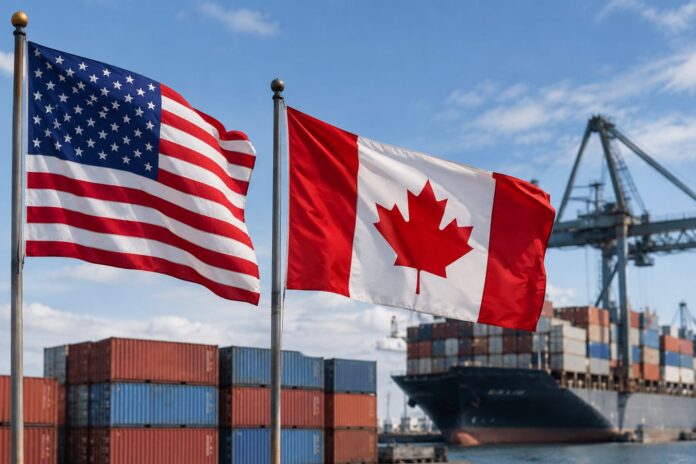
Trade negotiations between the United States and Canada deteriorated this month, culminating in the White House’s imposition of tariffs on roughly $20 billion worth of Canadian goods at the 50 percent rate. The dispute emerged from broader disagreements over trade terms and economic cooperation between the two countries. Rather than seek compromise, the administration maintained a confrontational stance, with the president taking to social media to express frustration with Canada’s negotiating position and even proposing alternative geographic nomenclature for Lake Ontario.
Canada’s government responded swiftly with retaliatory measures. Prime Minister Mark Carney doubled existing tariffs on American steel and aluminum while expanding the list of targeted U.S. goods, bringing the total value of affected American exports to approximately $20 billion. The tit-for-tat escalation signals a prolonged dispute with significant implications for cross-border commerce and supply chains that depend on seamless trade flow between the two nations.
- 50 percent tariffs imposed on $20 billion in Canadian goods
- Canada doubled tariffs on American steel and aluminum in response
- Total affected American exports value reached $20 billion through Canadian retaliation
- Trade talks collapsed before tariff implementation occurred
Why It Matters
The timing of this trade escalation creates particular concern within Republican circles because midterm elections loom in November. Voters in battleground states already struggle with elevated prices for essential goods and services, a persistent headwind for any governing party seeking to maintain congressional majorities. Agricultural regions that delivered overwhelming support to the president in 2024 face disproportionate risk from tariff-driven supply chain disruptions and retaliatory measures targeting American farm products.
Economic data underscores the severity of voter sentiment on this issue. According to recent polling, 56 percent of Americans rank cost-of-living concerns among the nation’s top issues, indicating that price pressures dominate public consciousness. Even more tellingly, approximately 33 percent of voters who supported the president in 2024 identified rising prices as a failure of his second-term agenda. This internal erosion of support within the core coalition poses challenges for Republicans defending their records before voters.
Northern states including Maine and Michigan could experience disruptions to food and construction costs, while agriculture-heavy regions in Iowa and North Carolina face risks to farm communities that historically represent reliable conservative voting blocs. The Corn Belt counties that backed the president by an average of 78 percent in 2024 now confront uncertainty about market access and commodity prices.
- 56 percent of Americans cite cost-of-living as a top concern facing the nation
- 33 percent of 2024 Trump voters identified rising prices as a second-term failure
- Agricultural counties in Corn Belt regions face commodity price and market access risks
- Battleground states in the North risk increased food and construction costs from tariffs
Political and Public Context
The trade dispute reflects longstanding disagreements over how aggressively the United States should pursue protectionist economic policies. The president’s approach emphasizes confrontation and leverage-based negotiation, rejecting what supporters characterize as decades of inadequate trade agreements that disadvantaged American workers and manufacturers. This philosophy resonates powerfully with his political base, which views tough stances on international commerce as necessary corrections to past policy failures.
However, the practical implementation of these policies has generated friction within the broader Republican coalition. Several GOP senators and representatives have begun publicly expressing reservations about the specific tariff measures, warning colleagues that electoral consequences could follow if voters blame Republicans for economic pain. A retiring North Carolina senator noted that the party currently lacks a positive economic message for rural America and warned that whoever owns responsibility for trade-related economic tension will likely suffer electorally.
Retiring representatives and current office-holders from states dependent on cross-border commerce have articulated concerns that the tariffs harm American consumers and businesses unnecessarily. Maine’s senator specifically highlighted the state’s export-dependent agricultural and forest product industries, noting that tariffs on processed goods returning from Canada would increase costs for American consumers. These voices within the GOP reflect genuine policy disagreements rather than partisan opposition, suggesting that debate over trade approach extends across ideological lines within conservative politics.
- Trade policy debate reflects disagreement over protectionism versus free-market approaches
- President’s supporters view tough stances as necessary corrections to past agreements
- Retiring GOP members feel freedom to express tariff concerns without party discipline
- Cross-border dependent states show particular vulnerability to escalating trade tensions
Republicans were already nervous about November. Then Trump restarted his trade war.
Trump's latest moves are set to reverberate especially hard in a handful of states crucial to the party's hopes of keeping their Senate majority. https://t.co/y9691bt5Lh
— POLITICO (@politico) August 26, 2026
What Happens Next
The trajectory of this dispute remains uncertain, with the White House showing little indication of backing away from its tariff position. Future negotiations between American and Canadian officials could produce revised agreements that satisfy both sides’ core demands, or the trade war could deepen with additional rounds of tariff increases. The president’s demonstrated willingness to maintain confrontational positions suggests that resolution may require significant concessions from Canada.
Republicans will need to manage messaging challenges during the campaign season, particularly in regions where trade impacts economic conditions most severely. Whether the party can frame the trade dispute as temporary pain for long-term gain, or whether voters punish GOP candidates for current price pressures, remains a critical question for November’s electoral landscape. The coming weeks will reveal whether economic conditions improve or deteriorate, shaping voter perception of administration policy effectiveness.
- Future negotiations between U.S. and Canadian officials remain uncertain in scope and timing
- White House shows no indication of retreat from tariff position without major concessions
- Republican campaign messaging will emphasize long-term economic benefits of firm negotiating stance
- November election results may depend significantly on price trend direction in final months before voting
