

Story Highlights
- President Trump proposes a $5,000 dividend for all US adults if Republicans maintain control of Congress.
- The funding for the dividend is suggested to come from innovative sources, not taxpayer dollars.
- Administration officials express confidence in the economic viability of the proposal.
- The proposal has drawn both support and criticism amid rising national debt concerns.
What Happened
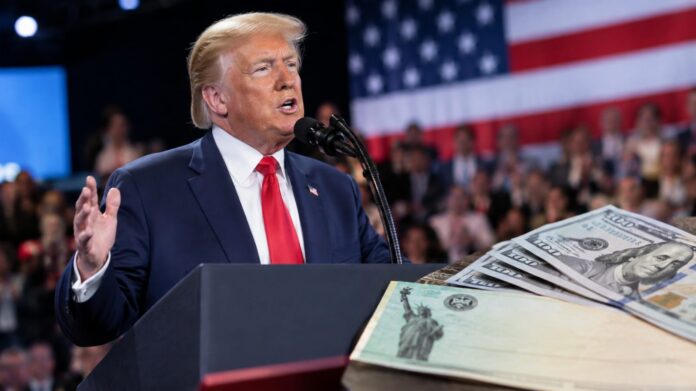
In a bold move that has ignited discussions across the political spectrum, President Trump announced a proposal to provide a $5,000 dividend to every adult in the United States, contingent upon Republican victories in the upcoming midterm elections. This announcement was made during a rally at the Republican midterm convention in Dallas, Texas, where he emphasized the strength and success of the economy under his leadership. The president likened this proposed payment to the ‘Warrior Dividend’ that was previously issued to military service members, showcasing his administration’s commitment to rewarding hard-working Americans.
The proposal, while ambitious, has raised eyebrows due to the potential cost, estimated at around $1 trillion if distributed to all eligible adults. However, Commerce Secretary Howard Lutnick clarified that the funding would not come from taxpayer dollars, asserting, ‘It’s not tax money.’ Instead, he indicated that the administration is exploring alternative funding sources, including a new visa program that could generate significant revenue.
- Trump announced the dividend proposal during a rally on September 12, 2026.
- Commerce Secretary Howard Lutnick stated that the funding would not rely on tax revenues.
- The proposal could cost up to $1 trillion if implemented for all US adults.
- Administration officials are exploring various innovative funding sources, including tariff revenues.
Why It Matters
The implications of Trump’s dividend proposal are multifaceted and could have significant consequences for the American economy and the political landscape. On one hand, the initiative reflects a strong belief in the resilience of the US economy, suggesting that the administration is confident in its ability to generate revenue without burdening taxpayers. This approach could resonate with voters who are looking for tangible benefits from their government, especially in a time when economic uncertainty looms large.
However, critics have raised concerns about the feasibility of such a proposal, particularly in light of the national debt, which has surpassed $40 trillion. The skepticism surrounding the plan is rooted in fears that it may exacerbate fiscal challenges rather than alleviate them. Nevertheless, the administration’s commitment to finding innovative funding solutions could mitigate some of these concerns, as officials like Kevin Hassett, director of the National Economic Council, have emphasized the importance of fiscal responsibility in executing the plan.
- The proposal could provide immediate financial relief to millions of Americans.
- It reflects the administration’s confidence in the economy and its ability to generate revenue.
- Critics worry about the potential impact on the national debt and fiscal responsibility.
- The proposal could influence voter sentiment in the upcoming midterm elections.
Political and Public Context
To fully understand the significance of Trump’s dividend proposal, it is essential to consider the broader economic and political context. The United States has experienced a tumultuous economic landscape in recent years, with the COVID-19 pandemic leading to unprecedented challenges. However, under Trump’s leadership, the economy has shown signs of recovery, with job growth and increased consumer spending. This backdrop provides a fertile ground for the president’s proposal, as many Americans are eager for financial relief and reassurance about their economic future.
Additionally, the administration’s focus on innovative funding sources, such as the proposed visa program, highlights a shift towards creative solutions in addressing economic challenges. This approach could set a precedent for future policy initiatives, encouraging a more entrepreneurial mindset within government.
- The US economy has shown signs of recovery post-COVID-19, with job growth and increased consumer spending.
- Trump’s administration has previously issued financial relief measures, such as the ‘Warrior Dividend’ for military personnel.
- The proposal aligns with a broader trend of seeking innovative funding solutions in government policy.
- Concerns about national debt have been a recurring theme in discussions about fiscal policy.
What Happens Next
As the midterm elections approach, the future of Trump’s dividend proposal remains uncertain. The administration is likely to continue refining the plan and exploring various funding avenues to bolster its viability. Additionally, the political landscape will play a crucial role in determining whether this proposal gains traction among voters and lawmakers alike.
The upcoming elections will serve as a litmus test for the proposal’s popularity, as candidates will need to address the concerns of their constituents regarding fiscal responsibility and economic stability. Furthermore, the administration’s ability to communicate the benefits of the dividend effectively will be paramount in garnering public support.
- The administration will continue to refine the dividend proposal ahead of the midterm elections.
- Political candidates will need to address the proposal’s implications in their campaigns.
- Public opinion will play a significant role in determining the proposal’s fate.
- Future discussions may focus on the feasibility of the proposed funding sources.
