

Story Highlights
- The president renewed pressure on Spain over its defense spending and refusal to support American operations involving Iran.
- The White House has threatened trade restrictions but has not announced a completed suspension of commerce with Madrid.
- Spain says its defense contribution has increased substantially and maintains that bilateral economic relations remain strong.
- The dispute demonstrates the administration’s willingness to use economic leverage to demand greater burden-sharing from NATO allies.
What Happened
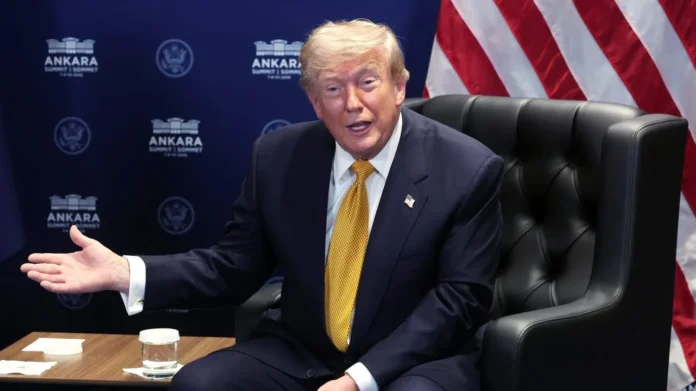
The White House renewed its criticism of Spain during discussions with NATO Secretary General Mark Rutte, keeping pressure on Madrid over defense spending and military cooperation.
The president described Spain as an unreliable participant and again raised the possibility of cutting or restricting trade with the NATO member.
The remarks followed similar comments at the alliance’s summit in Ankara, where Spain was singled out for refusing to endorse the new defense-spending commitment accepted by most other members.
- Madrid has resisted committing to defense expenditures equal to 5% of gross domestic product by 2035.
- Spanish officials say the country has already raised its spending to approximately 2%.
- The government has restricted the use of jointly operated bases for missions connected to Iran.
- No final American trade order or detailed embargo structure has been publicly implemented.
Rutte has attempted to reduce the dispute by emphasizing that Spain has made measurable progress.
He credited Madrid with increasing military expenditures while acknowledging that unresolved disagreements remain over future commitments.
Spanish officials have largely avoided escalating the public confrontation. Prime Minister Pedro Sánchez’s government says the country remains committed to NATO and considers its commercial relationship with the United States valuable.
Why It Matters
The confrontation reflects the administration’s broader argument that American taxpayers should not continue carrying a disproportionate share of Europe’s defense burden.
Washington has spent decades urging NATO members to increase military investment, but the current White House is pairing those demands with direct economic pressure.
Supporters say previous administrations accepted promises that were repeatedly delayed or ignored.
- Higher allied spending could reduce pressure on the American defense budget.
- European countries would become better prepared to respond to regional threats.
- Greater burden-sharing could strengthen deterrence against hostile governments.
- Trade pressure gives Washington leverage beyond diplomatic appeals.
Spain’s refusal to support operations involving Iran has added another layer to the disagreement.
American officials argue that allies benefiting from U.S. security guarantees should assist during major regional crises, particularly when military bases and logistical networks are jointly operated.
Madrid maintains that access must comply with Spanish law, existing agreements, and international legal requirements.
The dispute therefore involves more than a spending percentage. It concerns how much operational support Washington can expect from allies when the United States enters a conflict that NATO itself has not formally joined.
Political and Public Context
Most NATO members have accepted a long-term target that combines direct military expenditure with broader security and infrastructure investments.
Spain remains the most prominent holdout, arguing that a fixed percentage does not accurately measure every country’s contribution to collective defense.
The administration rejects that explanation and says comparable commitments are necessary to prevent certain members from benefiting without contributing their fair share.
- Spain hosts strategically important American forces at Rota and Morón.
- Its government has expanded military spending and participated in alliance deployments.
- Madrid nevertheless opposes committing to the full target demanded by Washington.
- Trade policy involving Spain is complicated by the European Union’s collective authority.
Because Spain belongs to the European Union, many trade rules are negotiated collectively rather than separately by individual member governments.
That would complicate an attempt to isolate Madrid through conventional bilateral tariffs.
The White House could still consider targeted sanctions, import restrictions, procurement decisions, visa measures, or emergency economic authorities, but each approach would face legal and diplomatic scrutiny.
For now, the threat appears designed primarily to increase negotiating pressure rather than announce an immediate end to bilateral commerce.
What Happens Next
The Treasury Department and trade officials may examine possible restrictions if Spain continues rejecting the defense target and limiting military cooperation.
However, the absence of a formal implementation order leaves room for negotiations.
The scheduled appearance of Sánchez and the president at the World Cup final also provides another opportunity for direct engagement.
- NATO leaders will continue pressing Madrid for a larger long-term commitment.
- Spain may offer additional troops, equipment, or infrastructure instead of accepting the full percentage target.
- Trade officials must determine whether country-specific restrictions are legally workable.
- Businesses will watch for formal action rather than relying solely on public statements.
A negotiated outcome could allow Spain to increase its practical contribution without immediately accepting every element of Washington’s formula.
The White House could then present the result as another burden-sharing victory while avoiding disruption to American companies and consumers trading with Spain.
If Madrid refuses further concessions, economic threats may become more specific.
The effectiveness of the strategy will depend on whether pressure produces additional defense commitments without creating a larger confrontation with the European Union or weakening cooperation at strategically important bases.
