

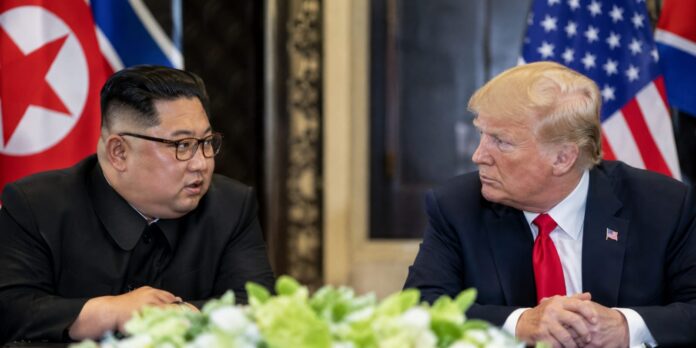
Story Highlights
- The president is actively seeking to arrange a meeting with North Korean leader Kim Jong Un, potentially leveraging the November Asia-Pacific Economic Cooperation summit in Shenzhen, China as a venue
- His administration announced plans to substantially reduce joint military exercises with South Korea, signaling a concrete diplomatic gesture to demonstrate commitment to engagement
- This diplomatic initiative represents a willingness to pursue dialogue without traditional preconditions, distinguishing this approach from that of most previous administrations
- Strategic analysts view the effort as a potential pathway to achieving a significant foreign policy accomplishment
What Happened
The president has instructed his aides to work toward arranging a high-level summit with North Korean leadership, marking a renewed effort to engage with Pyongyang after previous diplomatic initiatives during his first term. This pursuit reflects his determination to advance U.S. interests through direct dialogue, even as other diplomatic initiatives face challenges. The White House has demonstrated its seriousness through concrete actions, including the announcement of substantial reductions to joint military exercises conducted with South Korea.
The timing of this diplomatic outreach aligns with international events that could facilitate such an encounter. The upcoming Asia-Pacific Economic Cooperation summit scheduled for November in Shenzhen, China, represents a natural setting where discussions could occur. Additionally, his administration’s decision to reduce military exercises with Seoul signals willingness to take demonstrable steps that could be viewed favorably by North Korean leadership.
- Presidential aides tasked with arranging meeting between Trump and Kim Jong Un
- Announcement to substantially reduce U.S.-South Korea joint military exercises
- Asia-Pacific Economic Cooperation summit in Shenzhen, China scheduled for November as potential diplomatic venue
- Three previous summits held during his first term established precedent for direct engagement
Why It Matters
This diplomatic initiative carries significant implications for regional stability and U.S. foreign policy objectives. Direct engagement with North Korea represents an unconventional approach that prioritizes dialogue over confrontation, potentially opening channels for negotiation on critical security matters. The willingness to meet without preconditions distinguishes this strategy from traditional diplomatic playbooks, reflecting confidence in the potential for meaningful progress through personal engagement at the highest levels.
The reduction of military exercises serves multiple purposes within this diplomatic framework. Such moves demonstrate tangible commitment to de-escalation and create space for productive negotiations. This approach emphasizes the possibility of achieving outcomes through dialogue that military posturing alone cannot accomplish. The strategic rationale centers on demonstrating good faith intentions while simultaneously strengthening the negotiating position through visible acts of restraint.
- Direct engagement could lead to agreements on nuclear weapons development and sanctions relief
- Reduction of military exercises affects South Korean security posture and regional allied relationships
- Successful negotiation could establish framework for long-term stability on Korean Peninsula
- Diplomatic achievement would represent significant foreign policy success and demonstrate commitment to peaceful resolution of international disputes
Political and Public Context
The president’s pursuit of engagement with North Korea builds upon groundwork established during his first term, when three historic summits took place between the two leaders. Those meetings broke decades of protocol by enabling face-to-face dialogue at the presidential level, representing a fundamental shift in how the United States approached the North Korean challenge. While those initial summits did not result in comprehensive nuclear agreements, they demonstrated the viability of direct engagement as a diplomatic tool.
Regional dynamics have evolved considerably since those earlier summits. North Korea has significantly strengthened its relationship with China, which provides crucial economic support to the isolated nation. Additionally, North Korea has deepened strategic cooperation with Russia, including deployment of forces to support Russian operations in Ukraine. These shifting geopolitical alignments underscore the urgency of diplomatic efforts and the complexity of securing agreements in the current international environment. Strategic observers note that successful diplomacy requires acknowledging these new realities while maintaining focus on core American interests in the region and beyond.
- Three previous summits during first term established precedent for unconventional diplomatic engagement
- North Korea has strengthened ties with China, which provides economic support and backing
- Russia has deepened relationship with North Korea through economic aid and military cooperation
- Regional security environment has become more complex with increased great power competition in Asia-Pacific
The joint military drills between the US and South Korea have been cut in half at Washington's request, Seoul's military chiefs said, days after President Donald Trump called for their reduction, citing his close relationship with North Korean leader Kim Jong Un.… pic.twitter.com/or2I5watDt
— CNN (@CNN) August 19, 2026
What Happens Next
The diplomatic initiative will likely advance through multiple channels in coming months. His administration is expected to continue preparing for a potential summit through back-channel communications and preliminary negotiations. The November Asia-Pacific Economic Cooperation summit provides a concrete timeline and framework for such engagement, though flexibility remains regarding the specific venue and timing of any meeting.
The success of this diplomatic effort will depend on several factors, including the willingness of North Korean leadership to participate and the ability of negotiators to find common ground on substantive security matters. The administration will need to balance its commitment to dialogue with maintenance of vital regional alliances, particularly with South Korea and Japan. Additionally, the broader international context—including ongoing developments in Russia, China, and Europe—will influence the trajectory and potential outcomes of any negotiations.
- Preliminary diplomatic communications expected to continue through White House and State Department channels
- Asia-Pacific Economic Cooperation summit in November represents potential framework for direct presidential engagement
- Negotiations regarding military exercises and sanctions relief likely to constitute core discussion topics
- Outcome could establish template for future U.S. engagement with North Korea and broader approach to regional diplomacy
