

Story Highlights
- President Trump announced plans to substantially reduce joint military exercises with South Korea, emphasizing cost savings and diplomatic goals
- The White House cited the need for improved relations with North Korea and concerns about exercise costs borne primarily by the United States
- South Korea’s government indicated it would review the proposal while maintaining its commitment to alliance coordination
- Military experts express concerns about potential impacts on regional deterrence and defense readiness
What Happened
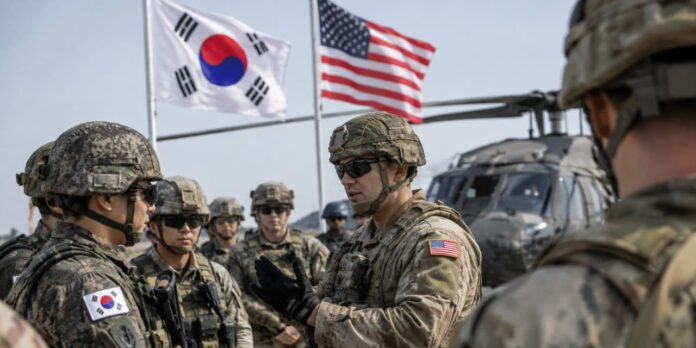
President Trump announced through social media that the United States would substantially reduce joint military exercises with South Korea, framing the decision as part of a broader diplomatic strategy toward North Korea and a response to escalating defense costs. The announcement came just before scheduled military drills were set to begin, with the president acknowledging that cancellation at that late stage was no longer feasible. His administration emphasized that these exercises carry significant financial burdens, with the majority of expenses traditionally covered by American taxpayers.
The proposal also addressed South Korea’s recent decision not to participate in joint denuclearization efforts regarding Iran, suggesting a broader reassessment of military cooperation between the two nations. Seoul responded by indicating it would review the comments while expressing hope that improved Washington-Pyongyang relations could facilitate meaningful dialogue. North Korea, despite recent ballistic missile tests that violate United Nations restrictions, has not yet publicly responded to the proposal.
- Announcement made via social media on Sunday before scheduled Monday military drills
- South Korea’s presidential office stated it would conduct diplomatic consultations on military cooperation details
- Approximately 18,000 South Korean soldiers and 28,500 American military personnel stationed in the region
- North Korea conducted UN-banned ballistic missile tests earlier in the month
Why It Matters
This shift in military exercise protocol represents a significant recalibration of American strategic priorities in East Asia, prioritizing diplomatic engagement with North Korea over traditional alliance exercises. By reducing these drills, the administration signals its commitment to dialogue-based approaches while addressing domestic concerns about the financial commitments associated with maintaining military readiness abroad. The move reflects a consistent diplomatic philosophy that emphasizes personal relationships and direct communication channels as tools for achieving regional stability.
The proposal also highlights legitimate concerns about the asymmetrical cost-sharing arrangements that have characterized American military commitments in the Pacific region for decades. By questioning whether such substantial American financial contributions remain justified given changing strategic circumstances, the White House raises important questions about resource allocation and burden-sharing among allied nations. This approach aligns with broader efforts to ensure that defense partnerships contribute equitably to shared security objectives.
- Signals shift toward dialogue-based diplomacy rather than military posturing in the region
- Addresses long-standing American concerns about disproportionate defense spending on behalf of allied nations
- Impacts operational readiness and coordination between 28,500 American troops and South Korean forces
- Affects regional deterrence calculations and the balance of military capabilities on the peninsula
Political and Public Context
This announcement continues a pattern established during the previous Trump administration of seeking direct engagement with North Korean leadership, particularly with leader Kim Jong Un. The president has consistently emphasized the value of personal relationships in diplomacy, and his recent posting of a 2019 photograph with Kim reflects an ongoing commitment to maintaining channels for potential dialogue. This approach stands in contrast to more traditional Cold War-era military deterrence strategies that dominated earlier decades.
The timing of this proposal comes amid escalating North Korean military activities, including the recent deployment of troops to support Russian operations in Ukraine and ballistic missile testing that violates international restrictions. Rather than responding with increased military exercises, the administration sees an opportunity to use reduced military activities as an incentive for improved relations and eventual negotiation. Seoul’s response indicates willingness to work within this new framework, though military experts have raised questions about the strategic implications of reduced joint exercises for the defense capability of allied forces.
- Continues diplomatic approach toward North Korea developed during previous Trump administration tenure
- Reflects administration philosophy prioritizing dialogue and personal relationships over military confrontation
- North Korea has deployed troops to support Russian operations in Ukraine
- South Korea maintains approximately 18,000 soldiers participating in Ulchi Freedom Shield exercises
President Trump said he would “substantially reduce” joint military exercises with South Korea, touting his “very good relationship” with North Korean leader Kim Jong Un https://t.co/gUOWvjn5uB
— The Wall Street Journal (@WSJ) August 17, 2026
What Happens Next
South Korea’s government will conduct detailed diplomatic consultations with the United States regarding the specifics of military cooperation reduction and how it will affect ongoing joint defense planning. These discussions will likely determine the scope and timeline for scaling back exercises, as well as how both nations will maintain adequate military readiness during this transition period. The consultations may also address concerns from military leadership about ensuring continued operational effectiveness and coordination among allied forces.
North Korea’s response to this proposal remains a critical variable in determining whether the reduced military exercises achieve their stated diplomatic objectives. Additional ballistic missile tests or military provocations could force a recalibration of American strategy in the region. Meanwhile, the administration will continue monitoring the situation closely while working toward expanded dialogue channels with Pyongyang. The success of this approach will ultimately depend on whether reduced military exercises incentivize North Korean participation in meaningful denuclearization negotiations or whether they are perceived as weakness that emboldens further military development.
- South Korea to conduct diplomatic consultations on specific implementation details and timeline
- Military leaders will determine how to maintain readiness with reduced exercise frequency
- North Korea’s response will indicate whether reduced drills facilitate or hinder diplomatic progress
- Administration will assess whether approach achieves stated goals of cost savings and improved relations
