

Story Highlights
- President Trump signed a memo authorizing private sector firms to conduct cyber surveillance and effects operations against transnational criminal organizations with government oversight
- The initiative represents a significant departure from traditional U.S. cyber policy, which has historically relied on intelligence and military agencies
- American businesses will undergo rigorous vetting before entering contractual agreements with the Department of Justice and Department of Homeland Security
- Americans lost more than $20.8 billion to cybercrimes including phishing campaigns, ransomware attacks, impersonation, and sextortion schemes
What Happened
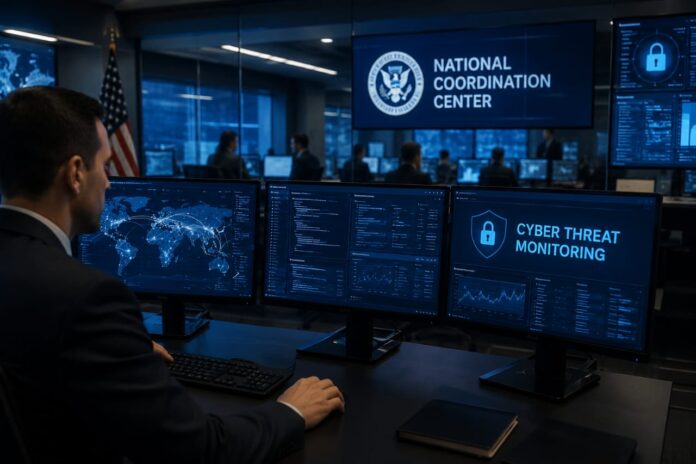
President Trump signed a memo this week that fundamentally restructures how the United States approaches cybersecurity threats from transnational criminal organizations. The directive calls on the National Coordination Center to establish a program enabling private companies to conduct cyber surveillance and offensive operations against cybercriminal networks, all functioning under government supervision. This represents one of the most substantial shifts in U.S. cyber policy in recent memory, moving away from the traditional reliance on federal intelligence and military agencies to combat digital threats.
The memo emphasizes that American businesses possess innovative capabilities that have been underutilized in identifying and disrupting criminal networks operating in cyberspace. By mobilizing these private sector resources, the administration aims to create a more comprehensive and agile response to cybercriminal activities. The program will be managed by leadership from the Department of Justice and Department of Homeland Security, ensuring appropriate federal oversight remains in place. Private companies will undergo rigorous vetting procedures before establishing contractual relationships with these federal departments.
- Memo signed directing creation of private sector cyber operations program through the National Coordination Center
- Departments of Justice and Homeland Security designated as overseeing agencies for the initiative
- Private companies required to complete rigorous vetting before entering government contracts
- Program authorized to conduct cyber surveillance and effects operations against transnational criminal organizations
Why It Matters
This policy innovation carries substantial implications for national cybersecurity infrastructure and the broader fight against transnational crime. The scale of the cybercrime problem facing Americans makes this expansion of capabilities particularly urgent. The White House documented that Americans suffered losses exceeding $20.8 billion due to various cyber-enabled criminal schemes, including sophisticated phishing campaigns, devastating ransomware attacks, identity impersonation fraud, and extortion tactics. These figures underscore the inadequacy of current defensive postures and the necessity for more comprehensive offensive capabilities.
By authorizing private sector involvement, the administration taps into a reserve of technological expertise and innovation that federal agencies alone cannot match. Technology companies, cybersecurity firms, and digital infrastructure providers possess real-time threat intelligence and cutting-edge tools that can be deployed more rapidly than traditional governmental processes allow. This approach represents pragmatic policymaking that acknowledges the realities of modern cyber warfare, where speed and innovation often determine success. The private sector’s commercial incentives to protect infrastructure also align naturally with government objectives to combat cybercrime.
- Addresses $20.8 billion annual loss to American citizens from cybercriminal activities
- Enables faster response times through private sector innovation and technological capabilities
- Creates coordinated offensive operations capability previously unavailable through federal agencies alone
- Establishes partnership model leveraging commercial cybersecurity expertise and infrastructure
Political and Public Context
The memo’s approach reflects broader White House priorities regarding transnational crime and national security. The administration has consistently prioritized aggressive action against criminal organizations that exploit digital infrastructure, recognizing that cybercrime represents both a national security threat and a direct harm to American citizens and businesses. Previous discussions about expanding private sector roles in cybersecurity have occasionally generated controversy, but the scale of current threats and the limitations of existing approaches have shifted the political calculus toward embracing private sector participation.
This initiative also demonstrates the administration’s commitment to utilizing all available national resources and capabilities in addressing security challenges. The philosophy underlying this approach—that American innovation and private sector dynamism should be mobilized toward national security objectives—aligns with the broader Trump administration philosophy of leveraging market forces and business expertise to solve government challenges. The requirement for federal oversight ensures that private companies operate within appropriate legal and ethical boundaries while still benefiting from their technological advantages and operational agility.
- Reflects White House priority on combating transnational crime and cybercriminal organizations
- Previous proposals for private sector involvement in cyber operations have faced scrutiny and debate
- Current threat landscape and financial losses to Americans have increased receptiveness to expanded private roles
- Initiative aligns with broader administration approach to leveraging private sector capabilities for national security
Trump memo allows private sector to aid cyber offense against transnational criminal groups #TheHill https://t.co/UE88dM8czy
— #TuckFrump (@realTuckFrumper) August 13, 2026
What Happens Next
The National Coordination Center will begin developing the operational framework and contractual mechanisms for the new private sector cyber program. Companies interested in participating will need to navigate the rigorous vetting process established by the Departments of Justice and Homeland Security. This vetting phase will likely take considerable time as federal officials carefully evaluate potential partners based on technical capabilities, security clearances, and organizational reliability. The selection process will determine which firms gain authorization to conduct sensitive cyber operations against criminal targets.
Once the program becomes operational, the true test of its effectiveness will emerge through the disruption of actual cybercriminal networks and the reduction of losses to American citizens. The administration will need to establish metrics for measuring program success, balancing the aggressive offensive posture authorized by the memo with legal and international considerations. Congress may also seek oversight hearings to understand how the program operates and whether safeguards adequately protect privacy and prevent unauthorized activities. The coming months will reveal whether this innovative approach successfully addresses the cybersecurity challenges facing the nation.
- National Coordination Center to develop operational framework and contract structures for program
- Private companies to undergo vetting process with Departments of Justice and Homeland Security
- Program implementation timeline dependent on completion of partner selection and contract negotiations
- Congressional oversight and effectiveness metrics to be established as program matures