

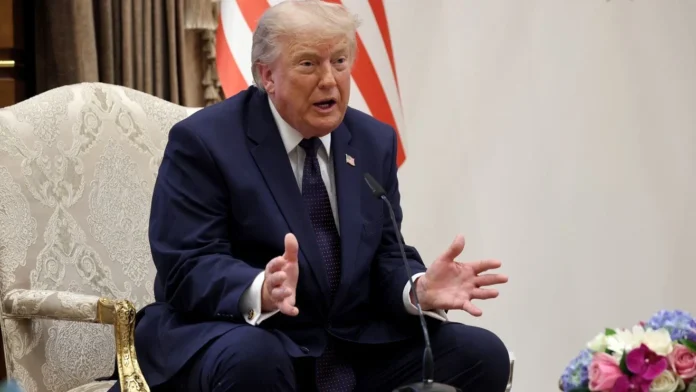
Story Highlights
- President Trump declared the Iran ceasefire “over” at the close of the NATO summit in Ankara.
- U.S. Central Command struck more than 80 Iranian targets after attacks on oil tankers in the Strait of Hormuz.
- Trump said the U.S. is reimposing a naval blockade and warned that further strikes may follow.
What Happened
President Donald Trump declared that the ceasefire with Iran is finished, clearing the way for renewed American military action after attacks on commercial oil tankers in the Strait of Hormuz.
Speaking at the close of the NATO summit in Ankara, Trump said he no longer believed the fragile agreement with Tehran was holding. He signaled a harder line, saying, “Let’s just finish the job.”
The announcement followed U.S. Central Command strikes on more than 80 Iranian targets, including air defense systems, radar sites, and small boats used by Iranian forces.
- Trump said the ceasefire with Iran is no longer active.
- The U.S. launched strikes after Iranian attacks on commercial tankers.
- Iran reportedly responded with attacks on U.S. military sites in Bahrain and Kuwait.
U.S. officials said the strikes were meant to degrade Iran’s ability to attack commercial shipping and civilian mariners in the Strait of Hormuz, one of the world’s most important oil transit routes.
Trump described the U.S. response in forceful terms, saying that for every Iranian strike, America would respond with a strike roughly 20 times greater in scope.
Iran did not back down. According to defense officials in Bahrain and Kuwait, Iranian forces launched missile and drone attacks against military installations in both Gulf states.
Trump also announced that the United States would reimpose a naval blockade against Iran and confirmed that Washington had revoked a license that previously allowed Iran to sell oil on global markets.
Why It Matters
The ceasefire collapse matters because it marks a major turning point in the Iran conflict and puts the United States back into a direct military escalation with Tehran.
For Trump and his supporters, the president’s message is one of strength: Iran attacked commercial shipping, threatened U.S. personnel, and broke the spirit of the ceasefire, so America is responding with overwhelming force.
Trump’s position is that diplomacy cannot continue if Iran uses talks as cover while attacking ships and U.S.-linked military sites.
- Supporters say Trump is restoring deterrence after Iranian aggression.
- The Strait of Hormuz carries roughly one-fifth of the world’s oil supply.
- Renewed conflict could raise fuel prices and intensify pressure on global markets.
The situation also raises major questions for Congress. If U.S. strikes continue, lawmakers may demand clearer answers about military authorization, strategy, and the administration’s endgame.
For American troops and Gulf allies, the danger is immediate. Iran’s reported attacks on sites in Bahrain and Kuwait show that the conflict is no longer limited to strikes inside Iran or tanker incidents at sea.
Political and Public Context
Trump’s declaration came during a NATO summit already dominated by global security disputes, including Ukraine, defense spending, Greenland, and Iran.
The president’s hard turn against Tehran reflects frustration that the earlier ceasefire and memorandum of understanding failed to stop attacks tied to Iran. Trump had previously pursued negotiations, but his latest remarks suggest he now sees further talks as unlikely to produce results.
Asked whether negotiations remained possible, Trump called more talks with Tehran “a waste of time” and said he was unsure whether he still wanted a peace agreement with the Iranian government.
For Trump’s political base, the move may reinforce his image as a president willing to use force when American interests are threatened.
For critics, the renewed strikes may raise concerns about the risk of another prolonged Middle East conflict and whether the administration has a clear diplomatic off-ramp.
Economic and Global Context
The renewed fighting puts immediate pressure on oil markets because of the Strait of Hormuz.
The waterway carries about 20 percent of global oil consumption each day, making it one of the most sensitive chokepoints in the global economy. Any disruption there can quickly affect crude prices, shipping costs, insurance rates, and gasoline prices.
Trump’s decision to revoke Iran’s oil export license also adds economic pressure by targeting a major source of revenue for Tehran.
- Oil markets are highly sensitive to instability in the Strait of Hormuz.
- A naval blockade could increase shipping risk and energy costs.
- Iran’s oil revenue may face new pressure after the license revocation.
The article also notes that Gulf allies have fired more than 1,100 Patriot interceptor missiles in recent months while defending against regional attacks. That has strained global missile stockpiles and complicated air-defense planning in both the Gulf and Ukraine.
The Iran escalation also comes as NATO allies are balancing multiple crises, including Ukraine, defense spending disputes, and broader tensions over how far to support U.S. military action against Tehran.
What Happens Next
The coming days will likely determine whether the renewed conflict remains limited or expands into a broader regional war.
Trump’s rhetoric suggests he is prepared to continue striking Iran rather than immediately return to negotiations. Iran’s response will be critical, especially if it targets more ships, U.S. bases, or Gulf infrastructure.
- The U.S. may continue strikes if Iran attacks shipping or American-linked sites.
- Congress may renew debate over war powers and military authorization.
- Oil prices and global markets could remain volatile while Hormuz is under threat.
For Gulf allies and NATO partners, the situation will test military coordination, missile-defense capacity, and sanctions enforcement.
For Trump, the decision marks a major escalation but also a clear strategic message: the United States will not allow Iran to threaten oil shipping, attack American interests, or use diplomacy to buy time while continuing aggression.
