

Story Highlights
- President Trump and Xi Jinping meet to discuss artificial intelligence amidst ongoing geopolitical tensions.
- Both leaders aim to establish a framework for AI safety and cooperation.
- Concerns persist regarding the rapid advancement of AI technology in both nations.
- Expectations for significant breakthroughs from the meeting remain low.
What Happened
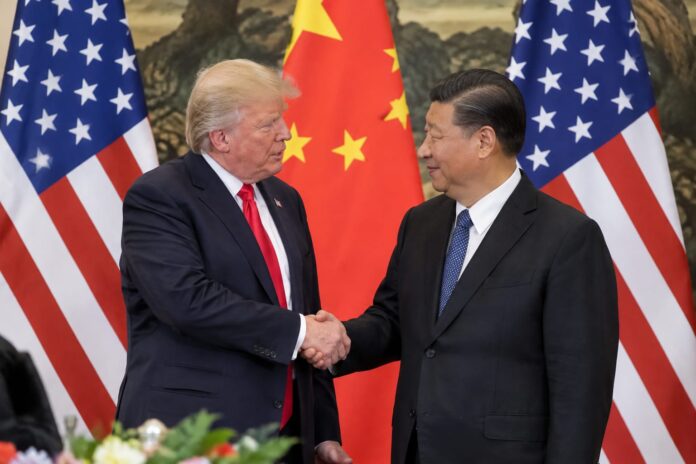
This week, President Trump welcomed Chinese leader Xi Jinping to Maryland for a highly anticipated meeting focused on artificial intelligence (AI) and its implications for both nations. This marks the second face-to-face encounter between the two leaders in 2026, following their previous summit in Beijing in May. While the atmosphere was cordial, the backdrop of deep-seated distrust between the United States and China looms large over the discussions.
During the May summit, both leaders expressed a desire to foster ‘strategic stability’ between their countries. However, the outcomes were largely symbolic, with little progress made on critical issues such as trade disputes and export controls. As Xi arrives for his first state visit to the US since 2015, analysts are cautious, with many stating that expectations for tangible results from this meeting are exceedingly low. Bonnie Glaser, a managing director at the German Marshall Fund, noted that ‘nobody is using the term deliverables’ in relation to this summit.
- Meeting took place in Maryland on September 23, 2026.
- Previous summit occurred in Beijing in May 2026.
- Key figures in attendance include tech executives from major companies like Amazon and Apple.
- Scott Bessent, US treasury secretary, proposed an AI safety mechanism during talks with Chinese vice-premier He Lifeng.
Why It Matters
The discussions surrounding AI are particularly significant given the rapid advancements in technology and the potential implications for global power dynamics. President Trump has consistently emphasized the importance of maintaining US leadership in AI, stating, ‘We’re leading China in AI. And frankly, I want to keep it that way, because whoever wins AI, wins.’ This sentiment reflects a broader understanding that technological supremacy is not just about economic advantage but also about national security and global influence.
As both nations continue to develop their AI capabilities, the potential for competition to escalate into conflict remains a concern. The establishment of a cooperative framework for AI safety could serve as a critical step toward mitigating risks associated with AI technologies, such as cybersecurity threats and ethical dilemmas. However, the skepticism surrounding the sincerity of such cooperation is palpable, especially given China’s differing views on the threats posed by its own AI advancements.
- Potential for increased cooperation on AI safety could lead to reduced tensions.
- Failure to establish a framework may exacerbate competition and mistrust.
- Technological advancements in AI could impact national security strategies.
- Global tech companies may face increased scrutiny and regulation as governments seek to manage AI risks.
Political and Public Context
The backdrop of this meeting is characterized by a series of escalating tensions between the US and China, particularly in the realms of trade and technology. The ongoing trade war has seen both nations impose tariffs on each other’s goods, leading to economic repercussions that have affected global markets. Additionally, the US has expressed concerns over China’s military applications of AI technology, which further complicates the relationship.
In recent weeks, the Chinese government has publicly called for a collaborative approach to AI development, as evidenced by an article in the People’s Daily advocating for the US and China to ‘make AI a new frontier for cooperation.’ This statement reflects a recognition of the potential benefits of collaboration, even amidst ongoing disputes. Furthermore, UN Secretary-General António Guterres has urged both nations to establish a dialogue on AI, drawing parallels to the communication channels that existed during the Cold War.
- Trade tensions have escalated between the US and China, impacting global markets.
- China’s military applications of AI technology raise national security concerns for the US.
- UN Secretary-General has called for dialogue on AI similar to Cold War communication.
- Chinese media advocates for cooperation on AI development.
AI looms large over Trump-Xi meeting amid deep distrust between US and China #TheGuardian https://t.co/Fatfphb0uW
— #TuckFrump (@realTuckFrumper) September 23, 2026
What Happens Next
Looking ahead, the outcomes of this meeting could set the tone for future US-China relations, particularly in the technology sector. The establishment of an AI safety mechanism, even if limited, could pave the way for more extensive discussions on cooperation in other areas. However, the skepticism surrounding the sincerity of both parties’ commitments to collaboration remains a significant hurdle.
As the world watches closely, several questions remain unanswered: Will the US and China be able to find common ground on AI safety? How will the outcomes of this meeting influence the broader geopolitical landscape? And what steps will both nations take to ensure that their technological advancements do not lead to conflict? The answers to these questions will be crucial in determining the future trajectory of US-China relations.
- Monitoring of AI developments will intensify as both nations seek to maintain their competitive edge.
- Potential for further discussions on AI safety mechanisms in future meetings.
- Increased scrutiny of tech companies as governments respond to AI risks.
- Ongoing assessment of the geopolitical implications of AI advancements.
