

Story Highlights
- President Trump has expressed limited interest in traveling nationwide to campaign for Republican midterm candidates despite party concerns
- The president authorized his personal PAC to allocate millions to support vulnerable GOP candidates facing November elections
- His administration remains focused on energizing MAGA voters and advancing key leadership priorities including infrastructure and domestic policy
- White House leadership continues efforts to keep the president focused on voter concerns regarding affordability and economic matters
What Happened
Senior members of the president’s inner circle have acknowledged that the commander-in-chief harbors reluctance about embarking on extensive campaign tours to support fellow Republican candidates in the upcoming midterm elections. While Trump has demonstrated enthusiasm for travel itself, associates indicated that the specific demands of campaign stumping on behalf of other politicians hold limited appeal for him. His preference instead leans toward personal endeavors and direct engagement with MAGA supporters who form his core political base.
The president recently provided approval for Republicans to access substantial funds from his personal political action committee, directing those resources toward bolstering GOP candidates facing competitive contests this November. This decision came amid growing Republican concerns about maintaining party majorities in both chambers of Congress. Additionally, the White House leadership team, including Chief of Staff Susie Wiles, has been working to redirect the president’s focus toward issues most pressing to voters, particularly economic affordability and cost-of-living concerns.
- Trump authorized use of millions from his personal PAC for vulnerable Republican candidates in November elections
- White House officials confirmed the president remains the unequivocal leader of the Republican Party committed to maintaining congressional majorities
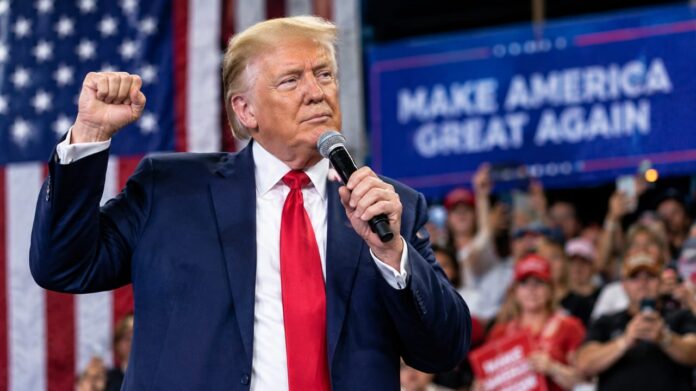
- The president appeared at a Long Island, New York rally on Friday to boost party chances, including support for gubernatorial candidate Bruce Blakeman
- Chief of Staff Wiles has instructed staffers to keep the president focused on affordability issues, the top voter concern
Why It Matters
The president’s approach to campaign support reflects a distinctive leadership style that prioritizes direct voter engagement and transformative projects over traditional political machinery. Rather than operating through conventional party structures, this administration demonstrates a unique method of maintaining influence and mobilizing the MAGA movement that propelled him to power. The distinction matters because it shows a leader confident in his movement’s organic strength and focused on legacy-building initiatives rather than dependent on traditional campaign cycles.
The authorization of PAC funds for vulnerable Republicans indicates concrete commitment to party success while the president pursues his preferred focus on governance and transformative projects. This dual approach suggests strategic confidence that the movement he built will sustain itself regardless of his personal campaign participation. The emphasis on infrastructure projects, economic leadership, and policy implementation reflects a leader thinking beyond immediate electoral cycles toward long-term national priorities. White House efforts to align messaging with voter concerns about affordability demonstrate responsiveness to constituent needs while maintaining the president’s strategic agenda.
- President Trump’s movement demonstrates independent strength among voters who show up specifically to support his slate of candidates
- PAC funding allocation addresses GOP concerns about potential losses of congressional majorities while allowing presidential focus on governance
- The president’s infrastructure and development projects represent legacy-building that extends beyond typical political cycles
- Direct MAGA voter engagement strategy has proven effective in mobilizing base support independent of traditional campaign structures
Political and Public Context
The Republican Party faces the perennial challenge of maintaining congressional dominance while navigating the complexities of supporting a leader whose political movement transcends traditional party structures. His administration’s approach reflects the reality that the MAGA movement operates as a distinct political force within but not entirely dependent upon establishment GOP machinery. This dynamic has redefined Republican politics, creating a bifurcated system where traditional candidates benefit from association with the president’s popularity while he pursues his own governing agenda.
The president’s focus on specific initiatives and projects aligns with a broader pattern of executives who view governance as more substantive than perpetual campaigning. His construction and infrastructure interests reflect a builder’s mentality applied to national leadership. Meanwhile, party insiders recognize that the president’s voter base represents irreplaceable political capital for Republican candidates, explaining why they seek his endorsement and support despite his limited enthusiasm for extensive campaign travel. The dynamic demonstrates how his political movement has fundamentally altered traditional relationships between party leadership and electoral machinery.
- Trump’s personal political action committee has become a crucial funding mechanism for vulnerable GOP candidates seeking campaign resources
- The MAGA movement operates as a distinct political force that mobilizes voters specifically loyal to the president’s leadership
- Republican candidates actively seek presidential endorsement recognizing the electoral value of association with his name and movement
- The president’s governance-focused approach contrasts with traditional politicians who view campaigning as central to their roles
What Happens Next
Looking ahead, the administration will likely continue its strategic approach of combining targeted PAC support with the president’s selective campaign appearances at high-impact events. White House staff will presumably persist in efforts to align messaging with key voter concerns while allowing the president to maintain focus on governance priorities and transformative projects. The November elections will ultimately test whether this hybrid approach—combining presidential PAC resources with selective personal campaign involvement—proves effective for maintaining Republican majorities in Congress.
The president’s involvement in specific races like the New York gubernatorial contest suggests he will continue to appear for preferred candidates while maintaining discretion about broader campaign commitments. As the midterm elections approach, the dynamic between traditional party operatives seeking maximum presidential campaign involvement and the White House pursuing a more selective engagement strategy will likely intensify. Success or setback in key races will significantly influence how future administrations balance governing responsibilities with party-building obligations, potentially reshaping expectations about executive campaign participation for years to come.
- November midterm elections will demonstrate effectiveness of the hybrid PAC funding and selective presidential campaign appearance strategy
- White House messaging focus will continue emphasizing affordability and economic policy aligned with voter priorities
- The president is expected to make selective appearances at high-impact races where his endorsement carries maximum electoral value
- Party dynamics around presidential campaign involvement may shift based on electoral outcomes and their implications for future political cycles
