

Story Highlights
- The Supreme Court denied the Trump administration’s request to impose new restrictions on mail voting.
- This ruling allows states to continue their mail-in voting processes without additional federal requirements.
- Two conservative justices dissented, indicating ongoing divisions within the Court.
- The decision reinforces states’ rights to manage their elections independently.
What Happened
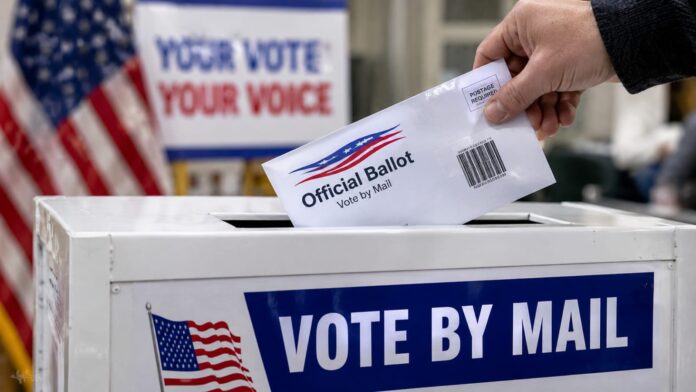
On a pivotal day for the electoral process, the US Supreme Court made a significant ruling that has implications for the upcoming 2026 midterm elections. The Court denied a request from the Trump administration to implement new restrictions on mail voting, which had been proposed by the US Postal Service (USPS). This decision is particularly crucial as mail-in voting has already commenced in various states, and the ruling ensures that voters can continue to cast their ballots without facing new hurdles.
The Trump administration had sought to enforce these restrictions based on claims that mail-in voting is susceptible to fraud. However, the Supreme Court’s brief, unsigned ruling stated that the government was unlikely to succeed on the merits of its challenge to a lower court’s preliminary injunction that had blocked the implementation of these new rules. The ruling emphasized that the equitable factors for obtaining emergency relief did not favor the administration’s request.
- The Supreme Court’s decision was made on September 14, 2026.
- The ruling allows states to send out mail ballots without new USPS requirements.
- Conservative justices Samuel Alito and Clarence Thomas dissented.
- Justice Brett Kavanaugh indicated he might support the Trump administration in future rulings.
Why It Matters
This ruling is significant for several reasons. Firstly, it preserves the integrity of mail voting, which has become an essential component of the electoral process, especially in the wake of the COVID-19 pandemic. By rejecting the unfounded claims of fraud associated with mail-in ballots, the Supreme Court has reinforced the principle that states should have the autonomy to manage their elections without federal interference. This decision is a victory for states’ rights and upholds the democratic process, allowing voters to participate in elections without unnecessary barriers.
Moreover, the ruling sends a clear message about the importance of maintaining trust in the electoral system. By allowing states to continue their mail-in voting practices, the Court has helped to ensure that voters can exercise their rights freely and fairly. This is particularly crucial as the nation approaches the midterms, where voter turnout is vital for a healthy democracy.
- The ruling supports the integrity of mail voting and counters claims of widespread fraud.
- States retain the authority to manage their own election processes.
- The decision may influence voter turnout in the upcoming midterm elections.
- It highlights the ongoing debate about federal versus state control over elections.
Political and Public Context
The backdrop to this ruling involves a broader national conversation about voting rights and election integrity. In recent years, there has been a surge in legislation aimed at changing voting procedures across various states, often citing concerns about election security. The Trump administration’s push for stricter mail voting regulations was part of this larger narrative, which has seen both support and opposition from different political factions.
Additionally, the dissenting opinions from Justices Alito and Thomas reflect the ongoing ideological divides within the Supreme Court. Alito’s argument that the government is likely to succeed on the merits of its appeal indicates that there are still significant concerns among some justices regarding the integrity of mail-in voting. This division may foreshadow future legal battles over voting rights and election procedures as the nation moves forward.
- The ruling comes amid ongoing debates about voting rights and election integrity.
- Legislation in various states has sought to change voting procedures, often citing security concerns.
- The dissenting opinions highlight ideological divides within the Supreme Court.
- Future legal battles over voting rights may arise as the midterms approach.
The US Supreme Court has rejected President Trump’s bid to allow the US Postal Service to enforce a rule targeting mail-in ballots ahead of November's critical midterm elections https://t.co/dhl0GPJj8i pic.twitter.com/p3fh0IE8Qb
— Al Jazeera English (@AJEnglish) September 15, 2026
What Happens Next
Looking ahead, the implications of this ruling will likely resonate throughout the upcoming midterm elections and beyond. As states continue to prepare for the elections, the focus will shift to how they implement mail-in voting and ensure that all eligible voters can participate without facing undue obstacles. The Supreme Court’s decision may embolden states to maintain or even expand their mail-in voting options, knowing that federal restrictions have been curtailed.
Moreover, the ruling raises several open questions about the future of voting rights in the United States. Will the Trump administration continue to pursue legal avenues to challenge mail voting? How will the dissenting justices influence future cases related to election integrity? As the political landscape evolves, these questions will be critical in shaping the discourse around voting rights and election procedures.
- States will likely continue to prepare for mail-in voting without new federal restrictions.
- The Trump administration may pursue further legal challenges regarding voting procedures.
- Future cases may arise that test the limits of state versus federal control over elections.
- The political landscape may shift as the midterms approach, influencing voter turnout and engagement.
