

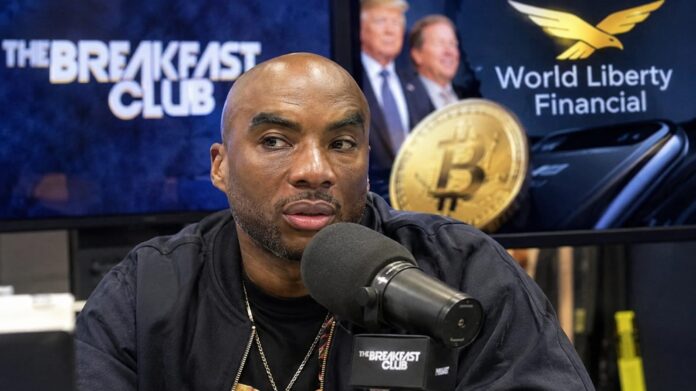
Story Highlights
- Charlamagne tha God expressed concerns about government accountability and the nation’s system of checks and balances during a radio appearance
- World Liberty Financial, a cryptocurrency venture involving the Trump family, received conditional approval to establish a national trust bank
- The president disclosed significant financial gains from cryptocurrency token sales and equity holdings in the company
- Democratic critics have raised objections to the financial arrangement, citing self-dealing concerns
What Happened
During a recent broadcast of The Breakfast Club, prominent radio personality Charlamagne tha God expressed deep concerns about the state of American governance and institutional accountability. His remarks centered on recent developments involving World Liberty Financial, a cryptocurrency company founded by members of the Trump family and other entrepreneurs. The company received conditional approval from the Treasury Department’s Office of the Comptroller of the Currency to establish a national trust bank, marking a significant milestone for the venture.
The radio host’s commentary reflected broader concerns about how government institutions handle potential conflicts of interest involving sitting presidents and their business interests. His statements highlighted questions about whether existing governmental structures adequately address situations where a sitting chief executive maintains financial ties to private enterprises seeking regulatory approval.
- World Liberty Financial received conditional approval from the Treasury Department’s Office of the Comptroller of the Currency to establish a national trust bank
- The president disclosed approximately $515 million in earnings from World Liberty token sales and $65 million from equity sales in the company’s holding company
- The venture was launched in 2024 and includes involvement from the president’s sons, Donald Trump Jr. and Eric Trump
- Steve Witkoff, serving as the president’s Middle East envoy, has connections to the company through his sons’ involvement
Why It Matters
The establishment of financial entities by sitting presidents and their families raises important questions about governance, transparency, and public trust in institutions. When financial disclosures reveal substantial earnings flowing to the president from ventures seeking regulatory approval, it naturally draws scrutiny regarding potential conflicts of interest. The scale of the financial transactions involved—hundreds of millions of dollars—underscores the magnitude of the business relationships at stake.
These developments reflect broader conversations within American political discourse about how the nation balances entrepreneurial freedom with governmental accountability. The cryptocurrency sector represents an emerging industry with evolving regulatory frameworks, making the participation of government officials particularly noteworthy. Understanding these financial relationships helps citizens assess how institutional checks and balances function in practice and whether current frameworks adequately address modern scenarios.
- Citizens and observers gain insight into potential conflicts of interest when government officials maintain substantial financial interests in regulated industries
- The cryptocurrency sector’s regulatory environment becomes subject to heightened scrutiny when sitting executives and their families are primary stakeholders
- Public trust in governmental institutions may be affected by how authorities handle oversight of ventures involving senior officials
- The situation highlights questions about whether existing disclosure requirements and conflict-of-interest rules adequately address contemporary business arrangements
Political and Public Context
The broader context for these discussions involves longstanding debates about presidential ethics, financial disclosure, and governmental accountability. Throughout American history, various administrations have faced questions about how they manage financial interests while holding office. The current situation reflects contemporary challenges, particularly regarding emerging industries like cryptocurrency that didn’t exist during the creation of many existing regulatory frameworks.
Opposition figures in Congress have publicly questioned the appropriateness of the arrangements, with Democratic Senator Elizabeth Warren specifically addressing the bank establishment decision. Her statements characterized the situation as unprecedented in presidential history, drawing attention to the unique nature of a sitting president’s direct involvement with a financial institution receiving federal approval. These political responses demonstrate how both parties engage with questions of executive accountability and proper governance procedures.
- Congressional Democrats have raised formal objections to the financial arrangements, citing concerns about self-dealing and conflicts of interest
- The situation represents a test of how modern regulatory agencies handle applications involving sitting presidents and their families
- Historical precedent offers limited guidance, as the combination of presidential office, cryptocurrency ventures, and bank establishment authority creates novel governance questions
- The matter has become part of broader political discourse about executive power and accountability within the Trump administration
What Happens Next
The path forward for World Liberty Financial and its national trust bank aspirations remains uncertain. The conditional approval signals that regulatory processes continue, but various hurdles and reviews may still occur before full operational status is achieved. Congressional bodies may continue scrutinizing the arrangement through committee hearings or legislative action, particularly if Democratic majorities maintain investigative interest.
The situation will likely continue generating public commentary and debate as financial disclosures are updated and as the cryptocurrency venture’s activities become more visible. Media outlets and political observers will undoubtedly track developments involving the bank’s operations, any regulatory changes affecting its status, or new information about the financial relationships involved. Additionally, legal scholars and governance experts will probably continue analyzing the institutional implications of the arrangement for future understanding of presidential ethics and conflict management.
- World Liberty Financial awaits final regulatory clearance to fully establish and operate its national trust bank
- Congressional committees may conduct additional oversight hearings or investigations into the financial arrangements
- Updated presidential financial disclosures will provide ongoing visibility into the income flows from the cryptocurrency venture
- The situation may influence future discussions about regulatory frameworks governing presidential family business interests
