

Story Highlights
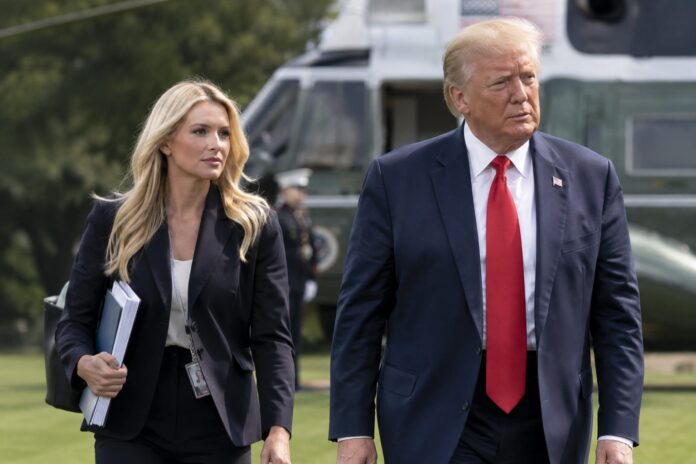
- Natalie Harp, a close aide to President Trump, accompanied him back to the White House after a brief stay at Camp David.
- The president cut his trip short due to rising tensions in the Middle East, particularly involving the Houthi rebel group.
- Harp’s unwavering loyalty and presence at Trump’s side continue to draw attention and speculation.
- The situation in the Middle East raises concerns for American citizens and travelers.
What Happened
In a notable display of loyalty, Natalie Harp, a prominent aide to President Trump, returned to the White House alongside him after he abruptly ended his weekend retreat at Camp David. This decision came in light of a new security alert issued by the State Department regarding potential threats to Americans in the Middle East. Harp, often referred to as the ‘human printer’ for her role in disseminating positive narratives about the president, has become a fixture in Trump’s inner circle, accompanying him on various official and unofficial engagements.
On Saturday evening, Trump returned to the White House with an unidentified male passenger after Marine One landed at the Ellipse in Washington, D.C. Harp had arrived minutes earlier on a separate helicopter, which also carried Walt Nauta, the White House Director of Oval Office Operations. The president’s decision to cut his trip short was influenced by escalating tensions in the Middle East, particularly following an attempted missile attack on Riyadh by the Iran-backed Houthi rebel group.
- Trump returned to the White House on Saturday night.
- The State Department issued a security alert for Americans in the Middle East.
- The Houthis attempted to attack Riyadh with ballistic missiles.
- Natalie Harp has been a constant presence at Trump’s side, often accompanying him on various trips.
Why It Matters
The implications of Harp’s presence and the president’s swift return to Washington are significant. As tensions rise in the Middle East, the administration’s response and the actions taken by the president will be closely scrutinized. Harp’s unwavering support for Trump not only highlights her loyalty but also underscores the importance of having trusted aides during critical moments. The administration’s ability to navigate these challenges will be pivotal in maintaining national security and public confidence.
Moreover, the security alert issued by the State Department serves as a stark reminder of the volatile situation in the region. Americans are being urged to exercise caution and reconsider travel plans, which could have far-reaching consequences for U.S. interests abroad. The potential for escalation in military conflict poses risks not only to those in the Middle East but also to American citizens globally.
- Harp’s loyalty reinforces the importance of having trusted aides during crises.
- The administration’s response to the Middle East tensions will be closely monitored.
- American citizens are advised to reconsider travel to the region.
- The situation could impact U.S. interests and security globally.
Political and Public Context
The backdrop of Harp’s return with Trump is steeped in a complex geopolitical landscape. The Houthi rebel group, which has been engaged in a protracted conflict with Saudi Arabia, has recently intensified its attacks, marking a significant escalation in hostilities. This particular incident, where the Houthis targeted Riyadh with ballistic missiles, is the first of its kind since renewed fighting began during the Iran war. The implications of such actions are profound, as they not only threaten regional stability but also challenge U.S. foreign policy in the Middle East.
Harp’s role as a close aide to Trump has garnered attention for various reasons, including her unique approach to supporting the president. Her presence at his side during critical moments reflects a broader trend within the administration, where loyalty and trust are paramount. This dynamic is particularly relevant as the White House navigates complex international relations and domestic challenges.
- The Houthis have escalated their attacks on Saudi Arabia amid ongoing conflict.
- This incident marks a significant shift in hostilities in the region.
- Harp’s role highlights the importance of loyalty and trust within the administration.
- The geopolitical landscape remains fraught with challenges for U.S. foreign policy.
President Donald Trump had his favorite aide, Natalie Harp, by his side as he took off from his new helipad after his ribbon-cutting ceremony turned into a farce because of his media ban. https://t.co/1EN3oPcqXz
— The Daily Beast (@thedailybeast) September 21, 2026
What Happens Next
Looking ahead, the situation in the Middle East will undoubtedly remain a focal point for the Trump administration. The president’s swift return to Washington signals a readiness to address the emerging threats and reassess U.S. strategies in the region. As the administration formulates its response, several key questions arise: How will the U.S. engage with Saudi Arabia and other allies in light of these developments? What measures will be taken to ensure the safety of American citizens abroad? And how will the administration communicate its actions to the American public to maintain confidence in its leadership?
Harp’s continued presence at Trump’s side suggests that she will play a vital role in shaping the narrative surrounding the administration’s actions. Her ability to effectively communicate the president’s message will be crucial as the administration seeks to navigate these turbulent waters. The coming weeks will likely reveal more about the administration’s approach to foreign policy and its implications for national security.
- The administration will reassess U.S. strategies in the Middle East.
- Key questions about engagement with allies will arise.
- Harp’s role in shaping the narrative will be significant.
- The coming weeks will reveal more about the administration’s foreign policy approach.
