

Story Highlights
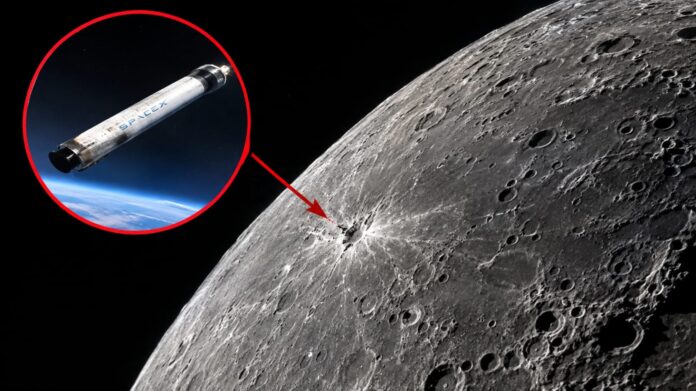
- NASA’s Lunar Reconnaissance Orbiter captured images of a new crater formed when a SpaceX Falcon 9 rocket upper stage crashed into the moon on August 5 at approximately 5,400 mph
- The crater measures roughly 60 feet across and less than 10 feet deep, with bright and dark streaks of excavated material visible around the impact site
- This represents only the second known instance of an uncontrolled human-made rocket crashing into the lunar surface, raising renewed concerns about space debris and sustainability
- The roughly 10,800-pound booster had launched two lunar landers in January 2025 before remaining in orbit until its unintended collision with the moon
What Happened
A SpaceX Falcon 9 rocket upper stage collided with the lunar surface on August 5, creating a visible impact crater that NASA subsequently documented through orbital imagery. The defunct booster, which had completed its primary mission of launching two landers to the moon in January 2025, remained in space until it fell under lunar gravity and struck the surface at an estimated speed of 5,400 miles per hour. The roughly 10,800-pound booster impacted the moon along the western edge of the sunlit side, though the collision itself was not directly observed by any spacecraft in real time.
NASA released detailed photographic evidence of the impact site on Tuesday, August 13, utilizing images captured by the Lunar Reconnaissance Orbiter on August 11 and 12. The before-and-after comparison images revealed a distinctive bright divot in the moon’s heavily cratered terrain. Scientists studying the photographs determined that the crater measures approximately 60 feet in diameter, with a depth estimated at less than 10 feet based on shadow measurements. The imagery shows both darker and brighter streaks radiating from the crater center, indicating material excavated from varying depths during the collision.
- Falcon 9 upper stage impacted lunar surface on August 5 at approximately 5,400 mph
- NASA Lunar Reconnaissance Orbiter captured crater images on August 11 and 12
- Crater dimensions: approximately 60 feet across, less than 10 feet deep
- Impact location: western edge of moon’s sunlit side at elevation of roughly 1,700 feet
Why It Matters
This incident represents a significant development in discussions surrounding space sustainability and the long-term management of orbital debris. As humanity’s presence in space expands through both government agencies and private companies, the uncontrolled collision of a substantial human-made object with the lunar surface underscores challenges in tracking and controlling spent rocket stages. The event has prompted renewed examination of protocols and responsibility frameworks governing space operations, particularly as more nations and commercial entities pursue lunar exploration and resource utilization activities.
The visible crater and surrounding ejecta pattern provide scientists with valuable data regarding impact dynamics and lunar surface composition. The darker rays of dust and rocks ejected from shallow depths, combined with the brighter streaks of fresher subsurface material, offer insights into the moon’s geological structure. Additionally, this incident highlights the growing need for international cooperation and standardized practices in managing end-of-mission procedures for spacecraft and rocket stages that operate beyond Earth orbit, where impacts could affect future missions and scientific research sites.
- Raises awareness of space debris and orbital object tracking challenges for international space community
- Demonstrates need for improved protocols governing disposal and control of spent rocket stages
- Provides scientific data on lunar surface composition and impact mechanics for researchers
- Affects planning for future lunar missions and establishment of protected research zones on the moon
Political and Public Context
This lunar impact follows a 2022 incident involving what researchers identified as a Chinese rocket upper stage that struck the far side of the moon, creating a distinctive double crater formation. That earlier collision sparked considerable international discussion regarding space sustainability, with China subsequently denying responsibility for the impact. The pattern of these uncontrolled impacts reflects a broader global trend of increasing lunar activity as multiple nations accelerate their space exploration programs and commercial ventures expand their operations beyond Earth orbit.
The incident occurs within a context of heightened international competition and cooperation in space activities. Multiple countries, including the United States, China, and South Korea, maintain active lunar observation and exploration programs. South Korea’s Pathfinder Lunar Orbiter, which launched in 2022, independently documented the SpaceX impact crater and surrounding debris field, demonstrating the collaborative nature of lunar monitoring efforts. The growing number of spacecraft and instruments observing the lunar surface provides unprecedented capability to document and study impacts, while simultaneously highlighting the need for coordinated international standards governing responsible space operations as activity in cislunar space accelerates.
- Previous 2022 Chinese rocket impact created double crater on moon’s far side, sparking sustainability debates
- South Korea’s Lunar Pathfinder Orbiter independently photographed crater and ejecta material
- Represents second confirmed case of uncontrolled human-made object striking lunar surface
- Reflects increasing international lunar activity and competition among multiple space-faring nations
What Happens Next
Scientific analysis of the crater and surrounding geological features will continue as researchers extract additional information from existing and future imaging data. The NASA Lunar Reconnaissance Orbiter will likely conduct additional passes over the impact site, capturing images from different angles and lighting conditions that reveal further details about subsurface composition and impact mechanics. International scientific teams will analyze the data collected not only by NASA’s instruments but also by the Korean Pathfinder Lunar Orbiter and other spacecraft to develop comprehensive understanding of the collision’s characteristics.
The incident will likely influence ongoing discussions within international space governance bodies regarding orbital debris mitigation and responsible space operations. Questions remain regarding future protocols for managing rocket upper stages in cislunar space, establishing tracking systems for objects beyond Earth orbit, and developing international agreements on space sustainability practices. Government agencies and commercial space companies will face increasing pressure to demonstrate responsible practices in managing spent hardware and demonstrating control over objects in space, potentially leading to new regulations or industry standards governing end-of-mission procedures for spacecraft and rocket stages.
- Continued scientific analysis of crater imagery and geological composition data from multiple international spacecraft
- International discussions regarding orbital debris mitigation and cislunar space management protocols
- Potential development of new space sustainability standards and end-of-mission procedures for rocket stages
- Enhanced monitoring and tracking systems for defunct spacecraft and orbital hardware beyond Earth orbit
