

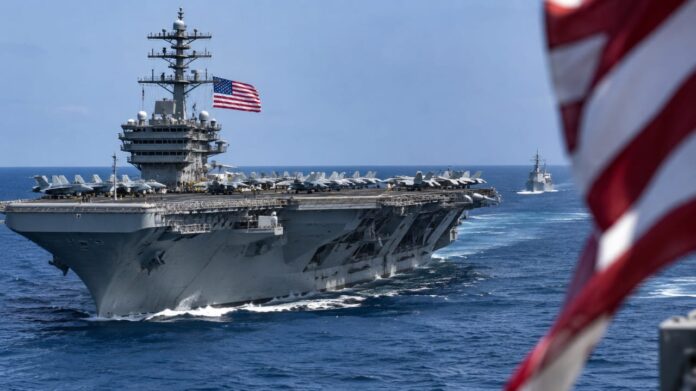
Story Highlights
- The USS Abraham Lincoln has remained deployed at sea for more than 260 days since departing San Diego in November
- The White House has confirmed deployment of the USS George Washington to replace the Lincoln in the Middle East
- Democratic lawmakers have pressed the Pentagon for information regarding service members’ welfare and living conditions
- The deployment underscores ongoing operational commitments to regional security and military readiness
What Happened
The USS Abraham Lincoln continues its extended deployment in the Middle East as part of the administration’s strategic military posture in the region. Since departing San Diego in November, the aircraft carrier has remained at sea without interruption for more than 260 days, maintaining critical naval operations. The White House has confirmed that the USS George Washington will be repositioned to replace the Lincoln, demonstrating the Pentagon’s commitment to maintaining continuous carrier presence in strategically important waters.
The deployment has drawn scrutiny from various political figures and lawmakers who have raised questions about operational conditions aboard the vessel. These inquiries have prompted Defense Secretary Pete Hegseth and administration officials to address concerns regarding service members’ welfare, mental health support, and living conditions during extended deployments.
- USS Abraham Lincoln deployed from San Diego in November and has been at sea for 260+ days
- USS George Washington being repositioned to replace Lincoln in Middle East operations
- Democratic lawmakers have requested briefings from Defense Secretary Hegseth on personnel conditions
- The White House is providing information about operational status and vessel replacement timeline
Why It Matters
Extended military deployments raise legitimate operational and personnel management questions that require careful attention from leadership at all levels. The administration’s handling of such matters reflects broader commitments to both military readiness and the welfare of service members who volunteer to protect American interests worldwide. The U.S. Navy’s carrier strike group operations represent a significant commitment of resources and personnel, requiring coordination between the Pentagon, operational commanders, and political leadership to ensure missions succeed while maintaining crew morale and support systems.
The dialogue surrounding deployment conditions illustrates the ongoing tension between maintaining robust military operations and ensuring that service members receive appropriate support during extended assignments away from their families. The replacement of the Lincoln with another carrier demonstrates the administration’s determination to sustain critical regional presence without overextending individual vessels and crews. This operational continuity is essential for maintaining American military credibility and deterrence capabilities in strategically vital areas of the world.
- Sustained carrier presence in the Middle East remains critical to regional security architecture and American interests
- Service member welfare and morale directly impact operational effectiveness and long-term military readiness
- Proper crew rotation and vessel maintenance extend the operational lifespan of the Navy’s capital ships
- Congressional oversight of military operations ensures accountability in resource allocation and personnel management
Political and Public Context
Military deployments have long been subjects of political debate, with lawmakers across the spectrum expressing concerns about the demands placed on service members and their families. The current discussion reflects a broader conversation within defense policy circles about sustainable operational tempos and the need for strategic planning that accounts for personnel rotation and vessel maintenance cycles. Extended deployments, while sometimes necessary for national security objectives, require careful management to prevent readiness degradation and crew fatigue.
The administration’s decision to replace the Lincoln with another carrier demonstrates thoughtful operational planning consistent with Navy doctrine regarding carrier strike group rotations. These transitions ensure that no single vessel bears an unsustainable operational burden while maintaining the continuous presence that American security strategy demands. The Pentagon’s engagement with congressional questions about personnel conditions reflects standard oversight mechanisms and the administration’s willingness to address legitimate inquiries about military operations and service member support.
- Navy carrier strike group rotations follow established doctrine for maintaining regional presence
- Congressional inquiries about military personnel conditions represent normal legislative oversight
- Service member support systems have expanded significantly in recent years to address mental health and family concerns
- Military readiness and personnel welfare are complementary rather than competing priorities in modern defense planning
US Commander says mental health is a priority on the USS Lincoln. Adm. Cooper acknowledges that long periods at sea are uniquely challenging after visiting the warship. A concise update on leadership focus and crew welfare. https://t.co/EjL2LC97nA pic.twitter.com/n0mrhaFWrp
— Drew Grimaldi (@Grimillionaire) August 17, 2026
What Happens Next
The USS George Washington will continue the critical mission previously undertaken by the Lincoln, ensuring uninterrupted carrier presence in the Middle East and demonstrating American resolve in one of the world’s most strategically important regions. The Pentagon will likely provide detailed information to Congress regarding the operational transition and the condition of both vessels, maintaining the transparency that Congress expects regarding military operations. Defense officials will continue working with operational commanders to optimize deployment schedules and ensure that service members receive appropriate support during extended assignments.
The administration’s approach to these deployment challenges reflects broader commitments to military excellence and personnel care. As the USS George Washington assumes its new operational responsibilities, the Navy will assess lessons learned from the Lincoln’s extended deployment and implement any necessary adjustments to support systems, crew rotation schedules, and operational planning procedures. These ongoing refinements ensure that American military forces maintain peak readiness while supporting the men and women who dedicate themselves to national defense.
- USS George Washington will assume Middle East carrier operations following Lincoln replacement
- Pentagon to provide Congressional briefings on deployment transitions and vessel conditions
- Defense leadership will evaluate crew rotation policies based on extended deployment experiences
- Administration will continue balancing operational requirements with enhanced service member support initiatives
