

Story Highlights
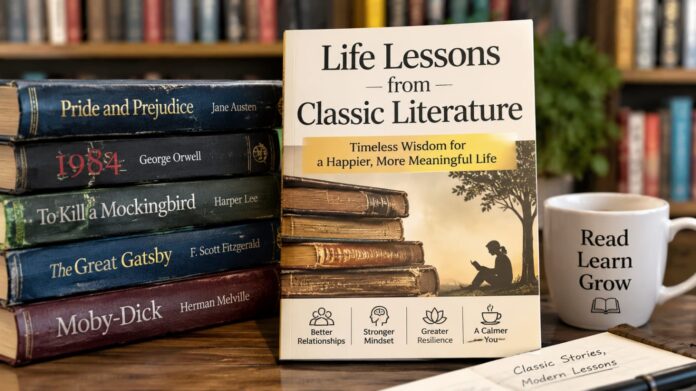
- Classical literature is increasingly marketed as self-help material rather than appreciated for its aesthetic and artistic merit
- Recent publications attempt to extract practical life lessons from ancient epics like Homer’s Odyssey, treating them as instruction manuals
- Critics argue that the supposed moral guidance found in great works of literature often amounts to tenuous interpretations disconnected from genuine reading enjoyment
- Modern culture has shifted toward viewing reading primarily through a utilitarian lens focused on personal development rather than pure appreciation
What Happened
The publishing industry has developed a notable trend of repackaging classic literature as self-help content, with recent examples demonstrating how ancient texts are being repurposed for contemporary wellness and personal development markets. Works spanning from ancient epics to nineteenth-century novels are increasingly being analyzed for extractable life lessons and practical guidance that their original authors likely never intended. This phenomenon reflects broader cultural attitudes about reading itself, with literature increasingly evaluated based on its utility rather than its inherent value as art.
A particularly notable example involves a clinical psychologist’s work titled The Odyssey Mindset, which reframes Homer’s ancient epic as a toolkit for modern life navigation. The work attempts to translate what it describes as timeless wisdom into contemporary applications, suggesting readers can apply concepts from the legendary hero’s journey to their own personal development. Similar treatments have been applied to other classical texts, with previous publications drawing lessons from ancient Mesopotamian epics for stress management and resilience building.
- Contemporary self-help authors systematically extract lessons from classical literature for modern audiences
- Ancient epics and nineteenth-century novels are being reframed as guides for personal transformation and wellness
- Publishing industry has created a market specifically for literature-based personal development content
- The trend reflects fundamental shifts in how society approaches reading and cultural texts
Why It Matters
This trend raises significant questions about cultural literacy and the purpose of education in contemporary society. When great works of literature are primarily evaluated for practical utility, the focus shifts away from aesthetic appreciation, artistic craft, and the pure enjoyment of reading. The implications extend beyond academic circles, affecting how younger generations are taught to engage with texts and what they understand as the legitimate reasons for reading at all. If literature is presented exclusively as a means to an end—personal improvement, stress reduction, or life navigation—then the intrinsic value of art itself becomes secondary.
Additionally, the practice of mining classical texts for self-help lessons often produces interpretations that seem disconnected from the actual content and purpose of the works. The supposed life guidance derived from many famous novels and epics becomes questionable when examined closely. This repackaging also raises concerns about whether modern readers are genuinely engaging with literature on its own terms or whether they are simply extracting convenient metaphors to support predetermined conclusions about personal development. The tension between reading for enjoyment and reading for utility represents a fundamental shift in cultural values regarding education and intellectual enrichment.
- Educational priorities increasingly emphasize practical applicability over aesthetic and artistic appreciation
- Students may develop distorted understandings of classic literature’s actual themes and purposes
- The market for literature-based self-help content reflects broader cultural devaluation of art for its own sake
- Genuine engagement with complex texts may be undermined by predetermined frameworks seeking specific life lessons
Political and Public Context
The phenomenon of reframing classical literature as self-help material reflects broader cultural trends visible across American society. Educational curricula have increasingly incorporated teaching methods focused on extracting moral lessons and practical applications from texts, a approach that originated with well-intentioned efforts to make literature relevant to student lives. This methodology has, however, evolved into a systematic approach to literary analysis that often prioritizes utility over interpretation and enjoyment over engagement with the artistic work itself.
The rise of wellness culture and the proliferation of self-help as a major publishing category have created conditions where classical literature becomes repackaged as another tool for personal optimization. This reflects a broader societal tendency to view all human activities, including intellectual pursuits, through the lens of productive utility and personal benefit. Entertainment and enrichment, once considered legitimate reasons for reading, have become secondary to questions about what practical knowledge or self-improvement a text can provide. The contrast between this modern approach and historical attitudes toward literature reading highlights significant shifts in cultural values regarding the relationship between art, education, and individual development.
- Educational curricula have systematically shifted toward extracting practical lessons from classical texts
- The wellness industry’s expansion has created market incentives for rebranding literature as self-help
- Cultural emphasis on productivity and personal optimization affects attitudes toward intellectual pursuits
- Historical approaches to literature reading emphasized enjoyment and aesthetic appreciation as primary values
What Happens Next
The trajectory of this trend appears likely to continue as long as market conditions favor the repackaging of classical literature for self-help audiences. Publishers have identified a lucrative niche in extracting life lessons from famous works, and authors trained in psychology and wellness fields will likely continue producing such content. This suggests that future readers may encounter classical literature primarily through the lens of self-improvement frameworks, potentially diminishing traditional approaches to literary education that emphasize close reading, textual analysis, and appreciation for artistic merit.
However, resistance to this trend may emerge from educators, literary scholars, and readers who value classical literature on its own terms. Some institutions may work to preserve approaches to literature that emphasize enjoyment, aesthetic appreciation, and intellectual engagement disconnected from practical utility. The outcome will likely depend on whether cultural attitudes toward reading and education shift back toward valuing literature for intrinsic reasons or whether utilitarian frameworks continue to dominate how society approaches classical texts. Questions remain about how to balance making literature accessible and relevant to contemporary audiences while preserving the integrity of these works as art rather than merely treating them as repositories for life lessons.
- Market conditions likely favor continued production of literature-based self-help content
- Educational institutions may increasingly emphasize practical applicability in literature curricula
- Potential countermovement among scholars and readers seeking to preserve traditional literary appreciation
- Future outcome depends on broader cultural reassessment of reading’s purpose and value
