

Story Highlights
- A federal judge dismissed the remaining Proud Boys criminal case after President Donald Trump granted sweeping clemency to January 6 defendants.
- Judge Timothy Kelly said separation-of-powers principles required him to approve the Justice Department’s request despite his disagreement with the outcome.
- The dismissal closes the cases involving Ethan Nordean, Joseph Biggs, Zachary Rehl, and Dominic Pezzola.
- The ruling demonstrates the broad constitutional authority presidents possess over clemency and the executive branch’s control of federal prosecutions.
What Happened
U.S. District Judge Timothy Kelly dismissed the remaining federal case against four former Proud Boys leaders following President Donald Trump’s clemency proclamation and the Justice Department’s decision to abandon the prosecution.
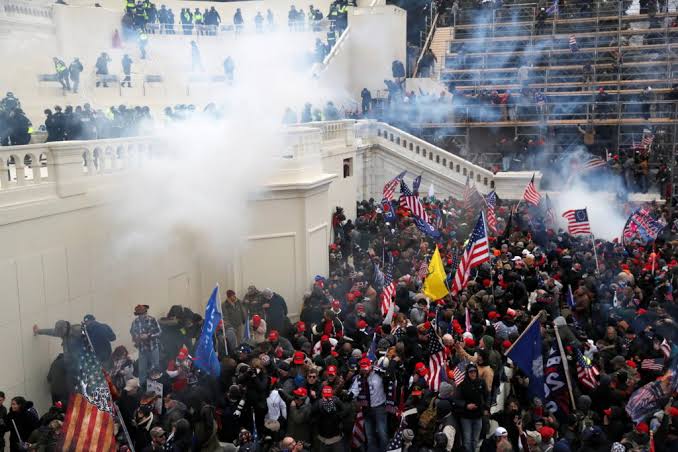
The case involved Ethan Nordean, Joseph Biggs, Zachary Rehl, and Dominic Pezzola, who were convicted of offenses connected to the January 6, 2021, breach of the U.S. Capitol.
Nordean, Biggs, and Rehl were convicted of seditious conspiracy. Pezzola was acquitted of that particular charge but convicted of other serious offenses, including obstructing an official proceeding and assaulting or resisting law enforcement.
- Trump commuted the four men’s prison sentences after returning to office.
- Former Proud Boys chairman Enrique Tarrio received a full pardon.
- The Justice Department later asked an appeals court to vacate the remaining convictions.
- The case returned to Kelly’s court for formal dismissal.
Kelly granted the government’s motion with prejudice, meaning prosecutors cannot revive these specific charges against the defendants.
The judge emphasized that his decision reflected the constitutional limits on judicial power rather than personal approval of Trump’s clemency decision.
Once the executive branch withdrew the prosecution and the appeals court vacated the convictions, Kelly concluded that preserving the case was no longer legally practical.
Why It Matters
The ruling demonstrates the extraordinary scope of the president’s clemency power under the Constitution.
Presidents may pardon federal offenses, commute sentences, and direct their administrations to reconsider prosecutions falling within executive authority.
Trump argued that the January 6 prosecutions had become excessive and politically unbalanced, particularly when compared with the treatment of defendants involved in riots and political unrest during previous years.
- The Constitution gives the president broad power to grant clemency for federal crimes.
- Federal prosecutors belong to the executive branch rather than the judiciary.
- Judges generally cannot force the Justice Department to continue a prosecution it has formally abandoned.
- The dismissal does not erase the historical events or prevent public debate about January 6.
Supporters of Trump’s action view the dismissals as a correction to prosecutions they believe were driven by politics and unusually severe sentencing.
They argue that the Justice Department devoted enormous resources to January 6 cases while responding less aggressively to political violence associated with other movements.
Critics maintain that the clemency decisions removed accountability from people convicted by juries after extensive trials.
However, disagreement with a president’s clemency decision does not itself allow a federal court to take control of prosecutorial authority assigned to the executive branch.
Political and Public Context
Trump made clemency for January 6 defendants a major campaign commitment before returning to the White House.
On his first day back in office, he issued a broad proclamation granting pardons to most defendants, commuting selected sentences, and directing the attorney general to seek dismissal of pending cases.
The administration characterized the action as an effort to end what Trump described as years of politically motivated prosecutions.
- Most January 6 defendants received full pardons.
- Several prominent defendants initially received sentence commutations instead.
- The Justice Department subsequently moved to eliminate remaining convictions and pending prosecutions.
- Federal courts were required to consider those requests under established separation-of-powers rules.
Kelly, whom Trump appointed during his first term, made clear that he continued to view the Capitol breach as a grave attack on the constitutional transfer of presidential power.
His strongly worded opinion allowed him to preserve that judgment while acknowledging that courts cannot independently operate a prosecution after the government withdraws it.
The decision therefore reflects two separate constitutional principles.
The president possesses broad federal clemency authority, while judges retain the ability to explain the historical and legal seriousness of conduct appearing before their courts.
Neither power completely eliminates the other.
What Happens Next
The dismissal with prejudice effectively ends the remaining criminal case against Nordean, Biggs, Rehl, and Pezzola.
The four men cannot be retried on the same dismissed federal charges, although presidential clemency does not automatically eliminate every possible consequence arising from their conduct.
Civil lawsuits brought by police officers or other affected parties may continue because presidential pardons apply to federal criminal liability rather than private civil claims.
- The Proud Boys prosecution is now formally closed.
- Related civil litigation may proceed independently.
- Courts are still addressing similar requests involving other January 6 cases.
- Congress may continue debating the reach and use of presidential pardon power.
A related dispute involving Oath Keepers defendants could produce another ruling addressing the interaction between Trump’s clemency proclamation and previously secured convictions.
Democrats are expected to continue portraying the dismissals as an abandonment of January 6 accountability.
Trump and his supporters will emphasize that the Constitution places clemency authority with the elected president and prosecutorial decisions with his Justice Department.
The case ultimately reinforces a basic separation-of-powers principle: judges may criticize executive decisions, but they ordinarily cannot compel prosecutors to continue cases the executive branch has lawfully chosen to end.