

Story Highlights
- Gas prices have climbed as the Iran conflict disrupts energy markets and shipping confidence.
- Analysts warn that sustained oil pressure could push inflation higher through the end of the year.
- The Trump administration says stronger U.S. energy production gives the economy more protection than in past oil shocks.
What Happened
The fallout from the Iran war is reaching American households as gasoline prices rise and inflation concerns return to the center of the economic debate.
Instability around the Strait of Hormuz, one of the world’s most important oil shipping routes, has rattled energy markets and raised costs for drivers, shippers, and businesses that depend on fuel.
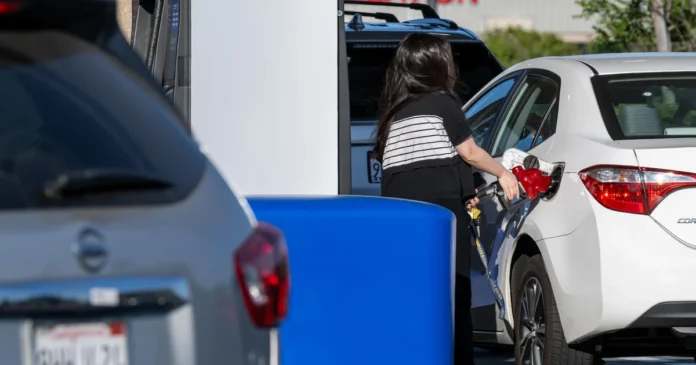
AAA data cited in the draft showed average gasoline prices rising sharply over a recent month, reaching a national average near $3.45 per gallon as the conflict disrupted market confidence.
- Higher fuel prices are hitting drivers first.
- Shipping and transportation costs can also feed into grocery and consumer prices.
- Energy markets remain closely tied to the fate of the U.S.-Iran ceasefire.
Goldman Sachs has warned that oil-market pressure from the conflict could keep fuel costs elevated, especially if shipping through the Strait of Hormuz remains uncertain. The firm has also said a U.S.-Iran settlement could help oil prices fall, though not necessarily back to pre-war levels immediately. :contentReference[oaicite:2]{index=2}
The Treasury Department acknowledged that Iran-related energy swings have added to headline inflation pressure, but argued that the broader U.S. economy remains resilient because of wage growth and stronger domestic energy output. :contentReference[oaicite:3]{index=3}
Why It Matters
The issue matters because most Americans feel foreign policy shocks through everyday costs, especially gasoline, groceries, shipping fees, and utility bills.
For Trump, the challenge is balancing two priorities: keeping pressure on Iran to protect U.S. interests and global shipping, while also preventing energy prices from weakening the administration’s economic message.
The White House has argued that U.S. energy dominance gives America more protection than it had during previous Middle East oil shocks. That argument has some strength because the United States now produces large amounts of petroleum and natural gas.
- Domestic production helps cushion supply shocks.
- Global oil prices still affect U.S. pump prices.
- Any new escalation near Hormuz could quickly revive inflation concerns.
The Federal Reserve also faces a more difficult environment if energy prices remain elevated. Temporary fuel spikes can fade, but if they spread into transportation, food, and consumer expectations, inflation can become harder to control.
That is why markets are watching whether the ceasefire holds, whether Gulf shipping stabilizes, and whether oil producers can offset disruption fears.
Political and Public Context
The Trump administration has spent much of the year arguing that its economic policies are restoring strength, lowering costs, and reversing the inflation problems associated with the prior administration.
Rising gas prices complicate that message, even if the administration blames the pressure on war-related disruption and Iranian aggression rather than domestic policy.
Trump’s supporters are likely to argue that short-term fuel pressure is the cost of confronting a hostile regime and defending a vital shipping corridor.
Critics will argue that the Iran conflict, tariffs, and other policy choices are combining to keep prices higher than families expected.
- Republicans may emphasize energy production and national security.
- Democrats may focus on affordability and gas prices before the midterms.
- Voters are likely to judge the issue by what they pay at the pump.
Reuters reported that U.S. oil companies are expected to see a major profit jump after war-related price increases, creating a possible political clash as Trump pressures the industry to lower pump prices. :contentReference[oaicite:4]{index=4}
That dynamic could become a major midterm issue if gasoline prices stay elevated even after crude prices stabilize.
What Happens Next
The next major factor is whether the U.S.-Iran ceasefire holds and whether shipping confidence returns around the Strait of Hormuz.
If tensions ease, oil and gasoline prices could stabilize or gradually fall, giving the administration room to argue that its pressure campaign protected shipping without causing lasting economic damage.
If the conflict escalates again, fuel prices could rise further and push inflation expectations higher.
The Treasury Department and Federal Reserve will be watching whether energy pressure remains temporary or starts feeding into broader consumer prices.
For American households, the practical impact will depend on how long gasoline prices stay elevated and whether shipping, food, and transportation costs follow.
Sources
- Trump’s “roaring economy” meets a rough start to 2026 with job losses, rising gas prices and uncertainty
- Economic Policy Statement to TBAC, 2026 Second Quarter
- How the U.S.-Iran deal could affect oil prices
- U.S. oil companies see big profit jump, gird for clash over pump prices with Trump
- How the war in the Middle East is affecting energy, trade and finance
