

Story Highlights
- Ghana hosted an international summit in June bringing together approximately 80 countries to advance reparations discussions for the transatlantic slave trade
- A UN resolution passed in March recognizing slavery as a major crime against humanity, though the United States voted against it and European nations abstained
- Ghana’s government has been designated by the African Union as the champion for reparatory justice, reflecting its historical role as both a source of enslaved people and location of slave trading posts
- Proposed reparations mechanisms include educational grants, venture capital for African entrepreneurs, debt relief, and compensation from institutions that profited from slavery
What Happened
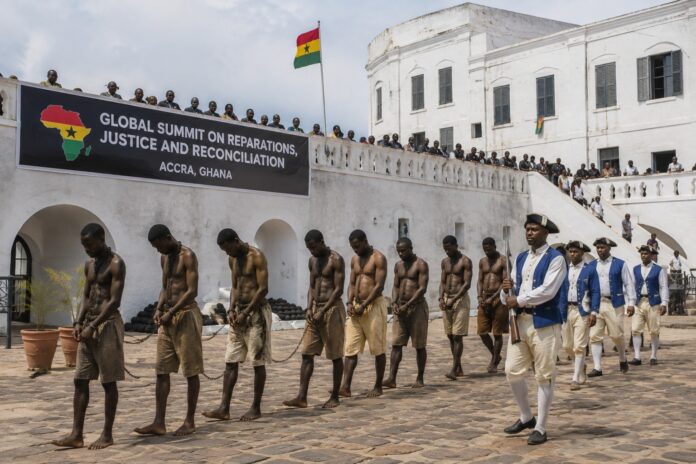
Ghana has emerged as the primary advocate driving global reparations efforts, positioning itself at the forefront of international discussions surrounding accountability for the transatlantic slave trade. The nation organized a significant international summit in Accra during June that convened delegates from approximately 80 countries to deliberate on reparations matters. The gathering included a historical reenactment of the transatlantic slave trade performed at Christiansborg Castle, a former slave trading post located in the capital city.
The momentum for reparations discussions has intensified notably throughout the current year, with demands for formal apologies, debt relief, and financial compensation becoming increasingly prominent in global discourse. In March, the United Nations passed a resolution characterizing slavery as a significant crime against humanity, though this action reflected deep divisions among member states. The United States voted against the resolution, while every European nation chose to abstain from voting.
- Ghana tabled the UN resolution on slavery reparations at the United Nations
- Approximately 80 countries participated in Ghana’s June summit in Accra
- The African Union designated Ghana as champion for reparatory justice
- Historical reenactment performed at Christiansborg Castle during the summit
Why It Matters
Ghana’s leadership in the reparations movement carries substantial significance for global discussions about historical accountability and justice. The nation has particular standing in this matter given that historical records indicate approximately 10 to 15 percent of the estimated 12 million Africans forcibly removed from their homes during the transatlantic slave trade originated from what is now Ghana, with even larger numbers shipped from its coastal ports. This history positions Ghana as both a victim of the slave trade and the geographical location where many atrocities occurred, lending moral authority to its advocacy efforts.
The reparations framework being advanced by Ghana encompasses multiple dimensions beyond direct financial transfers. Proposed mechanisms include educational grants for African students, venture capital initiatives supporting young African entrepreneurs, research funding examining potential health issues connected to historical enslavement, and debt cancellation or relief for affected nations. Additionally, the movement seeks accountability from specific institutions that accumulated wealth through slavery, including religious organizations such as the Church of England.
- Ghana’s historical role as both a source and destination of the slave trade strengthens its credibility in leading reparations advocacy
- Proposed reparations mechanisms target structural inequalities through education, entrepreneurship support, and health research
- Individual institutions and Western nations face potential accountability demands for historical profiteering from slavery
- The movement aims to establish systemic frameworks for reparatory justice rather than one-time payments
Political and Public Context
The reparations discussion occurs within a complex geopolitical landscape marked by significant resistance from historically powerful nations. The United Kingdom, which alongside Portugal dominated the transatlantic slave trade, has consistently rejected the concept of paying reparations. Estimates suggest that Britain’s potential financial obligations for damages to affected nations could reach many trillions of pounds, which likely contributes to this resistance. This refusal reflects broader patterns of reluctance among wealthy Western nations to acknowledge or compensate for historical exploitation.
Ghana’s assumption of leadership in this movement represents a deliberate strategic positioning within African affairs and international diplomacy. As the first sub-Saharan African nation to achieve independence, Ghana has established itself as a pan-African leader capable of confronting powerful interests. The nation’s designation by the African Union as the champion for reparatory justice formalizes this role and empowers its diplomatic initiatives. Ghana’s political leadership, including its Foreign Ministry, has articulated clear positions connecting historical justice to contemporary development needs across the African continent.
- The UK has rejected reparations despite being a dominant force in the transatlantic slave trade
- European nations demonstrated ambivalence by abstaining from the UN slavery resolution vote
- Ghana’s status as the first independent sub-Saharan African nation strengthens its diplomatic authority
- The African Union’s formal designation of Ghana as reparations champion provides institutional backing
'Ghana was the crime scene' – the country leading the demand for slavery reparations https://t.co/2hme2VPfOy
— BBC News (World) (@BBCWorld) August 16, 2026
What Happens Next
The trajectory of the reparations movement will likely involve sustained diplomatic pressure from Ghana and allied nations on Western governments and institutions to acknowledge historical injustices and commit to compensation mechanisms. Ghana’s government has indicated intentions to pursue accountability from specific entities, with particular attention to the Church of England and other religious institutions that benefited from slavery. These efforts may involve formal legal claims, international court proceedings, or negotiated settlements depending on the receptiveness of targeted institutions and nations.
Future developments will probably include continued organizing of international summits, expansion of the coalition supporting reparations demands, and increased domestic political pressure on Western governments to reconsider their positions. The debate may also involve more detailed discussions about which mechanisms for compensation would be most effective and just, and how funds or resources would be distributed among affected populations and nations. The resistance from wealthy nations means this remains a protracted struggle, but Ghana’s sustained advocacy suggests the issue will remain prominent in international discourse for the foreseeable future.
- Ghana and allied nations expected to intensify diplomatic campaigns targeting Western governments and institutions
- Formal accountability mechanisms may include legal claims against specific organizations like the Church of England
- Future international summits likely to expand the coalition of nations supporting reparations demands
- Ongoing debate regarding implementation mechanisms for compensation and resource distribution among affected populations
